

Salt Air and AC Coil Corrosion in Miami: Why Coastal Coils Fail Early
Stand next to an outdoor AC unit on Miami Beach and run your finger along the fins. On a coastal unit that is a few years old, you will often feel a gritty film, and in the worst cases the aluminum flakes off like old paint. That is salt air at work, and it is the reason coils near the water leak and fail years before the same coils would inland. This guide is written from inside the home and next to the condenser: what we see, why it happens in Miami-Dade and Broward, the signs to watch for, and how often a coastal system should have its coils looked at.
Live Near the Water? Get Your Coils Inspected
A licensed HVAC technician looks at both your indoor and outdoor coils, shows you what the salt has done, and explains your options before any work begins. Same-day available.
Why Salt Air Is So Hard on an AC Coil
Your outdoor unit pulls in a huge volume of air every minute, and everything that air carries lands on the condenser coil. Inland that means pollen, grass and dust. In coastal Miami-Dade and Broward it also means salt. Ocean spray and sea breeze lift microscopic salt into the air, and the coil’s thin aluminum fins are the first surface it touches.
Salt by itself is only part of the story. It attracts moisture, so a salty film stays damp long after the morning dew would have dried. Damp salt against aluminum and copper is a perfect recipe for corrosion. The fins turn white and chalky, then pit, then crumble. Where aluminum fins touch copper tubing, the two metals react with each other in the wet salt, and that is where we most often find the pinhole leaks.
Florida’s humidity makes it worse. Our summers keep the air near saturation for months, so the coil rarely gets a truly dry day to recover. A coil that survives fifteen years in a dry climate can be struggling at six or eight years on the barrier islands.
What We See Inside Coastal Homes
When we open the air handler of a condo near the water, the indoor evaporator coil tells a different story from the outdoor one. Indoors, the coil sits wet with condensation all day and collects dust, lint and the organic film that grows on damp surfaces. Salt that gets inside through door openings, balcony sliders and a leaky return adds to the film and can corrode the coil from the inside out.
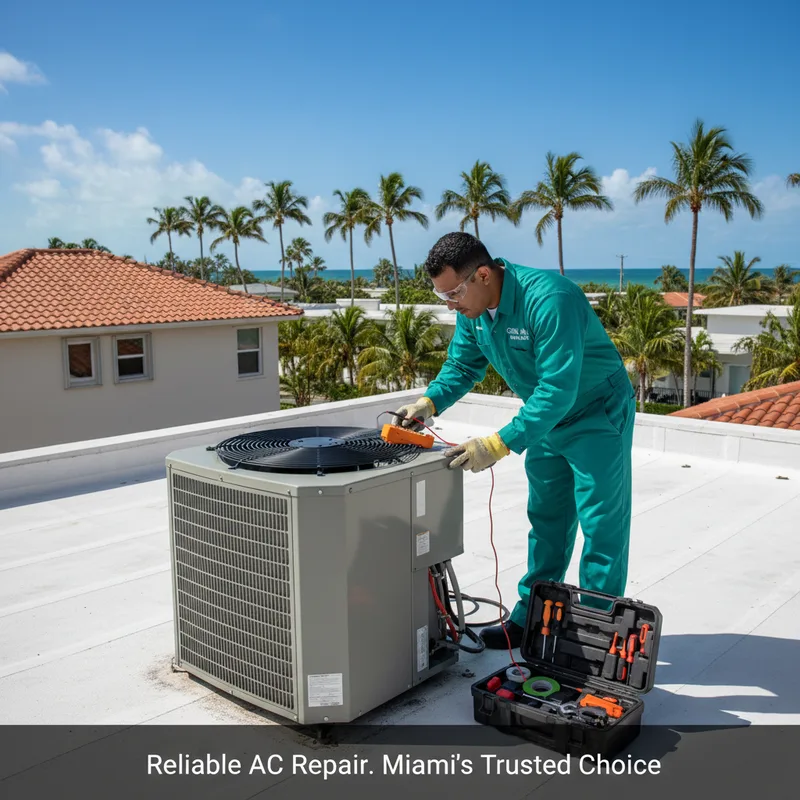
Outdoors, the pattern is just as consistent. On Miami Beach and in the high-rises along the ocean in Hallandale Beach, balcony and rooftop condensers show white crust on the fins and green staining where copper meets aluminum. In Hollywood and Fort Lauderdale, homes along the Intracoastal Waterway see it too, because boat traffic and wind kick up salt spray well away from the open ocean. A condenser sitting on a rooftop is the most exposed of all: no trees, no fences, and a constant onshore wind.
None of this is visible from the living room. The home still cools, so owners assume everything is fine until the system starts losing refrigerant or short-cycling.
Signs Salt Is Damaging Your AC Coil
Most coastal coil failures give warnings long before they become a no-cooling emergency. Watch for these:
- White, green or powdery residue on the outdoor fins. Healthy fins are clean, flat and silver. Residue means salt and corrosion byproducts are sitting on the metal.
- Fins that flake or crumble when you brush them with a gloved hand. That is metal loss, not dirt.
- A system that runs longer than it used to. A coated coil cannot shed heat well, so the compressor works more hours to hold the same temperature. If you want a fuller checklist, read our guide to the signs your AC coil needs cleaning in Miami.
- Ice on the indoor line or coil. Low refrigerant from a slow leak and restricted airflow both lead here. We explain the whole chain in why your AC is freezing up in Miami.
- Oily stains near the tubing or a refrigerant top-up you have needed more than once. A coil that keeps losing refrigerant is leaking somewhere, and in coastal homes the coil is the most common place.
- A home that feels damp even when the AC is running. A struggling coil removes less moisture; see why an AC stops removing humidity in Miami.
Any one of these is a reason to have a technician look. Two or three together usually mean the coil is already past routine cleaning.

Salt on the Fins? Do Not Wait for a Leak
Catching salt buildup early is the difference between a coil cleaning and a coil replacement. We serve Miami Beach, Hollywood, Fort Lauderdale and every coastal city in Miami-Dade and Broward.
What a Coil Cleaning Does for a Coastal System
A professional AC coil cleaning removes the film of salt, dust and growth that is insulating the coil and holding moisture against the metal. On a coastal unit, the visit usually looks like this:
- Inspection of both coils. We check fin condition, look for staining that points to a leak, and see how much of the coil face is blocked.
- Outdoor condenser cleaning. The unit is powered down, loose debris is cleared, a coil cleaner is applied, and the coil is rinsed from the inside out so salt is pushed away from the fins rather than packed deeper. Bent fins are straightened where they can be.
- Indoor evaporator cleaning. The access panel comes off, the coil is cleaned and rinsed through the drain pan, and the drain line is checked so water leaves the way it should.
- Test run. The system is restarted and airflow and temperature drop are checked to confirm the coil is doing its job.
Cleaning restores airflow and heat transfer and removes the damp salt that drives corrosion. It cannot put back metal that has already been eaten away. If the fins are crumbling or the tubing is leaking, we will tell you plainly, and the conversation moves to repair or coil replacement. Either way you find out early, and you decide with the facts in front of you.
If you are weighing a deeper sanitizing service for the indoor side of the system, our AC sanitizing and cleaning service in Miami covers the air handler, coil and drain pan together.
How Often Should Coastal Homes Clean Their AC Coils?
For most Miami homes, a professional coil cleaning every 12 to 18 months is the right rhythm. Coastal homes sit at the short end of that range or shorter:
- Oceanfront and rooftop condensers (Miami Beach, Hallandale Beach high-rises, Hollywood Beach): an outdoor coil look at least once a year, with a rinse more often if salt film is visible between visits.
- Homes along the Intracoastal in Fort Lauderdale and Hollywood: annual outdoor coil service, indoor coil every 12 to 18 months.
- A few miles inland: the standard 12 to 18 month schedule, with a quick fin check after strong onshore wind or storm weeks.
Our full maintenance guide, how often to service your AC in Miami, breaks down the rest of the system. And remember that a once-a-year visit is cheaper in effort than a mid-July breakdown, when every HVAC company is booked.
What You Can Do Between Visits
- Rinse gently. With the breaker off, a low-pressure hose from the inside of the unit outward can wash off loose salt. Never use a pressure washer, and never aim a hard spray straight at the fins.
- Keep the area clear. Maintain a couple of feet of open space around the condenser so air moves freely and salt does not collect in dead corners.
- Watch after storms. Strong onshore wind and tropical weather coat units with salt quickly. A short look at the fins afterward catches problems early.
- Change your filter on schedule. A clean filter keeps the indoor coil from loading up with dust that holds moisture.
A rinse is maintenance, not a substitute for a professional cleaning. The buildup deep between the fins is what a hose cannot reach.
When to Call Instead of Wait
Call a licensed technician if you see crumbling fins, ice on the line, oily staining at the tubing, or a system that has needed refrigerant more than once. Those are the symptoms of a coil that is failing, and every week of delay costs you more strain on the compressor, the most expensive part of the system. A short inspection tells you exactly where you stand. You can also start from our homepage at Air Duct Cleaning Miami to see the full range of services we offer across Miami-Dade and Broward.
Book a Coil Inspection Before Summer Hits
Let a licensed technician check what salt air has done to your coils. Call or book online and we will find a time that works.
