

Your AC Guy Said It’s Fine — Should You Get a Second Opinion?
You call your regular AC guy, he takes a look, says everything’s fine. Then a different company comes out for a duct cleaning quote and tells you there’s mold behind your vent. Now you’re standing in your own hallway wondering which one of them is lying to you.
Here’s the direct answer: usually neither. Most “he said it’s fine, they said it’s bad” calls come down to one thing — the first tech never actually looked. A real air duct inspection checks four places: the ducts, under the unit, the coil, and the blower. A technician who glances at the thermostat, confirms cold air and leaves isn’t lying. He just never checked the one place mold starts.
We hear this from Miami, Miramar and Dania Beach homeowners constantly — twice this month in nearly the same words. Below: why two techs can genuinely disagree, what a real inspection covers, and what we found on a Hollywood job this week that started exactly this way.
The Job That Shows Exactly How This Happens
We were called to a Hollywood home this week for what should have been a routine duct cleaning. Instead we found mold growing across the ceiling, coming out of the vent. The house has a hard ceiling, so the ducts aren’t in an open attic — they’re built into the structure, and reaching them means removing drywall. What could have been a cleaning is now duct replacement, plus a licensed mold remediation contractor for the ceiling material itself. We handle the mold inside the HVAC system — the ducts, the coil, the blower — because that is exactly what our HVAC license covers. The drywall is a different trade: neither we nor a mold company is a general contractor, so that part goes to a licensed GC.
Here’s the part that matters for you. The homeowner had maintenance done before, but nobody had ever run a real visual inspection — not the ducts, not under the unit, not the coil, not the blower. Open that coil compartment on an earlier visit and this is still a cleaning, not a rebuild.
The chain that got this house here sits behind a lot of “he said, she said” AC calls in South Florida. A dirty coil restricts airflow. When airflow drops, your AC stops pulling humidity out of the house. Humidity plus the dust already sitting in your ducts is close to the perfect recipe for mold — until it’s visible on a wall, around a vent, or across a ceiling like this job.
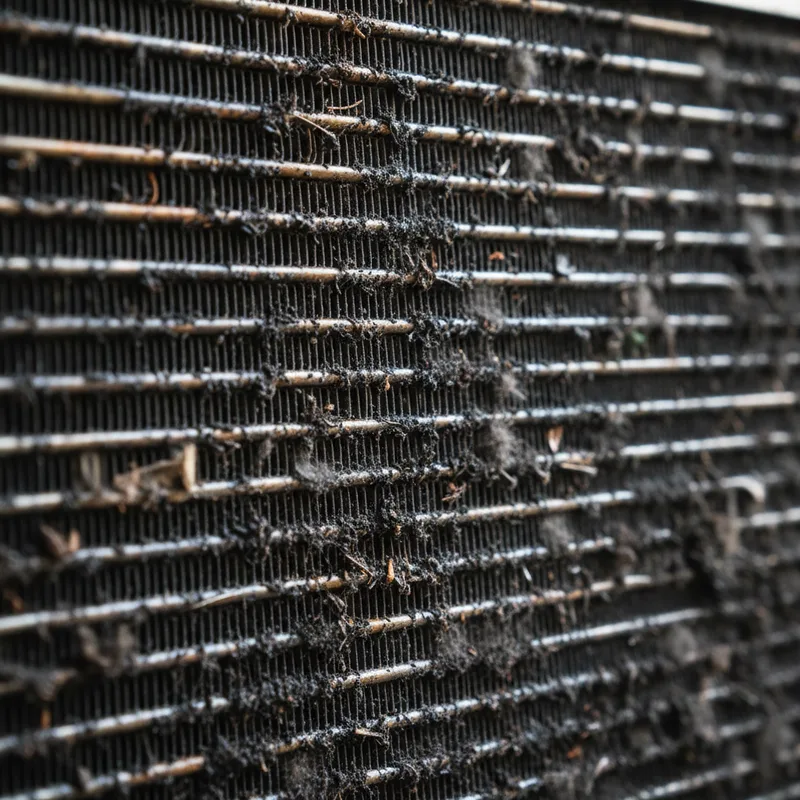
Every step in that chain is invisible from a thermostat and a cold-air check. That’s why one tech can say “it’s fine” in good faith while the coil behind the panel is already growing something. Florida humidity sits around 60–75% most of the year, so an AC that isn’t pulling moisture out leaves you, as we put it on that job, living in a fish tank. Here are the signs a dirty AC coil is already restricting your airflow.
Why Two AC Techs Can Look at the Same House and Disagree
Your regular guy isn’t wrong on purpose. A quick maintenance visit and a real inspection are two different services, even when they’re billed the same way.
A quick check confirms the system is running, the temperature drops when it should, and nothing sounds broken. It takes ten minutes and it answers “is my AC working right now.”
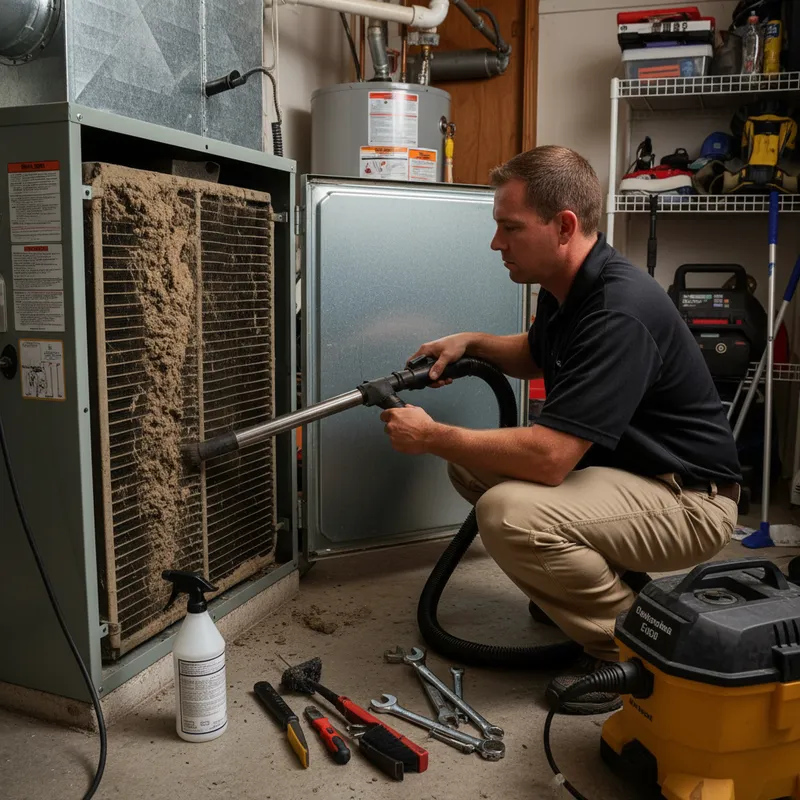
A real inspection means someone opens the panel and looks at the coil, checks the blower wheel for buildup, looks under the air handler for standing water or staining, and gets a light and a mirror on the visible duct runs. It answers a different question: “is anything building toward a problem.”
Two answers to two different questions. If nobody told you which one you were getting, you had no way to know you asked the wrong one.
What Duct Cleaning Can Actually Fix — and What It Can’t
There’s an honest limit here, worth saying plainly. Social media is full of before-and-after duct cleaning videos where every duct comes back looking brand new. That’s true for a lot of them. It is not true for all of them.
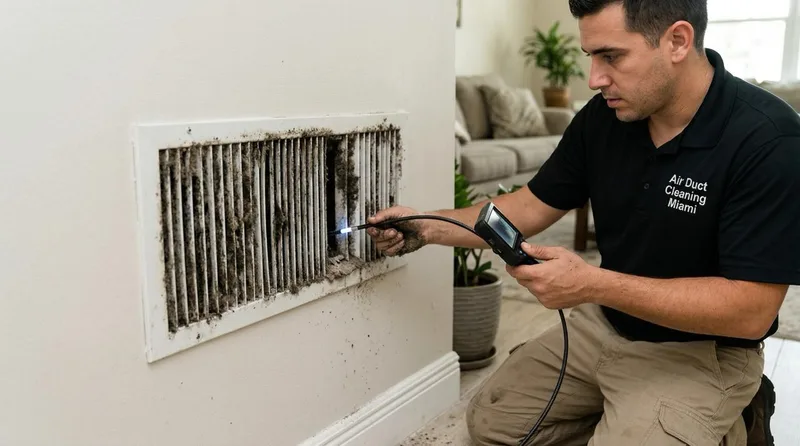
Duct cleaning removes dust and surface contamination. It does not renew a duct. If a duct is fully infested with mold — like the ceiling in Hollywood — cleaning doesn’t reach it, and pretending otherwise would just delay the real fix. A fully infested duct is a replacement, not a cleaning. That’s why the inspection comes first: every house is different, and the only way to know which one you’re in is to look. Here’s what mold in the ductwork actually looks like in a Miami home.
A company that tells you a cleaning won’t fix something is giving you the same information a second opinion would give you, just earlier — and for free, since our inspection doesn’t cost anything either way.
The One Thing on Your Receipt That Separates a Real Company From a Guess
There’s a simple test you can run afterwards, with zero HVAC knowledge: look for a Florida contractor license number on the paperwork. If the receipt doesn’t have one, the company didn’t have one to give you.
Ours is CAC1817115. We’re a licensed Florida HVAC contractor, BBB accredited A+, and our technicians are EPA-certified. We don’t subcontract our duct cleaning — the person at your Miami, Hollywood or Miramar door is trained on our own process. That matters for the same reason the Hollywood job does: a thorough inspection depends on someone who knows what he’s looking at. And here is the distinction most homeowners never hear: a mold company is licensed to CHECK mold, but it is not licensed to open and work on your HVAC system. We hold the HVAC license, so we can find it and fix it inside the equipment — one trade, one visit.
Weighing credentials one company has and another doesn’t? Here’s how a Florida HVAC license compares to NADCA and IICRC credentials.
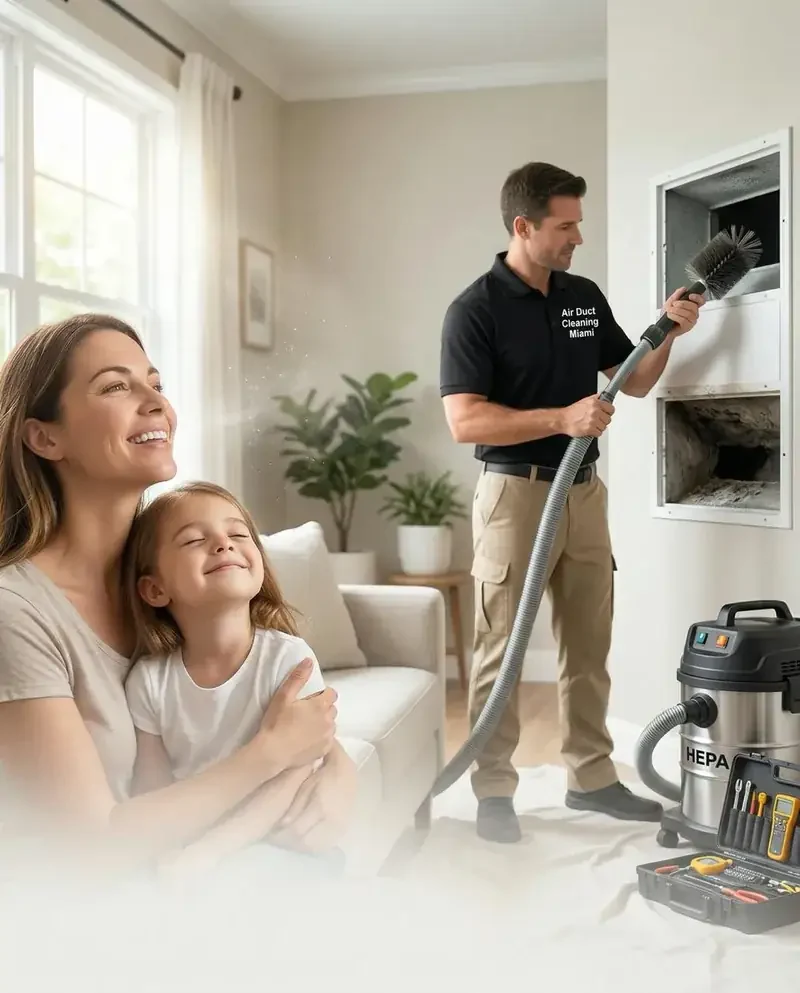
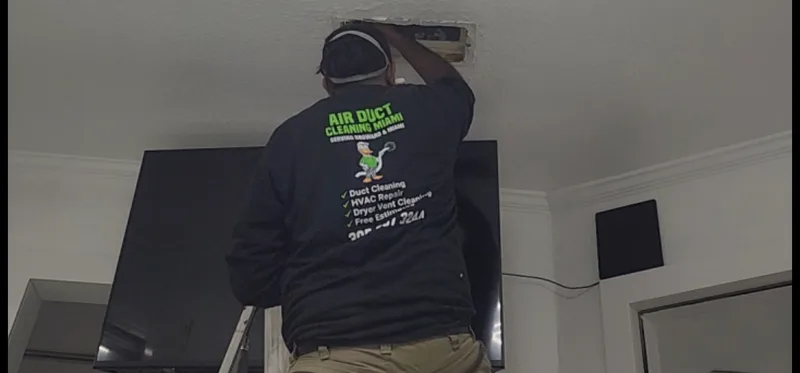
Two conflicting answers and no way to settle it?
Free, in-person inspection by a licensed Florida HVAC contractor: ducts, coil, blower and under the unit. No obligation to book. Same-day appointments across Miami, Hollywood, Dania Beach and Miramar.
Call (305) 607-3244 →Two Habits That Quietly Set This Up Before You Notice a Problem
Two patterns sit behind most of the second-opinion calls we get, and neither is anyone cutting corners on purpose.
The AC hidden in a closet. A lot of South Florida homes tuck the air handler into a closet and it stays there — out of sight, no airflow around it, nobody ever popping the panel to look at the coil. That’s usually the house that calls us later about a smell near the vent.
Pets change how often you need service. An AC should be serviced at least once a year; with a dog or a cat that interval needs to be shorter, because dander and fur build up on the coil and blower and end up inside the ducts.
Both are things a five-minute check misses and a real inspection catches every time.
Why This Matters for More Than Comfort
If a mold claim ever comes up with your insurer, they may ask for your maintenance records. A homeowner who’s never had a licensed company inspect and document the system has nothing to hand them. Every visit that was really inspected and written up is a paper trail — not just for us, for you. Insurance policies vary, and some exclude damage a carrier determines resulted from a lack of maintenance — we’re not your insurance agent, so check your own policy or ask your carrier directly. But a documented inspection on file only helps your case; having nothing to show never does.
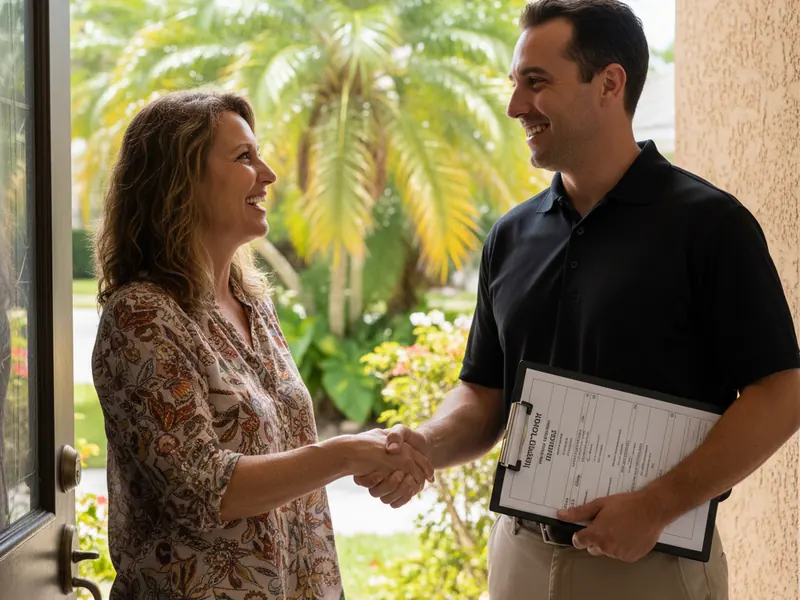
Not sure which tech to believe? Get a documented answer.
Ducts, coil, blower and unit, with a written report of exactly what we see. If we find mold inside the system, that is our work and our license. If it has gone into the building — the drywall, behind a window — we show you what we are looking at and bring in the right licensed trade for that part. You get proof, not just an opinion.
Book My Free Inspection →What a Real Second Opinion Should Look Like
If you’re standing between two conflicting answers right now, here’s what to ask for instead of picking whichever tech sounded more confident:
- Ask them to physically show you the coil, not describe it.
- Ask if they checked underneath the unit, not just the vents.
- Ask what specifically they looked at in the ductwork itself.
- Ask for a Florida license number on the paperwork before they start.
- Ask whether they found the cause of a problem, or just noted a symptom.
A company with nothing to hide will walk you to the unit and show you. That’s the difference between an inspection and a guess dressed up as one. There’s a longer list of questions to ask before hiring an AC contractor, and if that second answer came with a suspiciously low number attached, read the red flags behind cheap duct cleaning offers in Miami first.
Frequently Asked Questions
My AC guy said the system is fine, but a duct cleaning company says there’s mold. Who’s right?
Both can be telling the truth. A routine AC check confirms the system runs and cools; it usually doesn’t include opening the coil compartment or inspecting the ducts directly. Ask what was actually checked, not just what was concluded.
Is a second opinion inspection free?
Yes. Our in-person inspection of the ducts, coil, blower, and unit is free with no obligation to book, for homeowners across Miami-Dade and Broward, including Hollywood, Dania Beach, and Miramar.
Will duct cleaning fix mold that’s already in the ductwork?
It depends on how far it’s spread. Professional air duct cleaning removes dust and surface contamination — it does not renew a duct. A duct that’s fully infested with mold needs replacement, not a cleaning, which is exactly why the inspection comes first, before anyone quotes a fix.
Does my insurance require proof I maintained my AC?
It depends on your policy — we’re not insurance agents, so we can’t say what yours requires. What we can say: some policies exclude damage tied to a lack of maintenance, and a documented inspection gives you something to show your carrier if it’s ever in question. Check your policy or ask your agent directly.
How do I know a duct cleaning company is actually licensed?
Check the receipt for a Florida contractor license number. If it isn’t printed on the paperwork, the company doesn’t have one to show you. We print ours — CAC1817115 — on every job.
Are you NADCA certified?
Not NADCA certified. We’re licensed by the State of Florida as an HVAC contractor (CAC1817115), staffed by EPA-certified technicians, BBB accredited A+, and we never subcontract our duct cleaning — it’s our own crew on every job. NADCA is a private, voluntary paid membership, not a government credential — see the difference.
The Bottom Line From a Licensed Florida Contractor
Two opinions don’t mean somebody is lying. They usually mean only one person opened the panel. Ask what was checked, ask for the license number, and get a second look at the four places that matter — before a cleaning turns into a rebuild.
Get the inspection that actually answers the question.
Book a free duct, coil and airflow inspection from a licensed Florida HVAC contractor. We tell you exactly what we find, mold or not. Same-day across Miami-Dade and Broward.
Call (305) 607-3244 →