Our Services
Duct & Vent CleaningFrom Free Estimates
›

AC MaintenancePackages from $149
›

Indoor Air QualityThermostats, UV Lights & More
›
CommercialRefrigeration & Restaurant
›
Quick Links
You went up into the attic and found flex duct that has been chewed open, torn, or turned into a nest -- or one room that never cools and an FPL bill that keeps climbing. Here is what happens next: a licensed technician inspects every run for free, cuts out the animal-damaged flex ducts, replaces them with new insulated duct, seals the plenum and the boots, then cleans the system downstream so what was left inside does not ride the airflow into your rooms. Air duct repair and replacement, same-day across Miami-Dade and Broward County.
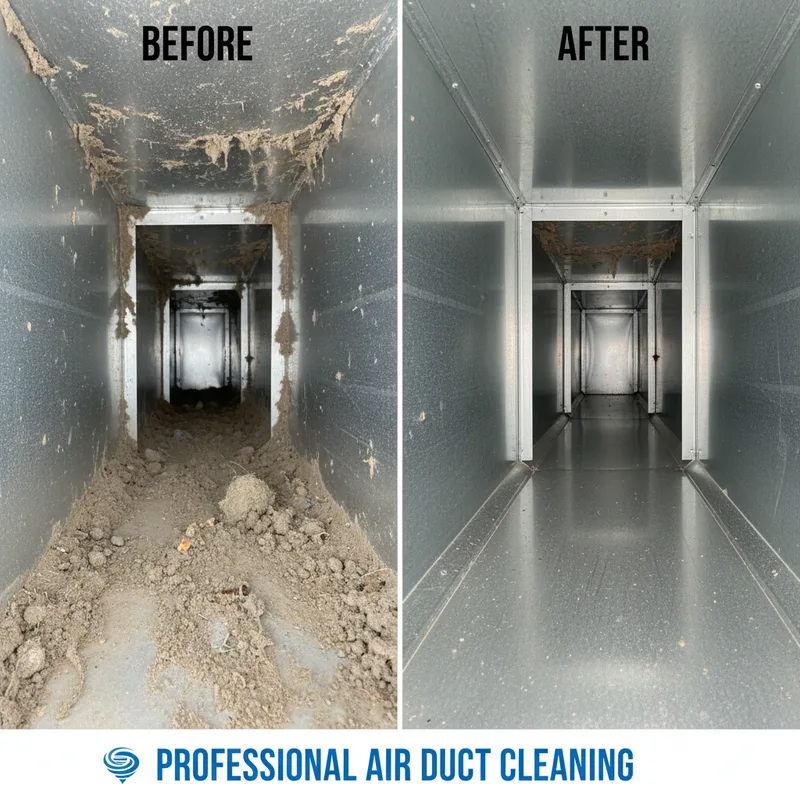
Duct cleaning removes dust, debris, and contaminants from inside your ducts. Duct repair fixes the physical structure of the ductwork itself -- leaks, disconnections, crushed sections, and corrosion damage.
Removes dust, mold, pet dander, and debris from inside the duct system. Your ducts stay physically intact -- we clean what is inside them. Learn about our duct cleaning service.
Fixes physical damage to the ductwork -- leaking joints, crushed flex duct, corroded metal, gaps at registers, insulation failures, and poor original installation. Without repair, conditioned air never reaches your rooms.
Many homes need both. We inspect your duct system free with job approval and tell you exactly what you need -- cleaning, repair, or both. If your ducts are leaking air, no amount of cleaning will fix the problem. The air escaping through damaged ductwork into your attic is money leaving your home every time the AC runs.
South Florida's extreme heat, year-round humidity, and salt air create duct damage that homes in other states rarely see. Here are the problems we repair every week.
The most common duct problem we find. Duct sections pull apart at the connections, dumping 100% of the conditioned air for that run into your attic or wall cavity. Your AC runs nonstop but the room stays warm.
"One bedroom just won't cool no matter what I set the thermostat to."
High Energy LossFlex duct is soft and pliable -- it crushes easily when attic items are stacked on it, when it sags between supports, or when a previous contractor ran it through a tight space without proper clearance. A crushed duct restricts airflow to nearly zero.
"The vent barely blows any air even though the AC is running full blast."
Severe Airflow RestrictionRats, raccoons and iguanas chew and tear through flex duct in the attic. Attic work creates accidental punctures. Aging duct material becomes brittle and cracks. Every hole is an air leak that costs you money and comfort. Animal-damaged flex ducts get replaced, not patched.
"I can see daylight through the ductwork in my attic."
Moderate Energy LossMiami's salt air corrodes galvanized sheet metal ductwork from the outside. Coastal homes in Miami Beach, Sunny Isles, Hollywood, and Hallandale Beach are especially vulnerable. Corroded ducts develop rust holes that leak conditioned air and allow attic contaminants into your air supply.
"There's rust flaking off the ducts in the attic."
Worsens Over TimeWhere the duct connects to the ceiling or wall register, a loose or disconnected boot leaks conditioned air into the wall cavity. You feel weak airflow at the vent even though the duct behind it has full pressure.
"I can feel air blowing around the edges of the vent, not through it."
Common in Older HomesWhen duct insulation deteriorates or gets wet, the temperature difference between the cold air inside and the hot attic outside causes condensation on the duct surface. That condensation leads to mold growth, water damage to ceilings, and massive energy loss because uninsulated ducts absorb heat.
"There are water stains on the ceiling near the AC vent."
Mold RiskWhen ducts are undersized for the AC system, static pressure builds up, the blower works harder, energy bills climb, and rooms don't cool properly. When ducts are oversized, air velocity drops too low to properly distribute conditioned air. Sizing issues are common in Florida homes where the original builder installed the cheapest system that passed inspection. We measure and correct duct sizing as part of our repair service.
"Some rooms are freezing and others are still warm -- I keep adjusting the thermostat."
Comfort + Efficiency IssueThe U.S. Department of Energy estimates that the average home loses 20 to 30 percent of conditioned air through duct leaks. In Miami, where your AC runs 10 to 12 months per year, that translates to hundreds of dollars per year on your FPL bill paying to cool your attic. Repairing duct leaks is one of the fastest ways to lower your energy bill without replacing any equipment.
The note we get from attics in Hollywood, Pembroke Pines and Kendall reads almost word for word: "air duct repair/replacement, animal-damaged flex ducts in the crawl space." Here is the honest answer, and where the crawl space actually is.
First, where it lives. Most South Florida homes sit on a slab, so there is no crawl space under the floor. The crawl space you are looking into is almost always the attic, or the tight space above a garage or closet air handler where the flex duct runs. In Emerald Hills and Hollywood Lakes (Hollywood, 33019 to 33021), Chapel Trail in Pembroke Pines (33028) and The Hammocks in Kendall, that attic is where we work.
Rats, raccoons and iguanas get into the attic through a soffit gap, a roof vent or an unsealed pipe penetration. Once inside, the flex duct is the softest thing up there. Rodents chew the jacket to reach the insulation for nesting, raccoons tear it open, iguanas nest against it, and a gap at the plenum or a loose collar gives them a head start. It got this far because nobody had been in the attic in years and the filter plan that came with the AC was never kept, so the first sign anyone noticed was the smell. Not sure whether that smell is a carcass, live rats or mold? Our five-minute AC smell test for a dead animal, rat or mold odor tells you which trade to call first.
A chewed-open run dumps conditioned air into a 140-degree attic, so the room at the end of that duct never cools and the AC runs longer to make up for it. You see it on the FPL bill before you ever see the damage. The same hole pulls humid attic air back into the system, the duct insulation gets wet, and that moisture lets mold and mildew grow. And every time the blower starts, the droppings, nesting material, fur and dander sitting inside that run ride the airflow into the bedrooms.
Flex duct that animals have chewed, torn or nested in gets replaced, not patched. A patch on a jacket that has been opened will not hold in Florida attic heat, and the inside of that run is contaminated. We cut the damaged section out back to sound duct on both ends and install new insulated flex duct, sized, supported and sealed at the collar. If the animals lived in a run for a season, the whole run goes. Runs they never reached are sealed and kept, so you do not pay to replace ducts that are still good. The free inspection tells you which runs are which, with photos, before any work starts.
Two things: sealing the entry points, and a maintenance plan that puts a technician in the attic once a year. A yearly AC maintenance visit catches a soffit gap, a loose plenum collar or the first chewed jacket while it is still a one-run fix, and a filter changed every 60 to 90 days keeps the return from pulling attic debris through the system. The entry points get sealed as part of the repair. The yearly visit is how they stay sealed.
Inspect every run and photograph the damage. Cut out and replace the animal-damaged flex ducts. Seal the plenum, collars and boots. Then clean the system downstream so nothing the animals left behind stays in the ducts you kept. Pressure-tested before we leave. The in-home inspection is free: call (305) 607-3244, book online, or start with a free air duct inspection and we come out the same day in most of Miami-Dade and Broward.
Every duct repair starts with a free diagnostic inspection. We never guess. We find the damage, show you, price it, then fix it.
Our licensed technician inspects every accessible duct run, connection, and register. We measure airflow at every supply vent and use pressure testing to pinpoint exactly where your system is losing air. We check the attic, crawl spaces, closets, and every vent in the home.
Free -- No Obligation to BookWe photograph every problem area and walk you through exactly what we found. You see the damage, understand why it matters, and get a written estimate with line items for each repair. No surprises, no hidden fees.
Transparent PricingDepending on the damage: we seal leaking joints with mastic sealant and metal-backed tape, repair or replace crushed flex duct sections, patch corroded metal ductwork, replace damaged insulation, and re-support sagging duct runs. We carry all parts and materials on our truck.
Same-Day Repairs AvailableAfter repairs, we pressure-test the duct system to confirm all leaks are sealed. We re-measure airflow at every supply vent and compare the numbers to pre-repair readings so you can see the improvement in real data.
Verified ResultsWe walk through the home with you, show before-and-after photos, verify you can feel the difference at every problem vent, and provide a written summary of all work performed. Documentation is available if you need it for insurance claims or home sale disclosures.
Insurance-Ready ReportsWe always try to repair first because it saves you money. But sometimes ductwork is too far gone. Here is how we determine which you need.
| Situation | Repair | Replace |
|---|---|---|
| One or two disconnected joints | ✓ | -- |
| Small holes or tears in flex duct | ✓ | -- |
| Loose register boot connections | ✓ | -- |
| Minor insulation damage on one run | ✓ | -- |
| Crushed flex duct (single section) | ✓ | -- |
| Widespread corrosion on metal ducts | -- | ✓ |
| Multiple crushed runs with insulation failure | -- | ✓ |
| Duct system 20+ years old with chronic leaks | -- | ✓ |
| Severely undersized ductwork for the AC system | -- | ✓ |
| Mold throughout duct interior (not surface-level) | -- | ✓ |
Not sure which you need? That is exactly what the free diagnostic determines. We always recommend the least expensive option that will solve the problem permanently.
Every duct repair job is different. Cost depends on the type of damage, how many sections are affected, and how accessible the ductwork is. Here is how our pricing works.
We inspect your entire duct system at no cost. You only pay if you approve the repair.
Line-item pricing for each repair. You see exactly what each fix costs before we start.
The price we quote is the price you pay. We never add charges after the work is done.
Want to understand duct cleaning pricing? See our air duct cleaning cost breakdown.
Not every HVAC company does duct repair. Most just sell new systems. We specialize in diagnosing and fixing the ductwork itself.
FL State Contracting License #CAC1817115. EPA 608 certified. Mechanical and journeyman licensed. Insured. Not a handyman with duct tape -- a licensed contractor with specialized duct repair tools and training.
Our trucks carry flex duct, mastic sealant, metal-backed tape, sheet metal patches, duct insulation, hanging straps, register boots, and connectors. Most repairs are completed the same day without a second visit.
We do not just seal and leave. Every repair is verified with airflow measurement at every vent and pressure testing of the duct system. You see the numbers before and after -- proof that the fix worked.
Over 1,000 homes served across Miami-Dade and Broward County since 2014. We have worked on every duct configuration, every material type, and every brand of HVAC system found in South Florida homes.
We photograph every damaged section before and after repair. You see exactly what was wrong and exactly what we did. Documentation is available for insurance claims, home inspections, and real estate transactions.
We always recommend repair over replacement when the repair will hold long-term. We do not upsell full duct replacement when a targeted repair solves the problem at a fraction of the cost.
Many homeowners combine duct repair with these services for the best results.
After repairing the physical ductwork, clean the interior to remove dust and debris that accumulated while ducts were leaking.
Learn More →For ducts with joint leaks that do not need physical repair, professional sealing eliminates air loss at every connection point.
Learn More →If your AC unit itself is also struggling, we diagnose and repair the equipment alongside the ductwork for a complete fix.
Learn More →"My master bedroom would not cool below 80 no matter what I did. They found a completely disconnected duct in the attic -- the air was blowing straight into the attic. Fixed it same day and the room was cool within an hour. Should have called months ago."
"Our FPL bill dropped $85 per month after they repaired three crushed flex duct runs in the attic. The ducts had been sitting under boxes from when we moved in. They showed me photos of the damage and the repairs. Very professional, very fair price."
"The home inspector flagged duct damage before our sale went through. These guys came out the next morning, photographed everything, repaired three sections, gave us documentation for the buyer, and the sale closed on time. Lifesavers."
Same-day duct repair service available in all cities listed below. We service homes, condos, and commercial properties.
Don't see your city? Call (305) 607-3244 -- we likely serve your area. View all HVAC service areas.
Free diagnostic inspection. We find the damage, photograph it, price it, then fix it. Same-day duct repair across Miami-Dade and Broward County. Licensed. Insured. BBB A+ Rated.
