

Mold in AC? Who to Call in Miami, and in a Condo, Whose Job Is It?
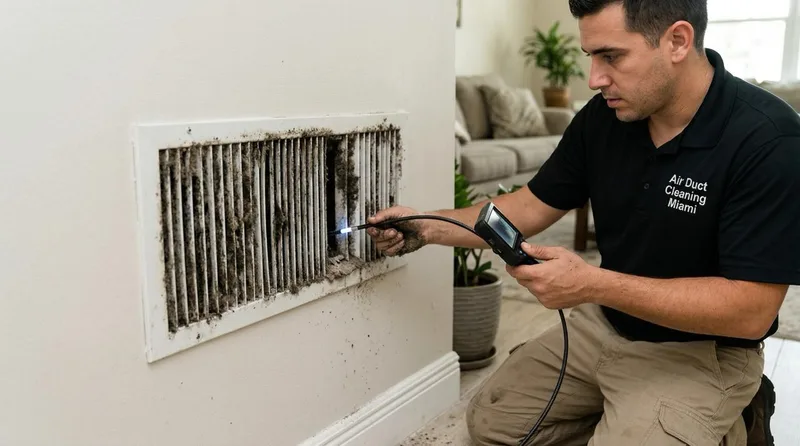
You see black specks on the vent, the unit smells like a wet towel when it kicks on, or someone at home says the AC is making their allergies worse. Then you pick up your phone and type some version of “mold in AC who to call Miami.” You are not the only one: condo owners from Brickell up the coast have been asking us the same thing all month, and most of them add a second question, which is whether the problem is theirs or the building’s.
Here is the direct answer. If the growth is on the AC itself (the coil, the drain pan, the air handler cabinet or inside the ducts), call a licensed HVAC contractor. If it is on drywall, ceilings or a large area of your home, call a mold assessor. In a condo, check your declaration and ask the association’s manager who owns which part.
Key Takeaways
- Mold on the coil, in the drain pan or in the duct runs is HVAC work. Our Florida licence CAC1817115 covers mold remediation inside the HVAC system.
- Mold on walls, ceilings, cabinets or across a big area is a job for a mold assessor first, then a remediator.
- In most condos the air handler, coil, drain pan and your own ducts sit inside your unit; shared risers usually do not. Your declaration and your manager decide.
- Most buildings want a certificate of insurance (COI) before any contractor goes up. We send ours to the manager before the visit.
- Breathing or allergy symptoms are a question for your doctor. What we do is clean what your system circulates.
Where Is the Mold? The Answer Picks the Trade
Before you call anybody, open the closet where your indoor unit lives and look: in most Miami and Miami Beach condos a hallway or utility closet, in newer towers a fan coil unit behind a panel. Check the vent covers, the filter slot and the drain pan. Do not pull the coil apart, and do not spray anything on it.
| Where you see it | What it usually means | Who you call |
|---|---|---|
| Black or green specks on the vent covers and the ceiling right around them | Cold, damp air meeting warm room air, often with dust from the system | A licensed HVAC contractor to check the coil and ducts behind it |
| Slime or dark growth on the coil, standing water in the drain pan | A wet coil and a slow or blocked drain line | A licensed HVAC contractor: coil cleaning and a drain clear |
| Growth on the insulation inside the air handler or on the first few feet of duct | Moisture sitting inside the system for weeks or months | A licensed HVAC contractor: anti-mold AC cleaning or HVAC mold remediation |
| Stains or growth on drywall, the ceiling of the closet, baseboards or cabinets | Water in the building materials, from your drain pan or a leak above | A mold assessor first; tell your manager the same day |
| Musty smell, nothing visible anywhere | Often the coil or drain pan, sometimes the ducts | A licensed HVAC contractor for a look inside (why an AC smells musty) |
Some calls need both trades: the drain pan overflowed, the coil grew mold, and the water went into the closet wall. Then the AC work and the wall work are two scopes, and it helps to know that before anyone quotes you.
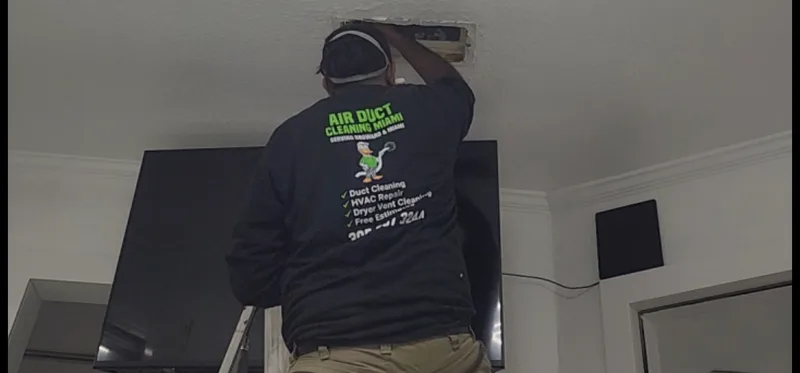
Not sure which row you are in?
Send us a phone photo of the vent or the drain pan, or tell us what you see. If it is ours, the inspection is free and we will say so on the call.
Call (305) 607-3244 →In a Condo, Is the Mold Yours or the Association’s?
We are an HVAC contractor, not your association’s lawyer, so we will not tell you who is responsible. We can tell you what is usually physically inside your unit and what usually is not, so you know what to ask.
Usually inside your unit
- The air handler or fan coil unit in your closet or behind your panel.
- The evaporator coil and the drain pan under it.
- The condensate drain line from your pan to the point where it joins the building line.
- The supply and return duct runs above your ceiling that serve only your rooms.
- The vent covers, the filter and the thermostat.
Usually part of the building
- The shared condensate riser and main drain stacks.
- Chilled water or condenser water loops in buildings that have them.
- Corridor air, make-up air and bathroom exhaust shafts.
- Anything behind a wall you share with a neighbour or the hallway.
Every building is written differently, so before you book anybody, read the maintenance section of your condo declaration and rules, and email the association’s manager with photos: “Is this equipment mine to service, and what do you need from my contractor?” You will usually get a list back: a COI, contractor hours, a service elevator booking.
If the growth is on the ceiling or wall and you are not sure where the water came from, tell the manager first. A drip from the unit above and a drip from your own drain pan look the same from below.
Why Does Mold Grow in a Miami AC in the First Place?
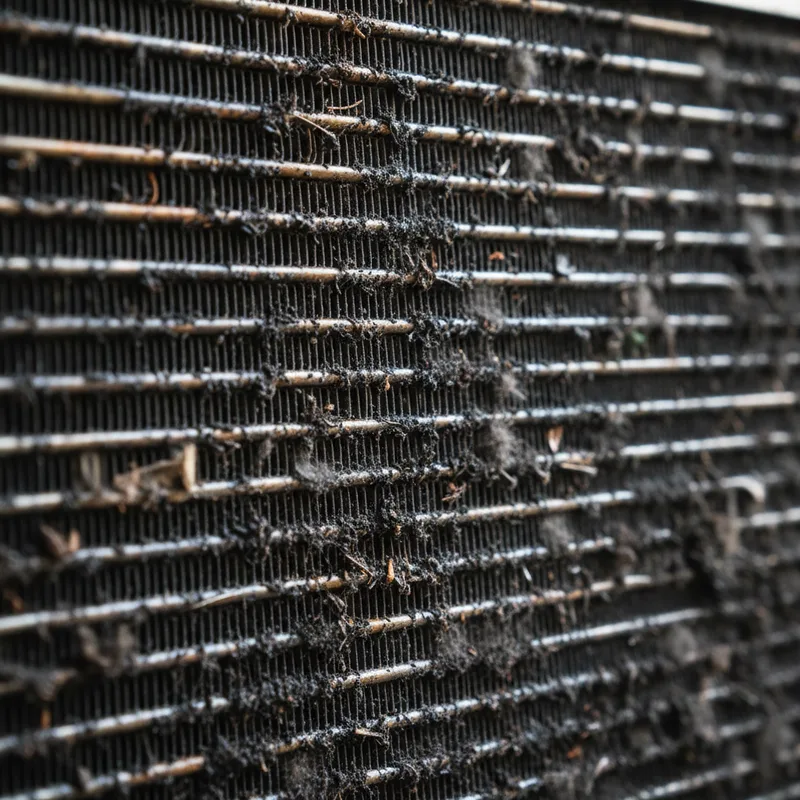
The cause is almost never bad luck. A Miami AC pulls water out of the air all day, off the coil, into the pan and down the drain line. When that path slows, the water sits, and standing water in a dark closet is where mold starts.
What slows it down is usually nobody being on it. The filter goes months without a change, so dust coats the coil. The drain line never gets flushed, so algae narrows it. The unit is set high and left while the owner is away, and humidity climbs inside the ducts. It is what happens when there is no plan.
What It Costs You If It Keeps Running
A coil coated in growth and dust moves less air, so the system runs longer and your power bill climbs. A drain pan that keeps filling trips the float switch and your AC shuts off on a Saturday in August. If the switch fails, the pan overflows, and in a condo that water goes to the unit below: water damage to your floor, your neighbour’s ceiling and a conversation with the association nobody wants.
Whatever grows on the coil and in the pan sits in the path of all the air your system moves. If someone at home has allergy or breathing symptoms, talk to your doctor. What we do is physically clean the coil, the pan, the cabinet and the ducts so the system stops circulating what has built up in it.
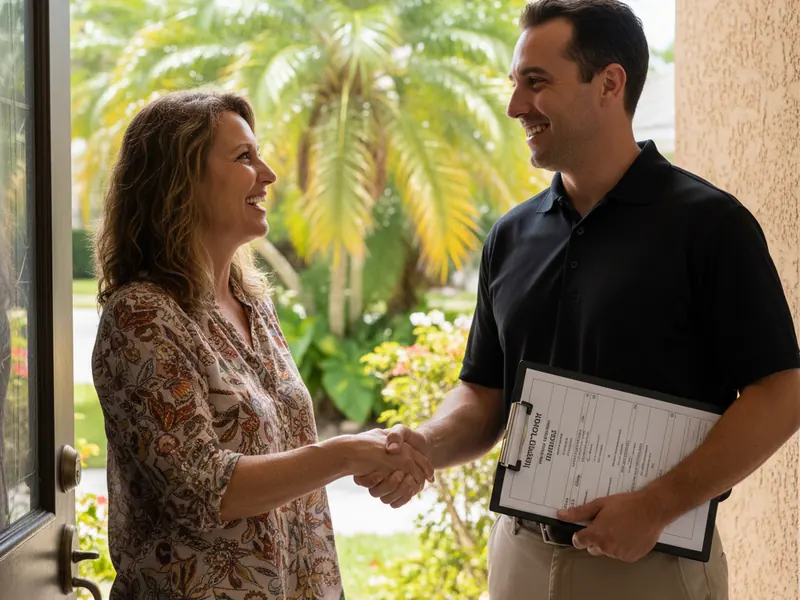
Ask for the free AC inspection special.
Coil, drain pan, cabinet and the first runs of duct, with photos you can forward to your manager. See what the free AC inspection covers.
Call (305) 607-3244 →How Do You Keep It From Coming Back?
Every cause above is preventable. Three habits do most of the work in a South Florida condo.
A filter on a schedule. Every 30 to 60 days in summer, sooner with pets. A clean filter keeps dust off the coil, and a clean coil drains properly.
The drain line flushed and the pan checked once a year, at minimum. This is the single cheapest thing you can do to avoid the call to the unit below.
A setting for when you are away. Off or very high for months lets humidity climb inside the ducts. Ask us what fits your unit before you leave for the season.
Our AC maintenance plan puts all three on a calendar, with the building’s paperwork handled every visit, so the mold question becomes a line on a checklist instead of a call you did not plan for.
What We Do When the Answer Is “Call Us”
Before the visit: we send our certificate of insurance to your building manager, with the association listed the way they ask, and book around the building’s contractor hours and service elevator.
At the unit: we open the air handler, check the coil, pan and drain line, and run a camera into the duct runs. You get photos you can send to your manager.
The work follows the finding. Coil cleaning and a drain clear if the growth is at the coil and pan. Duct cleaning if it has reached the runs. Anti-mold cleaning and a sanitizing treatment on the clean surfaces to control mold and mildew. And because our licence covers HVAC mold remediation inside the system, the crew that finds it is the crew that finishes it. If it is on the walls and not in the AC, we tell you that too.
Serving Condos in Miami, Miami Beach, Hallandale Beach and Hollywood
Each part of the coast has its own habits. In Brickell (33131), many of the towers along Brickell Avenue run fan coil units or water-source units behind a panel, tied into a building water loop, so ask where your equipment ends and the building’s begins. In Miami Beach, from North Beach and the 33141 blocks around Normandy Isles down through Mid Beach and South Beach, salt air and older buildings mean coils that corrode and drain lines that clog faster. In Hallandale Beach (33009), from Three Islands to the Diplomat area, many owners leave for part of the year, so the away setting matters most. In Hollywood (33020), from Hollywood Beach back to Emerald Hills, we see high-rise fan coils and older houses the same afternoon.
Same licensed crew, same COI, same free inspection across Miami, Miami Beach, Hallandale Beach and Hollywood, plus the rest of Miami-Dade and Broward. Our office is on West Pembroke Road in Hallandale Beach, so the coast between Brickell and Hollywood is our home ground.
Frequently Asked Questions
Who do I call for mold in my AC in Miami?
A licensed HVAC contractor when the mold is on the coil, the drain pan, the air handler or inside the ducts. A mold assessor when it is on walls, ceilings or a large area. If you cannot tell, start with the free AC inspection.
In a condo, is mold in the AC my job or the association’s?
It depends on your building’s documents, so check the maintenance section of your condo declaration and ask the association’s manager with photos. In most condos the air handler, coil, drain pan and the ducts serving only your unit sit inside the unit, while shared risers and building systems do not, but your documents decide.
Does my building need a COI from the AC contractor?
Most Miami and Miami Beach condo buildings ask for a certificate of insurance before a contractor works in a unit. We send ours to your manager, listing the association the way they ask, before the visit.
Should I test for mold before I call anyone?
If the growth is visible on the coil or in the drain pan, you already know where it is. Testing helps more when you smell it but cannot see it, or when it is on the walls. A mold assessor handles testing; we handle the AC.
Can I spray bleach or a cleaner on the coil myself?
We do not recommend it. Household sprays can damage the coil and the pan, they do not reach the ducts, and whatever you spray gets blown into your rooms when the unit starts.
My AC seems to make my allergies worse. Is it the mold?
That is a question for your doctor. What we can tell you is what is inside the system: dust, moisture and any growth on the coil, the pan and the ducts. We physically clean those parts so the system stops circulating what has built up in it.
How do I keep mold from coming back in my condo AC?
Change the filter every 30 to 60 days in summer, have the drain line flushed and the pan checked at least once a year, and use a proper setting when you are away. Our maintenance plan schedules all three.
The Bottom Line From a Licensed Miami Contractor
Look at where the mold is. On the AC, it is HVAC work, and our licence CAC1817115 covers it. On the walls, start with a mold assessor. In a condo, your declaration and your manager decide whose equipment it is. Call (305) 607-3244 and ask for the free AC inspection special.

Think there is mold in your AC?
Free inspection, photos for your manager, COI sent to your building, and an honest answer about which trade you need.
Call (305) 607-3244 →