

AC Off After a Hurricane? Why Your Air Ducts Grow Mold in 48 Hours (Miami-Dade & Broward)
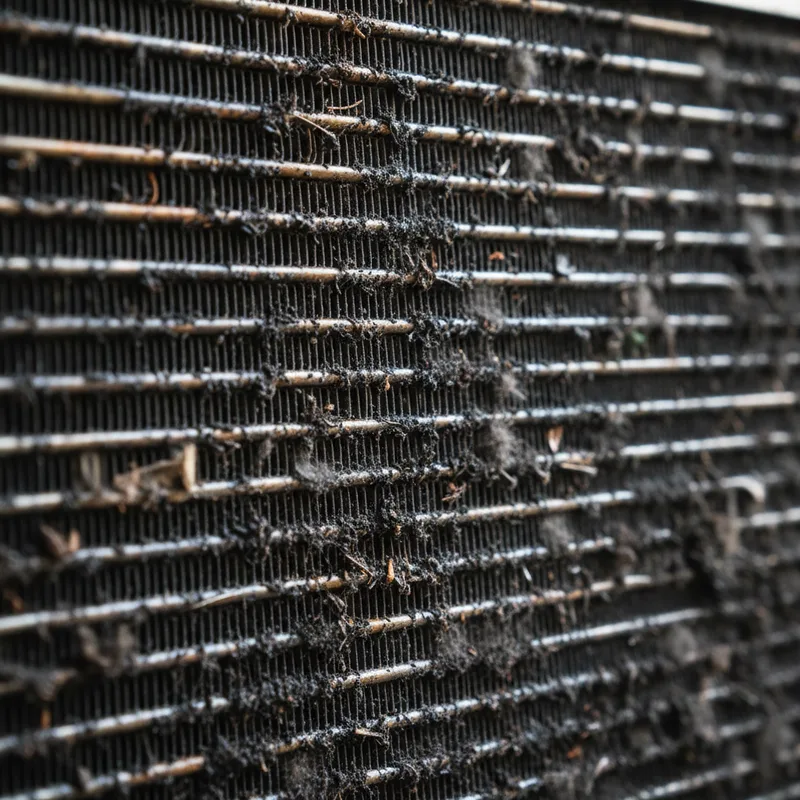
Mold doesn’t need standing water — humid, stagnant air sitting in a shut-down system is enough.
Quick answer: When a hurricane knocks out power and your AC shuts off, the humid air trapped inside a sealed South Florida home can grow mold inside the ductwork in as little as 24 to 48 hours. The fix isn’t running the AC harder when the power comes back — it’s having your ducts inspected before you do, so you’re not blowing mold spores through every room. Air Duct Cleaning Miami offers a free post-storm duct inspection across Miami-Dade and Broward. Call (305) 607-3244.
You lost power in the storm, the AC’s been off for two days, and now the lights are back on. Your first move is probably the thermostat. In Hallandale Beach, Hollywood, and Aventura, that’s the moment we get the call — not during the storm, but the week after, when the house starts to smell.
Here’s the direct answer: in a sealed, humid South Florida home, mold can start colonizing inside your air ducts and air handler in roughly 24 to 48 hours with no airflow and no dehumidification running. It doesn’t need visible standing water to start — just warm, stagnant, humid air sitting inside dark metal or fiberglass ductwork, which is exactly what a shut-down AC leaves behind. The mold doesn’t stay put once you flip the system back on. It gets pulled through the return, spun through the blower, and pushed out of every supply vent in the house.
In this post we’ll walk through why this happens so fast in Miami-Dade and Broward specifically, what a post-storm restart should actually look like, when insurance might be involved, and how to tell if your ducts already need attention before you turn the AC back on.
Why 48 Hours? It’s How South Florida Homes Are Built
This isn’t a scare number pulled from nowhere — it’s how our climate and our construction work together against you the moment the AC stops.
South Florida homes don’t have basements or crawlspaces. Your air handler almost always sits in a closet inside the living space, or in the garage, with return grilles pulling air straight out of your hallway or bedroom. There’s no buffer space for humid air to sit in before it reaches your ductwork — the moment the AC goes off, the same air in your living room becomes the air trapped in your supply and return ducts.
Add hurricane conditions on top of that. Windows are boarded or shuttered. Doors stay shut. The house gets sealed up tight, on purpose, for the storm — and that’s the correct move for wind safety. But it also means zero fresh-air exchange while the humidity outside is running well above 85%, sometimes for days. With the compressor off, nothing is pulling moisture out of the air. It just accumulates, inside a dark, enclosed metal box that never sees sunlight. That’s the textbook environment mold needs: moisture, warmth, and stillness.
We see the same pattern every hurricane season, from Kendall to Coral Gables to Pembroke Pines: multi-day FPL outages after a direct hit are the normal case here, not the exception. FPL’s own storm restoration guidance tells customers to expect extended outages after major storms, particularly in harder-hit or more rural service areas. Two or three days without airflow is common. That’s already inside the mold-growth window.
Condo vs. Single-Family: The Restart Looks Different
If you’re in a Sunny Isles Beach or Hallandale Beach high-rise, your AC situation after a storm isn’t the same as a single-family home in Weston or Pembroke Pines, and it’s worth knowing the difference before you touch anything.
Most condo towers run on individual heat pump units in each unit, but the building’s common systems, generators, and sometimes even unit power restoration are controlled by the HOA or building management, not you. We’ve walked into towers along the coast where residents’ units came back online hours or days after building power was technically restored, because the association staged the restart floor by floor. That delay adds directly to the number of hours your specific unit’s ducts sat without airflow — worth asking your building manager about if you’re not sure.
In a single-family home in Davie, Plantation, or Miramar, you control the restart yourself. That’s actually the riskier moment in some ways, because there’s no building staff pacing anything — the second the power comes back, most people go straight to the thermostat.
What to Do Before You Restart the AC
The instinct after days without air conditioning is to crank the system the moment the lights come back on. That’s the wrong first move if the power was out for more than a day.
Before you touch the thermostat, walk through and check for these signs, which tell you the ducts need a look before you run air through the house:
- A musty, “wet cat” smell near any supply vent, even faintly, before the system is even running
- Visible dark or greenish spotting around vent covers or on the ceiling near a duct run
- A noticeably muskier smell than usual the first time the AC does kick on
- Any sign the air handler closet itself got damp, even without a leak
If you don’t see or smell anything, that’s a good sign, but it isn’t proof. Mold growth inside the ductwork itself often isn’t visible or smellable from the room until it’s well established — by the time you can smell it every time the AC kicks on, it’s usually had a head start. That’s the reason to get eyes inside the system, not just in the room.
This is also where we won’t pretend there’s a clean DIY fix. Wiping down a vent cover with bleach doesn’t touch what’s actually growing inside 100+ feet of ductwork you can’t see or reach. Full mold remediation inside HVAC systems requires containment, PPE, and specialized equipment — that’s licensed work, not a weekend project, and doing it wrong (like spraying bleach into ductwork) can push spores deeper into the system instead of removing them.
Salt Air Makes the Coast a Different Case
If you’re within a few miles of the water — Hollywood Beach, Miami Beach, Hallandale Beach — there’s a second factor working against your system after any extended shutdown. Salt-laden coastal air accelerates corrosion on AC coils and metal components faster than it does further inland in places like Doral or Kendall. A few extra days of stagnant, salty humid air sitting on components that are already more corrosion-prone isn’t ideal. It’s not the main driver of duct mold, but it’s one more reason coastal homeowners shouldn’t wait to have a system checked after a storm.
Why a Free Estimate Beats Guessing
The longer a homeowner waits to have ducts checked after an extended outage, the more room mold has to move past the ductwork itself and into the surrounding drywall or insulation, where it’s a bigger, more expensive job to remove. That’s the pattern we plan around every hurricane season across Miami-Dade and Broward — not to alarm anyone, but because the only way to know which situation you’re actually in is to have someone look, not to guess based on smell alone.
We’re a licensed Florida HVAC contractor, #CAC1817115, BBB A+ accredited, and we’ve worked on more than 1,000 homes across Miami-Dade and Broward. During a free inspection, we get a camera into the ductwork and the air handler and show you exactly what our tech is seeing on the screen before you decide anything — not a sales pitch, just the actual condition of the system.
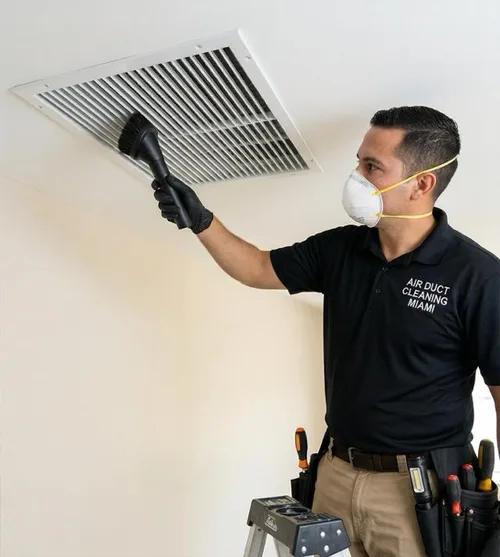
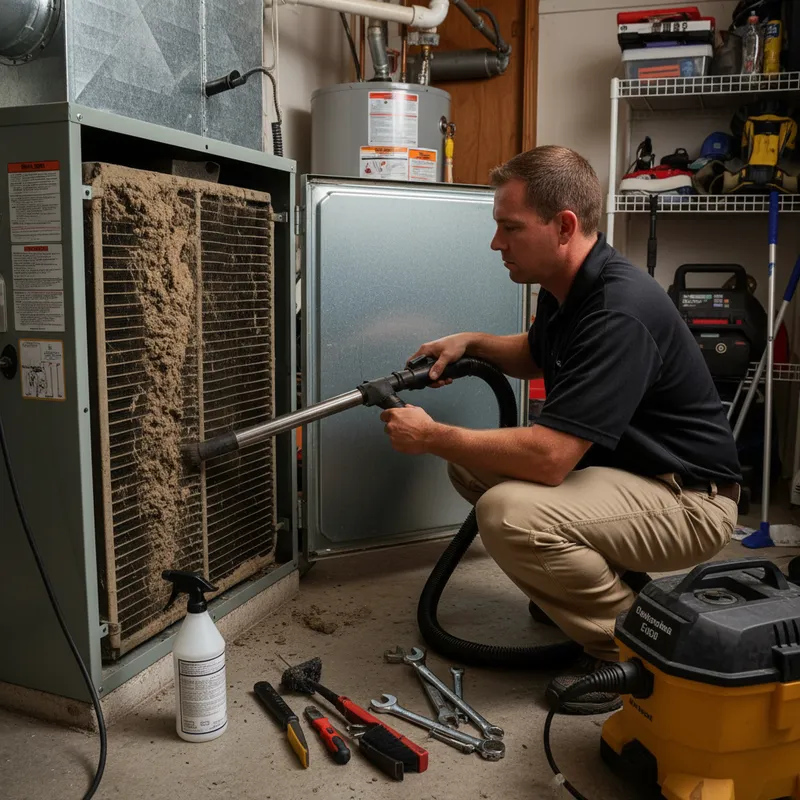
That’s a licensed HVAC crew with containment equipment doing post-storm duct and mold work the way it’s supposed to be done — camera-verified, in a home you actually live in, not a side job.
Power Just Came Back On? Don’t Run the AC Yet.
Get a free camera inspection of your ducts and air handler before you turn the system back on. Same-day appointments available across Miami-Dade and Broward.
Book a Free Post-Storm Duct Inspection →Can a Generator Prevent This?
If you’re running a generator during the outage and can keep the AC compressor cycling, you’re removing the main condition mold needs — stagnant humid air. A properly sized generator running the AC (not just lights and a fridge) keeps dehumidification happening the whole time, which is the single biggest thing that stops duct mold from starting in the first place.
The catch is sizing. Central AC systems draw a lot of starting current, and a small portable generator often can’t handle the compressor’s startup load even if it can handle the running load. If you’re generator-powering your AC during outages, that’s worth confirming with an electrician or your generator’s spec sheet before the next storm — not something to find out for the first time mid-outage.
Signs of Mold in Your Air Ducts to Watch For After Any Outage
Even outside hurricane season, any extended AC shutdown — a breaker issue, a compressor failure, a vacation with the system off — can start the same clock. If you want the fuller list of what to look and smell for, we cover it in depth in signs of mold in your air ducts, including what’s a minor issue versus what needs same-day attention.
What Mold Remediation Actually Costs
Cost is usually the first question once someone suspects mold, and it’s a fair one to ask before you commit to anything. It depends heavily on how far the mold has spread — duct-only versus duct-plus-drywall are very different jobs. We break down real ranges, what drives the number up or down, and what a fair quote looks like in air duct mold removal cost in Miami.
Get Ahead of It Next Storm
The best time to deal with post-storm duct mold is before the storm even hits. If your AC, ductwork, and attic space are in good shape heading into hurricane season, an outage is far less likely to turn into a mold problem at all. We cover the full pre-season checklist — from securing outdoor equipment to a pre-storm system check — in prep your AC before hurricane season.
See If Your Home Qualifies for a Free Inspection
Enter your ZIP to check availability across Miami-Dade and Broward.
Check My ZIP Code →Frequently Asked Questions
In a sealed South Florida home, mold can begin colonizing inside the ductwork and air handler in as little as 24 to 48 hours once airflow and dehumidification stop, especially during summer or hurricane-season humidity. The exact timeline depends on how sealed the house is and how humid it is outside, but two days without air movement is enough to create the right conditions.
Not necessarily, but water contact isn’t the only trigger — an extended power outage alone can be enough, since it’s the loss of airflow and dehumidification that lets mold start, not standing water. If your AC was off for more than a day or two, a free inspection is the fastest way to know either way, rather than guessing from the outside.
It depends on your specific policy and what caused the outage and any related water intrusion, so we’re not able to tell you what’s covered from a blog post. Review your policy’s mold and water-damage provisions and talk to your adjuster directly about your specific situation before assuming either way.
Running your AC on a properly sized generator keeps the compressor cycling and the air dehumidifying, which is the main thing that prevents duct mold during an outage. The catch is that central AC systems need a generator sized for the compressor’s startup load, not just its running load — worth confirming with an electrician before the next storm rather than during one.
The Bottom Line From a Licensed Miami Contractor
Storm season in Miami-Dade and Broward isn’t going anywhere, and neither is the humidity that makes a shut-down AC risky within two days. The fastest, cheapest fix is checking before you restart, not remediating after you’ve been breathing it for a week. If your power was out for more than a day, that’s worth a free look before the system goes back on.
Air Duct Cleaning Miami is a licensed Florida HVAC contractor, #CAC1817115, BBB A+ accredited, serving Hallandale Beach, Hollywood, Aventura, Miami Beach, Sunny Isles Beach, Fort Lauderdale, Pembroke Pines, Miami, Miramar, Davie, Weston, Plantation, Sunrise, Hialeah, Doral, Coral Gables, Kendall, North Miami Beach, and the rest of Miami-Dade and Broward County. See our full mold remediation service areas we cover, or start with Air Duct Cleaning Miami’s free estimate to get a same-day inspection scheduled. Call (305) 607-3244.
Read Next
- Preparing your AC for Miami hurricane season — the pre-storm checklist that prevents this
- Signs of mold in your Miami air ducts — what to look and smell for
- Air duct mold removal cost in Miami — real ranges and what drives them
- Why your AC smells musty in Miami — the smell most homeowners notice first