

When My Dryer Takes Two Cycles and the Laundry Room Smells Like Burning: What Miami Homeowners Must Know About Dryer Vent Fire Risk
Your dryer is taking two cycles to finish one load. The laundry room smells faintly like something is burning. These are not minor annoyances. They are the two clearest warning signs that your dryer vent fire risk in Miami has crossed from inconvenience into genuine danger. According to the National Fire Protection Association (NFPA), clogged dryer vents cause approximately 2,900 house fires every year in the United States — and the #1 cause is not a faulty appliance or an electrical problem. It is simply lint that nobody cleaned out of the vent line. In Miami, where year-round humidity makes lint stick and compact faster than in any northern city, that risk is higher and builds faster than most homeowners realize. This guide covers why your dryer vent is a fire hazard, what the warning signs mean, why DIY fixes fall short, and exactly what a licensed technician does to make your home safe.
We are licensed Florida HVAC contractor #CAC1817115, BBB A+ accredited, and we have cleaned dryer vents in more than 1,000 South Florida homes.
We see this problem every week in Brickell condos, Doral single-family homes, Coral Gables estates, and Hallandale Beach high-rises. The pattern is always the same: the warning signs were present for months, and the homeowner did not know what they meant. After reading this, you will.
Why Dryer Vent Fire Risk Is Higher in Miami Than Anywhere Else
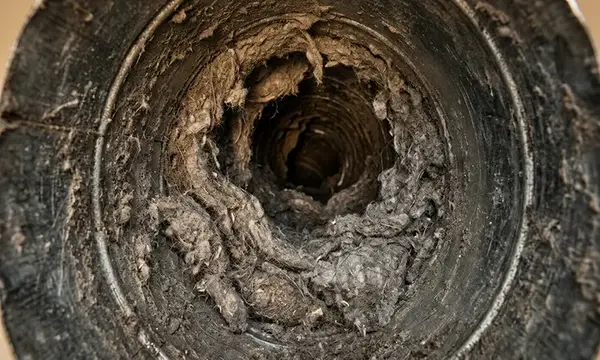
The mechanics of a dryer fire are simple. Lint is highly flammable. Every load of laundry produces lint. The lint trap catches roughly 75% of it. The remaining 25% travels with the hot exhaust air through the vent pipe and gradually coats the interior walls. Over time, that coating thickens into a dense, compressed mass. When the vent becomes restricted enough, the dryer cannot exhaust heat properly. The internal temperature climbs. The lint gets hotter. Eventually a spark from the heating element finds the lint, and you have a fire inside your walls.
What makes Miami especially dangerous is our climate. Three factors stack on top of each other here that do not exist in most American cities:
Factor 1: Humidity Compacts Lint into a Dense Mass
Miami's average relative humidity runs around 73%. During the June through October rainy season, it spikes above 85% for weeks at a time. That moisture mixes with lint as the hot exhaust air moves through the vent pipe. Wet lint is sticky lint. It adheres to pipe walls, clumps together, and compresses into layers that dry lint in arid climates simply does not form. A Miami dryer vent accumulates dangerous blockage in roughly half the time it would take in Phoenix or Denver.
Factor 2: Condos and High-Rises Have Longer Vent Runs
In a typical single-family home, the dryer vent might travel 8 to 12 feet before exiting the exterior wall. In a Miami condo or high-rise — Brickell, Aventura, Sunny Isles, Bal Harbour, Edgewater — the vent run is often 20 to 30 feet with multiple 90-degree turns through walls and ceilings. Every additional foot of vent pipe is another surface where lint can accumulate. Every turn is a spot where lint collects instead of passing through. Long, winding condo vent runs clog faster, clog more completely, and are impossible to clean without commercial-grade equipment. Learn more about the specific warning signs of a clogged dryer vent in Miami condos and homes.
Factor 3: Dryers Run 365 Days a Year Here
In northern climates, many households line-dry clothes outdoors during summer. In Miami, the combination of humidity and daily afternoon rain showers makes outdoor drying impractical for most of the year. Your dryer runs every week, year-round, producing lint 12 months a year instead of the 8 or 9 months a typical northern household uses it. That is 33% to 50% more lint production annually.
⚠ If You Smell Burning Right Now
Stop the dryer immediately. Unplug it from the wall outlet. Do not use it again until a licensed technician inspects and cleans the vent. A burning smell means lint inside the vent is hot enough to scorch. Call (305) 607-3244 — we offer same-day service across Miami-Dade and Broward County.
6 Warning Signs Your Dryer Vent Is a Fire Hazard Right Now
Your dryer gives you clear signals before a fire occurs. Most homeowners miss them because they look like performance issues, not safety emergencies. Here is what each signal means.
1. Clothes Take More Than One Cycle to Dry
This is the most common early warning sign. Your dryer finished that load of towels in 45 minutes two years ago. Now it takes 80 minutes. Or you run two full cycles. The vent is restricted. Hot, moist air cannot escape at the correct rate, so your clothes sit in humid air instead of drying. The dryer compensates by running longer and hotter. That extra heat is what brings the lint inside the vent closer to 480 degrees Fahrenheit — its ignition point.
2. The Laundry Room Feels Like a Sauna While the Dryer Runs
When the vent is clear, exhaust heat exits the building. When it is blocked, that heat backs up into the room. If your laundry room is noticeably hot and humid while the dryer runs, the exhaust is not going where it should. You are essentially heating your laundry room with a restricted exhaust system, and the dryer is operating above its designed temperature range.
3. You Smell Something Burning
This is the emergency signal. Lint inside the vent is scorching. Stop the dryer, unplug it, and call a licensed technician before using it again. Do not dismiss this as "the clothes smelling a bit warm" or "dryer sheets burning off." Burning lint smells distinct and acrid. Trust your nose.
4. The Top of the Dryer Is Hot Enough to Burn Your Hand
Touch the top of your dryer during a cycle. Warm is normal. If you cannot comfortably rest your palm on it, the dryer is overheating. Heat that should leave through the vent pipe has nowhere to go and is radiating through the cabinet instead. Overheating also stresses the dryer's motor, heating element, and thermal fuse — accelerating the mechanical failures that start dryer fires even without lint ignition.
5. The Exterior Vent Flap Barely Moves
Find where your dryer vent exits the building. Start the dryer and go check. The flap should open fully, pushed by strong, steady airflow. You should feel a rush of warm air against your hand. If the flap barely cracks open, if the airflow feels weak, or if you see lint accumulated around the opening, the vent line is obstructed. You need professional cleaning.
6. You Cannot Remember the Last Time the Vent Was Cleaned
If you cannot remember — or if the answer is "never" — that is a warning sign by itself. For Miami homes, annual professional cleaning is the minimum safe interval. For condos with long vent runs, every 6 to 8 months is better. The NFPA and the U.S. Consumer Product Safety Commission both recommend annual professional dryer vent cleaning. If you are behind, you are running a fire risk right now.
🔥 Is Your Dryer a Fire Hazard Right Now?
We inspect and clean dryer vents across Miami-Dade and Broward. Same-day service available. Licensed #CAC1817115 • BBB A+ • 1,000+ homes served.
☎ (305) 607-3244 Schedule Dryer Vent Cleaning →Why DIY Dryer Vent Cleaning Creates More Risk Than It Solves
A hardware store brush kit costs about $25. It comes with a 12-foot flexible rod and a round brush. It feels like a solution. It is not — and using it incorrectly can make the problem worse.
Here is what the kit cannot do. It cannot navigate multiple 90-degree turns without detaching inside the vent line. It cannot scrub compacted, humidity-bonded lint off the walls of a metal duct. It does not have enough reach for a 25-foot condo vent run. And critically, it cannot tell you whether the lint has been pushed deeper into the vent or actually removed. We have cleaned dozens of Miami homes where homeowners used a brush kit and thought they were done — only to find a dense compacted plug of lint 15 feet into the vent, pushed further in by the brush, creating an even worse obstruction and a higher fire risk than before they started.
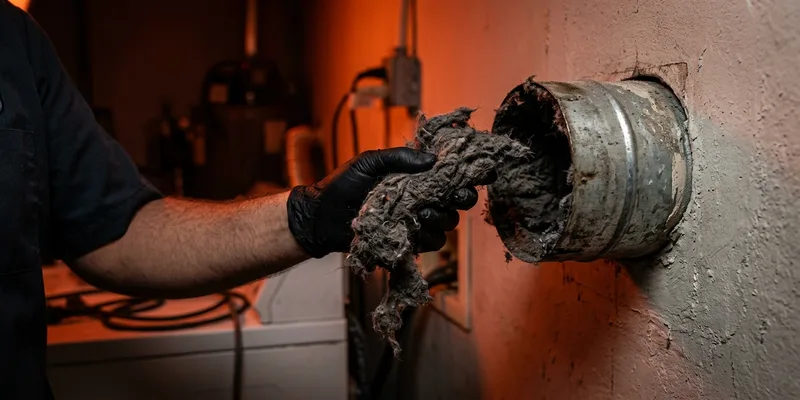
DIY cleaning is appropriate for one thing: the first 6 inches behind the dryer's exhaust hose connection. Beyond that, you need commercial-grade rotary brush equipment with vacuum extraction. That equipment physically scrubs the full interior of the vent pipe, captures the dislodged lint in a commercial vacuum so it does not blow back into the room, and reaches every foot and every bend in the line from dryer to exterior. The difference in what comes out of a professionally cleaned vent versus what a brush kit removes is startling. We routinely show customers before-and-after photos. The lint removed professionally looks like something out of a fire safety textbook — dense gray bricks of compacted fiber that a $25 kit could not have touched.
For context on what professional service involves and costs, see our complete guide to dryer vent cleaning cost in Miami. Live in Broward? See what Fort Lauderdale homeowners miss about dryer vent fires.
The Insurance Risk Nobody Talks About
Most homeowners assume their insurance covers accidental fires. That assumption may be wrong if the fire starts in a dryer vent that was never cleaned.
Insurance adjusters investigate dryer fires. They check the dryer's maintenance history. If the investigation reveals that the vent had never been professionally cleaned, or had not been cleaned in multiple years, the adjuster may classify the fire as the result of negligent maintenance rather than an unforeseeable accident. Homeowner's insurance policies contain exclusions for damage caused by failure to perform routine upkeep. A denied or reduced dryer fire claim can leave you paying tens of thousands of dollars in property damage out of pocket.
Annual professional cleaning gives you a documented maintenance record. It demonstrates due diligence and protects your coverage if the worst ever happens. For most Miami homes and condos, that annual cleaning costs between $100 and $170 — a small price against a potentially six-figure claim denial. Air Duct Cleaning Miami provides a service record with every cleaning that you can keep on file for insurance documentation.
Get a Free Dryer Vent Inspection Estimate
Enter your ZIP code below. We serve all of Miami-Dade and Broward County. Same-day appointments available — no obligation to book.
What a Licensed Technician Does That Changes Everything
When our technician arrives at your Doral home or your Pembroke Pines condo, here is what the professional cleaning process looks like:
- Full vent line assessment — We trace the vent run from the dryer connection to the exterior vent cap. For condo and high-rise installations, we identify every turn, every penetration through walls or ceilings, and the total length of the run. This matters because a 25-foot vent with three bends requires different equipment settings than a straight 10-foot residential run.
- Disconnect and inspect the exhaust hose — We check the flex hose connecting the dryer to the wall duct. Crushed, kinked, or corrugated plastic hoses are fire hazards independent of lint buildup. If the hose is unsafe, we note it and explain the replacement options. Rigid or semi-rigid metal duct is the code-compliant standard for a reason.
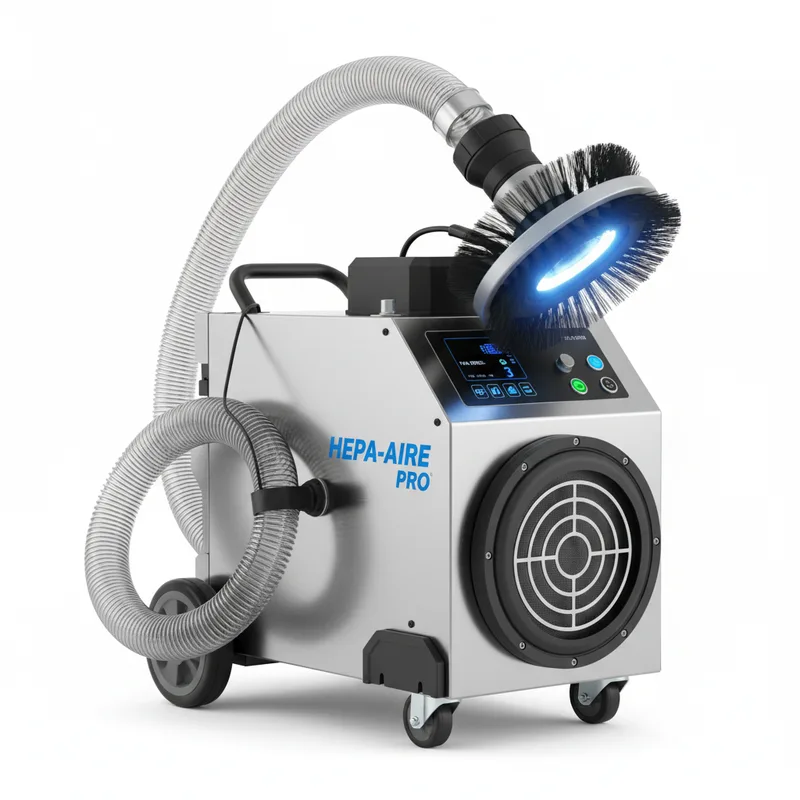
- Commercial rotary brush cleaning with vacuum extraction — This is the step that matters most. A high-speed rotary brush system is fed through the full length of the vent pipe, scrubbing compacted lint from the interior walls. A commercial vacuum captures every bit of dislodged lint simultaneously, so nothing blows back into your home. This is not comparable to a brush kit from the hardware store. The equipment we use is designed to clean the full interior cross-section of a vent pipe at every point in its run.
- Exterior vent cap inspection and cleaning — We clean the exterior vent cap flap and ensure it opens freely. In South Florida, birds and insects (particularly wasps and mud daubers) routinely nest inside exterior vent caps. A partially blocked cap reduces airflow even after the vent line itself is clean.
- Airflow verification — We run the dryer after cleaning and confirm strong, unrestricted airflow at the exterior vent. You will feel the difference immediately. Drying time typically drops back to the factory-intended cycle time within the same day.
- Before-and-after documentation — We photograph the lint removed from your vent so you have a visual record of what was in there and why the cleaning was necessary.
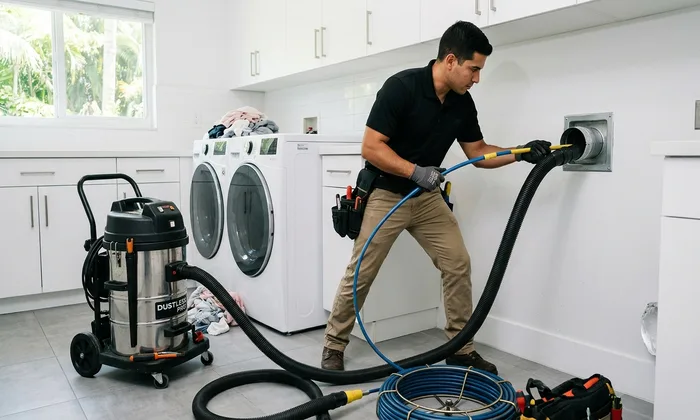
The entire process takes 30 to 60 minutes for a standard residential run. For longer condo installations with multiple bends, plan for 60 to 90 minutes. When it is done, your dryer is operating safely, your energy bills drop, and your drying times return to normal.
How Often Should You Schedule Professional Dryer Vent Cleaning in South Florida?
The NFPA recommends annual cleaning as the minimum. In South Florida, we recommend going by the conditions of your specific installation rather than a fixed calendar interval.
- Standard residential home with a vent run under 15 feet: Once per year is sufficient for a family of 2 to 4 doing typical laundry volumes.
- Households with 5 or more people, or heavy laundry use: Every 6 to 8 months.
- Miami condos or high-rises with vent runs over 15 feet: Every 6 to 8 months, regardless of household size. The length and complexity of the run accumulates lint faster than a shorter residential installation.
- Gas dryers: Annual cleaning is especially important. A restricted gas dryer vent does not just cause fires — it can cause carbon monoxide to back up into your living space instead of being safely exhausted outside. Carbon monoxide is colorless and odorless, and its symptoms (headache, fatigue, nausea) are often dismissed as unrelated illness.
- Any dryer showing warning signs (two cycles, burning smell, excessive heat): Schedule immediately, not at the next annual interval.
For the full cadence breakdown and how Fort Lauderdale high-rises compare to Coral Gables single-family homes, see our guide to how often you should clean your dryer vent in Miami.
Why We Are the Right Call for South Florida Dryer Vent Safety
We specialize in dryer vent cleaning and air duct cleaning across Miami-Dade and Broward County. We are not a carpet cleaning company that added dryer vent cleaning as an upsell. We are not a handyman service with a brush kit. We are a licensed Florida HVAC contractor (license #CAC1817115) with commercial-grade rotary brush and vacuum extraction equipment designed specifically for dryer vent cleaning.
Our technicians are background-checked, uniformed, and arrive in branded service vehicles. We have served over 1,000 homes in the region, from Brickell high-rises to Weston estates to North Miami Beach condos. We are BBB A+ accredited, and every cleaning comes with before-and-after documentation.
We also connect dryer vent cleaning to the bigger picture of your home's air quality. If your dryer vent has been blocked for a while, the backed-up humid exhaust air often promotes mold growth in the laundry room and in adjacent wall cavities. We check for signs of moisture intrusion as part of every dryer vent cleaning visit. If we see evidence of a broader moisture or air duct mold concern, we tell you plainly and let you decide what to do next. No pressure upsells. Just an honest assessment from a licensed contractor who has seen what ignored maintenance looks like when it becomes a major problem.
Same-Day Dryer Vent Cleaning Across Miami-Dade & Broward
Stop the fire risk today. Licensed #CAC1817115 • BBB A+ • 1,000+ homes served. Free estimate, no obligation to book.
Book Your Cleaning →Or call (305) 607-3244
Frequently Asked Questions
Protect Your Home — Call (305) 607-3244
You started this post because your dryer was taking two cycles and the laundry room smelled off. Now you know what those signs mean. They mean the lint in your vent line is building toward a flash point, and the only thing standing between your home and a preventable fire is a professional cleaning.
We serve all of Miami-Dade and Broward County — from Homestead to Coral Springs, from Miami Beach to Weston. Same-day appointments are available. Our dryer vent cleaning in Miami removes every bit of compacted lint from the full length of your vent line, verifies airflow, and documents the work. Call (305) 607-3244 or schedule online today.