

Clogged Dryer Vent Warning Signs Every Miami Homeowner Should Know
Your dryer runs a full cycle and the clothes come out still damp. You run it again. Same result. That second cycle used to never be necessary — now it happens every single load. When your dryer needs two cycles to finish what it once handled in one, your dryer vent is almost certainly clogged with lint, and the situation is more urgent than just wasted electricity. A blocked dryer vent is one of the leading causes of residential fires in the United States, responsible for approximately 2,900 home fires per year according to the U.S. Fire Administration. In this post, you will learn the 7 specific warning signs that your dryer vent is clogged right now, why South Florida homes are at higher risk than most, what happens if you keep ignoring it, and how to get a licensed tech to clear it the same day.
The direct answer: a clogged dryer vent reveals itself through longer drying times, a laundry room that feels like a sauna, a burning smell near the dryer, the dryer shutting off on its own, and excess heat on the outside of the machine. Any one of these signs means the vent needs professional cleaning. Two or more means schedule it today. Air Duct Cleaning Miami clears dryer vents across all of Miami-Dade and Broward County — licensed #CAC1817115, BBB A+, same-day service available.
Why Dryer Vents Clog Faster in Miami Than Up North
Miami-Dade and Broward homeowners run their dryers differently than people in Ohio or Illinois. Here, summer humidity means towels and bedding come out of the wash holding more moisture than in a dry climate — which means the dryer works harder to evaporate that extra water, which means more lint sheds per load. Families running 7 to 10 loads a week through a Pembroke Pines townhome or a Hollywood single-family home pile up a full year of lint faster than any national average suggests.
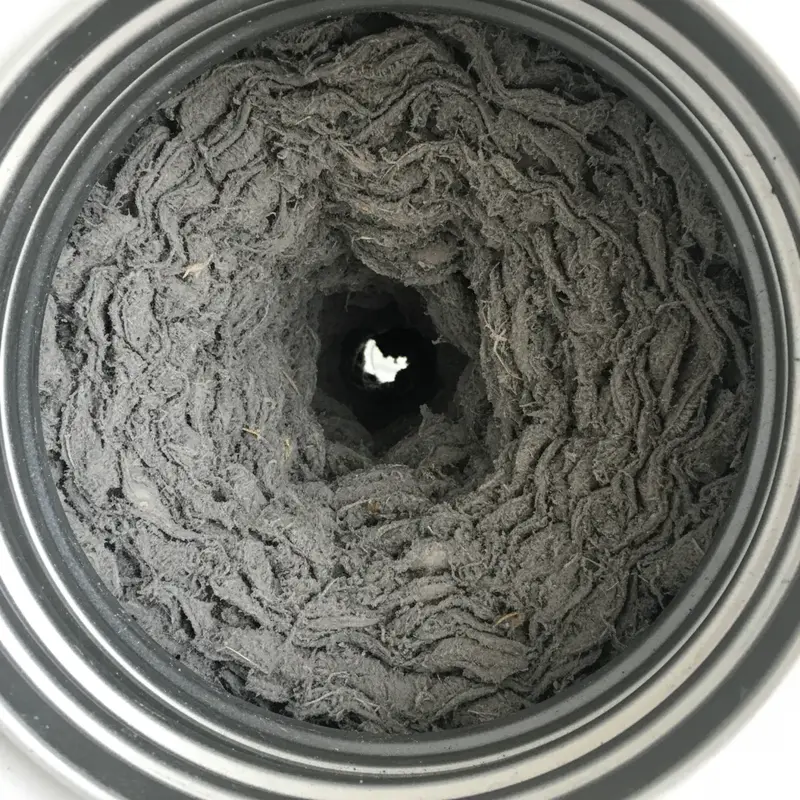
Condo buildings present an additional problem. Many Hallandale Beach and North Miami Beach condos run the dryer vent vertically up through multiple floors to the roof rather than horizontally out through an exterior wall. Vertical runs trap lint at every bend. We pull vents from those buildings that look like a sleeve of packed felt — solid lint from bend to bend. The exterior flap at the top barely opens. One spark is all it takes.
The Miami lint problem in plain terms: your dryer vent is basically a straw your dryer breathes through. When lint coats the inside of that straw and narrows the opening, your dryer can't exhale hot, moist air. The moisture stays trapped, the heat builds up, and the lint sitting in there gets hotter every cycle. That is the fire hazard in one sentence.
7 Clogged Dryer Vent Warning Signs to Check Right Now
-
1
Clothes take two full cycles to dry. This is the number-one complaint we hear before a dryer vent cleaning call. A load that used to finish in 40-45 minutes now takes 80-90 minutes across two runs. The drum is hot, but the air has nowhere to go. Moist air recirculates inside instead of exhausting through the vent. Your clothes stay damp even when the sensor says they are dry. This single sign, on its own, means the vent is blocked enough to schedule a cleaning immediately.
-
2
The laundry room feels hot and humid while the dryer runs. Step into your laundry room mid-cycle. It should be warm but not stifling. If it feels like a steam room — the walls actually feel warm, humidity is thick, you break a sweat standing there — your dryer is dumping hot, moist exhaust back into the room instead of outside through the vent. That moisture is not just uncomfortable. Over weeks and months, it feeds mold growth on the walls and ceiling of your laundry closet.
-
3
A burning smell during or right after a cycle. Lint is extremely flammable. When lint accumulates in a blocked vent and the dryer heats up to 125-135 degrees Fahrenheit during a cycle, that lint can scorch. You may smell something like burning fabric or a faint electrical burning odor near the dryer or the exterior vent flap. Do not dismiss this as a normal dryer smell. This is lint starting to overheat. Turn the dryer off and do not run another load until the vent is cleared.
-
4
The dryer shuts off mid-cycle on its own. Modern dryers have a thermal cutoff fuse (a safety device that trips when the internal temperature gets dangerously high). When a blocked vent traps heat inside the dryer instead of exhausting it, that cutoff trips and the dryer shuts itself off before the cycle finishes. You come back to cool, still-damp clothes and a dryer that stopped on its own. If this happens once, the vent is clogged. If it happens repeatedly, the thermal fuse may already be weakened and close to permanent failure — a $200-$400 appliance repair.
-
5
Clothes and the dryer drum are extremely hot to the touch after a cycle. Finished clothes should come out warm. If they come out so hot you have to wait before handling them, or the metal drum surface is painfully hot to touch, the heat that should be exhausting through the vent is staying inside the machine. This stresses every component of the dryer: the motor, the heating element, the belt, the drum bearings. You are shortening the life of a $600-$1,200 appliance for the cost of skipping a $100 cleaning.
-
6
Lint visible around the exterior vent flap or on nearby surfaces. Walk outside to where your dryer vents. The exterior flap should open fully when the dryer runs and close completely when it stops. If you see lint caked around the flap, on the wall around it, or even on plants or the ground nearby, lint is being pushed past a partial blockage on every cycle. If the flap stays partially open even when the dryer is off, the vent duct is packed tight enough to prop it open.
-
7
You have not had it cleaned in more than a year. This one is not a symptom — it's a timeline fact. The U.S. Fire Administration, the Consumer Product Safety Commission, and every appliance manufacturer recommends cleaning dryer vents at least once per year. Miami families doing 7 or more loads a week, anyone with pets, and condo buildings with vertical vent runs should clean every 6 months. If you cannot remember the last time a tech cleaned your dryer vent, the answer is: it was too long ago.
Stop running the dryer immediately if you notice any of these
Burning smell from the dryer or vent area. Dryer shutting off mid-cycle more than once. Visible scorch marks near the vent opening. Any sign of smoke or visible heat distortion near the dryer duct. These are not "call tomorrow" situations. Call (305) 607-3244 right now or stop using the dryer entirely until a tech inspects it.
What Happens If You Keep Ignoring a Clogged Dryer Vent
Three things compound the longer you wait, and none of them are cheap.
Fire risk grows with every load. There is no plateau. Lint accumulates, heat builds, the ignition point gets closer. The U.S. Fire Administration reports that dryer fires peak in January — after the holiday months of heavy laundering. But in Miami, dryer use stays high year-round. Summer humidity, beach towels, athletic wear from year-round outdoor activity — our households run dryers in patterns that make "clean it once a year" mean every January, not "whenever I get around to it."
The heating element burns out faster. Your dryer's heating element is designed to cycle on and off as the internal temperature stays within a safe range. When the vent is blocked and heat has nowhere to go, the element runs hotter and longer to force drying. Elements designed to last 8-10 years fail in 4-5 when the dryer constantly overworks. A replacement heating element for a standard residential dryer runs $200 to $400 in parts and labor. A dryer vent cleaning is $100 to $200. The math is not complicated.
Mold grows inside the vent duct. A blocked dryer vent traps hot, moist air inside the duct. In Miami's ambient humidity, that moisture creates ideal mold conditions inside the duct itself. We have opened vent ducts in Miramar and Davie townhomes where the lint was not just compacted — it was damp and beginning to show mold growth at the interior bends. That duct then has to be replaced rather than just cleaned.
Why DIY Dryer Vent Cleaning Only Goes So Far
You can clean the lint trap after every load — and you should. You can also pull the dryer out from the wall and vacuum the first 8-10 inches of flexible duct behind it. That handles the obvious buildup closest to the appliance. But the vent duct runs from your dryer through the wall or ceiling, sometimes 15 to 25 feet, to an exterior termination point. That entire run accumulates lint at every elbow, every joint, and every bend.
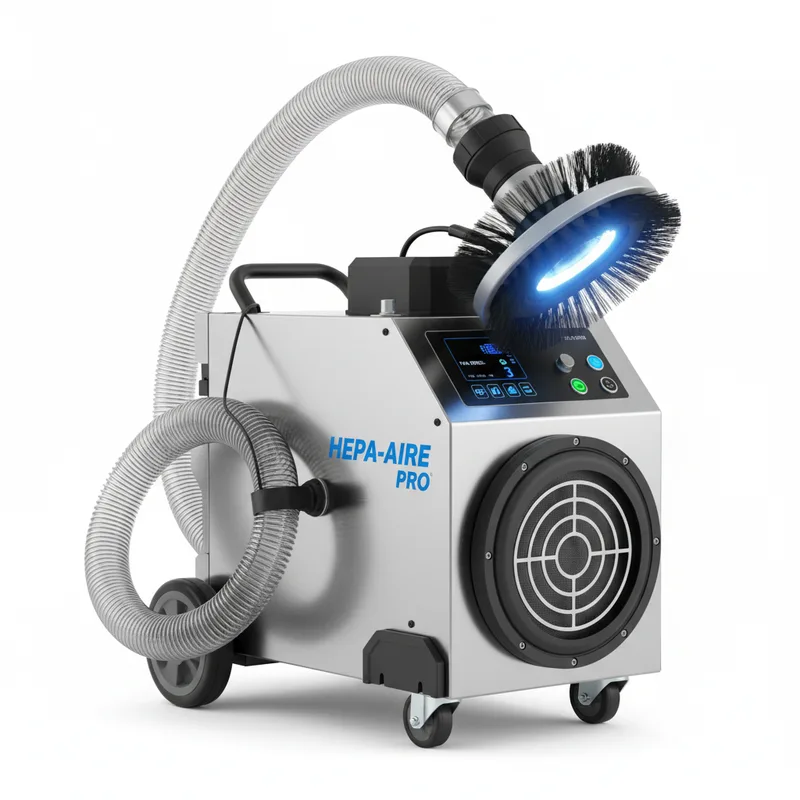
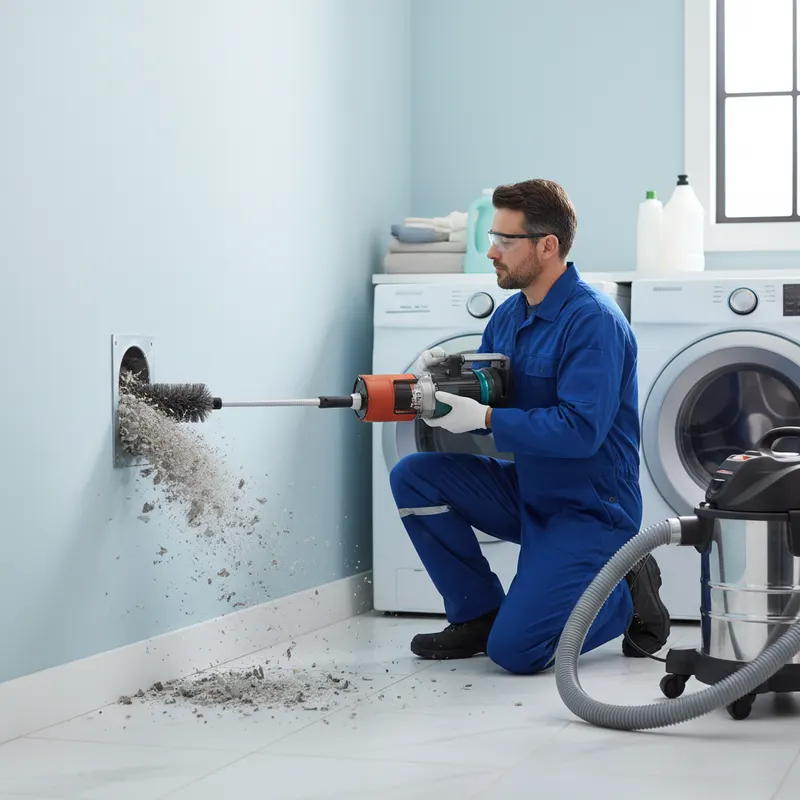
Standard consumer brush kits are not long enough to reach the exterior end of most Miami vent runs, and they cannot navigate multiple 90-degree bends without disconnecting. A licensed tech uses a rotary cleaning brush system that extends the full length of the duct, an inspection camera to confirm the full run is clear, and checks the exterior flap opens freely under airflow. That combination is what actually clears the blockage — not a 6-foot flexible brush from a big-box store.
Florida's HVAC licensing requirements exist for exactly this reason. Improper dryer vent work — disconnecting ducts incorrectly, using the wrong duct material, or leaving bends too tight — creates the conditions for future clogs and fire risk. Our techs are licensed under FL HVAC #CAC1817115. They do this in under an hour and leave with video confirmation that the full duct is clear.

How Our Licensed Techs Clear a Clogged Dryer Vent
We specialize in dryer vent cleaning across Miami-Dade and Broward. Here is what actually happens on a job, not a vague description of "professional cleaning."
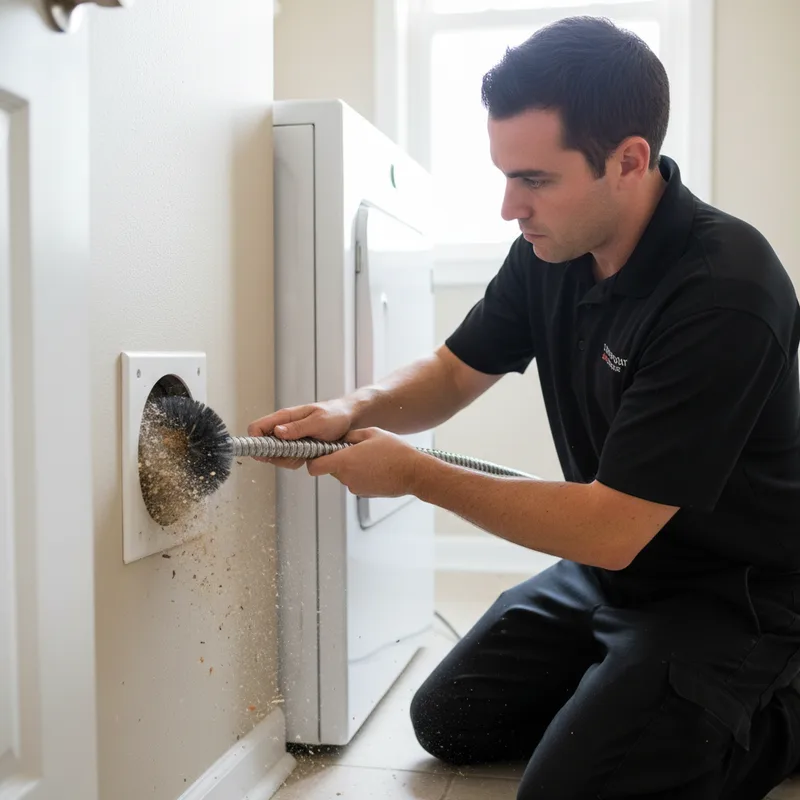
The tech arrives and pulls the dryer away from the wall. The flexible duct connecting the dryer to the wall is disconnected and inspected. The rotary brush system goes into the wall duct and runs the full length of the run to the exterior termination point. Lint is driven out and captured. The exterior flap is checked to confirm it opens under airflow and closes fully when the dryer is off. An inspection camera run confirms nothing remains blocking the duct. The dryer is reconnected and a test cycle confirms single-cycle drying is restored.
The entire job takes 45 minutes to 1 hour for a standard single-family home in Coral Gables or Kendall. Condo buildings with vertical runs to the roof take slightly longer. We serve Doral, Hialeah, Miami Gardens, North Miami, Miami Beach, Aventura, Hollywood, Hallandale Beach, Fort Lauderdale, Plantation, Davie, Miramar, Pembroke Pines, Sunrise, Weston, Coral Springs, and every city in between.
Bundle and save: Many homeowners schedule dryer vent cleaning the same day as whole-home air duct cleaning and get a bundled rate. Both services improve indoor air quality, reduce fire risk, and cut energy waste. Ask about our bundle pricing when you call.
What Happens If a Blocked Vent Causes a Dryer Fire
Dryer fires move fast. Lint is one of the most flammable materials in a household. A fire starting inside a vent duct can travel through walls before a smoke detector triggers. That is not a hypothetical — it is why the U.S. Fire Administration dedicates a specific campaign to dryer vent fire prevention. Homeowner's insurance will cover fire damage in most cases, but insurers increasingly ask about maintenance records when processing claims. A documented history of annual dryer vent cleaning is your paper trail.
For Miami and Broward homeowners in condos and HOA communities, the liability dimension adds another layer. A dryer fire that spreads to a neighboring unit creates a property damage claim that can involve both your homeowner's policy and the building's master policy. That conversation is significantly better with proof of maintenance than without it. Our dryer vent fire prevention guide covers the full risk picture and what South Florida homeowners can do to eliminate it.
Frequently Asked Questions
The clearest sign your dryer vent is clogged is clothes that take two full cycles to dry when they used to take one. Other warning signs include a laundry room that feels noticeably hot or humid during drying, a burning smell from the dryer or vent area, the dryer shutting off mid-cycle on its own, lint appearing on the outside vent flap, and clothes that come out hotter than normal but still damp. If you notice any of these in your Pembroke Pines, Hollywood, or Hialeah home, schedule a professional dryer vent cleaning as soon as possible.
Yes. The U.S. Fire Administration reports that dryer fires cause approximately 2,900 residential fires per year nationally, with a clogged vent being the leading cause. Lint is extremely flammable. When a vent is blocked, heat and lint build up together inside the duct until conditions are right for ignition. In Miami-Dade and Broward County homes, where dryers often run through the humid summer months with higher-than-average lint loads from towels and bedding, the risk compounds without annual professional cleaning.
When your dryer needs two cycles to finish a load it used to handle in one, the vent is almost certainly partially or fully clogged. Your dryer works by pushing hot, moist air out through the vent while pulling dry air in. When the vent is blocked with lint, that hot moist air has nowhere to go — it recirculates inside the drum. The clothes stay wet even though the drum is hot. A professional dryer vent cleaning typically restores full single-cycle drying the same day.
Professional dryer vent cleaning in Miami typically costs $100 to $200 depending on vent length and accessibility. Condo units with longer vertical vent runs to the roof often run on the higher end. For full pricing details, see our dryer vent cleaning cost guide for Miami homeowners.
You can clean the lint trap and the first 6-8 inches of the vent opening yourself. But the vent duct that runs through your wall to the exterior — sometimes 10 to 25 feet long in Miami condos and townhomes — requires a professional rotary brush kit and inspection camera to clean properly. DIY kits miss compacted lint in bends and joints, which is where most clogs form and where fire risk concentrates. A licensed tech does it in under an hour and confirms the exterior flap opens freely.
Once per year is the standard recommendation for most Miami-Dade and Broward households. If you have a large family doing 7 or more loads per week, a pet, or a dryer vent that runs 15 or more feet, clean it every 6 months. Condos with vertical vent runs to the roof accumulate lint faster and tend to need more frequent service. Learn more in our full guide on how often to clean your dryer vent in Miami.
Ignored dryer vents create three compounding problems. First, fire risk increases every load until the vent is cleared. Second, the dryer's heating element burns out faster from overworking — a $200 to $400 appliance repair that a $100 cleaning would have prevented. Third, mold can grow inside the vent duct from trapped moisture, especially in Miami's humidity. What starts as a $100 cleaning can turn into a vent replacement plus appliance repair.

Clogged Dryer Vent? Get It Cleared Today
Licensed FL HVAC #CAC1817115 • BBB A+ • Same-day service • Miami-Dade & Broward County
Book Dryer Vent Cleaning →The Bottom Line: Recognize the Signs, Call a Licensed Tech Today
You started reading because your dryer is taking too long. Or the laundry room feels like a steam room. Or something smelled a little off after the last cycle. All of those sensations are your dryer vent telling you it is blocked and getting worse every load. The fix is straightforward, fast, and costs less than one repair bill on the appliance you are currently wearing out.
Book a professional dryer vent cleaning service online or call (305) 607-3244 right now. We serve all of Miami-Dade and Broward County with same-day availability. Licensed #CAC1817115, BBB A+, free estimate with no obligation to book. One hour and your dryer works right again.