

Condo Smells Musty After Being Closed All Summer? What Miami Snowbirds Should Do
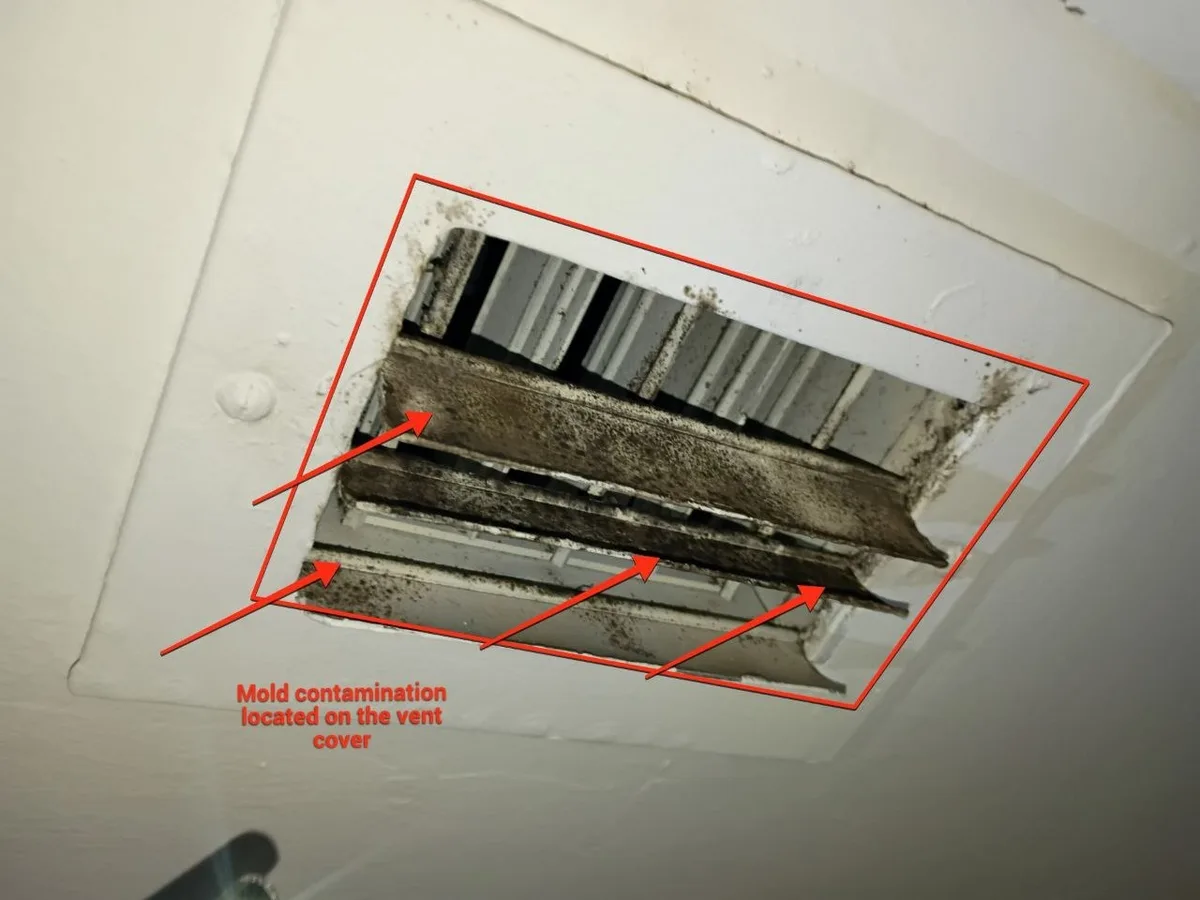
If your condo smells musty after being closed all summer, the smell is almost always coming from inside the AC: a unit left off or set high for months lets humidity settle on the coil, in the drain pan and in the ducts, and mold grows there. Running it spreads the smell; cleaning the system removes it.
This week an owner on Yacht Club Drive in Aventura (33180) booked us to clean the ducts in a condo unit. Before our crew could come up, the condo association asked for our certificate of insurance, which is normal in Aventura's towers. If you are flying back to Aventura, Hollywood or Sunny Isles Beach this fall, here is why the unit smells, what the smell means for your first week back, and how to land to fresh air instead.
Key Takeaways
- A closed condo smells musty because the AC stopped doing its second job: pulling water out of the air.
- The moisture settles where it is cold, dark and still: the coil, the drain pan, the blower and the first feet of duct. That is where the mold grows.
- Airing the unit out resets the room, not the air handler. The smell returns every time the blower starts.
- The fix is a cleaning of the coil, pan, blower and ducts, with a sanitizing treatment on the clean surfaces, ideally done before you fly in.
- Your building will ask for a certificate of insurance. We send it to your management or association before the visit.
Why Does a Condo Smell Musty After Being Closed for the Summer?
Before flying north in the spring, most owners either switch the AC off or set the thermostat high so it barely runs. Both cause the smell, because in a Miami condo the AC is also the dehumidifier. When it stops running, the indoor air takes on the humidity of a South Florida summer, with nothing to take it back out.
The second cause is still air. The air handler sits in a closed hallway or utility closet and nothing moves for four or five months, so the moisture settles on the coldest, darkest surfaces in the unit, and those are inside the AC cabinet. The third is water that never left: the drain pan under the coil still holds the last condensate, and the drain line to the building's riser can slime over while nobody is home.
Add the fine dust already on every coil, and you have the recipe. Mold grows on the wet coil fins, in the pan, on the blower wheel and along the first stretch of duct. That growth is what you smell. For the version that applies to any home, read why an AC smells musty in Miami. This post is about the unit that sat closed.
What the Smell Means for Your First Week Back
You walk in and turn the AC down. The first time the blower starts, it pushes air across whatever grew on the coil and in the pan and out of every vent at once, which is why the smell is the same in every room and strongest in the first minutes of each cycle.
Candles, plug-ins and a spray into the vents buy you an evening. The next morning the smell is back, because the source is still sitting on the coil. Meanwhile the coating on that coil makes the AC work harder to cool the same space, so it runs longer and the FPL bill climbs. And if the drain line is partly blocked, the pan can overflow into the closet. In a condo, water on the floor is not only your problem: it can reach the unit below, and that becomes a conversation with your neighbor and your association about damage.
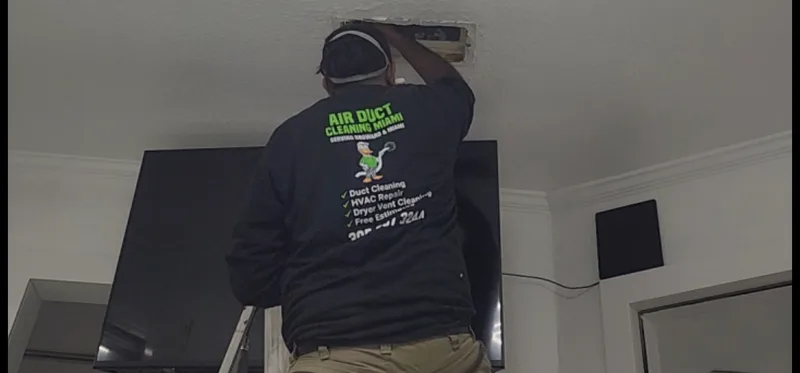
Opening the balcony door freshens the room, but it cannot reach the coil, the pan or the blower inside a closed cabinet. Whether the source is the coil, the drain pan, the blower wheel or the duct runs decides the job, and that gets answered by opening the air handler and putting a camera in the runs, not by a guess from the vent. That is the free part of our visit.
Already back and the unit smells?
Tell us your building and when you landed. We send the certificate of insurance to your management, and the inspection is free.
Call (305) 607-3244 →How to Keep It From Happening Next Summer
The owners who come back to a fresh unit every October do two things differently. First, they leave the AC running at a moderate setting with humidity control on, so it keeps drying the air all summer; we set it with you on the visit before you leave. Second, they book a maintenance visit on both ends of the season. Before you leave: the coil cleaned, the drain pan and drain line cleared, the filter changed. Before you return: a visit about a week ahead of your flight, booked two or three weeks out, so anything that grew while you were gone is cleaned before you walk in. Our AC maintenance plan puts both visits on a schedule, which is exactly what a unit that sits empty half the year needs.
Book it before you fly in.
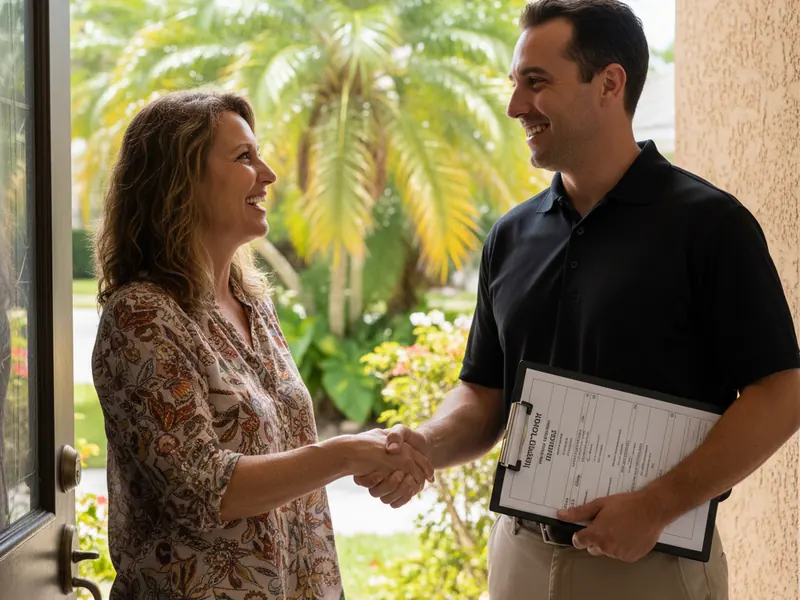
We coordinate access with your building or property manager, clean the system while you are away, and send you the photos. You land to fresh air.
Call (305) 607-3244 →What We Do When You Call Before Your Return
The paperwork first. We carry general liability insurance and send our certificate of insurance to your building management or association before the scheduled date. We schedule inside the building's contractor hours, book the service elevator and sign in with security. It is the same routine behind our condo air duct cleaning in Miami, and it is why a request like the one from the association on Yacht Club Drive does not hold up the visit.
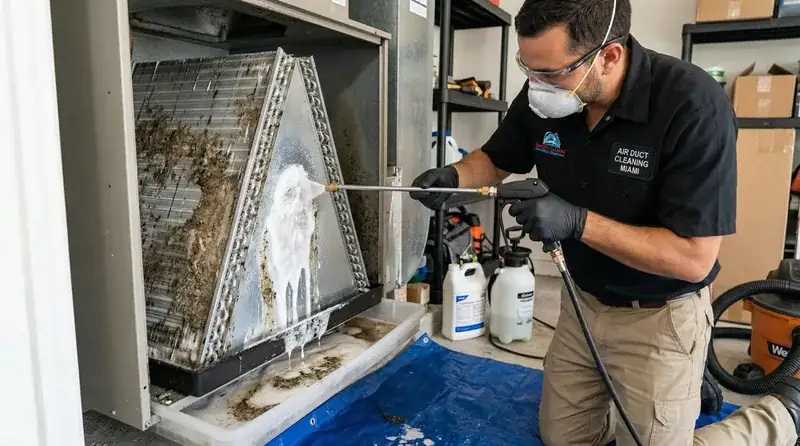
Then the inspection. We open the air handler, look at the coil, the drain pan and the blower wheel, and run a camera into the supply and return runs. You get photos of what we find and a free estimate before any work starts.
Then the cleaning the inspection points to. Coil cleaning when the coil is coated. The drain pan and the drain line cleared so water leaves the unit again. The blower wheel cleaned. The ducts cleaned when the growth has reached the runs. Last, on the surfaces we just cleaned, an EPA-registered antimicrobial treatment that the manufacturer designs to control mold and mildew and the odor they cause.
Still up north? We work with your building or property manager for access and send before-and-after photos. Our Florida HVAC licence CAC1817115 covers mold remediation inside the HVAC system, so the crew that finds the mold on the coil is the crew that cleans it.
Aventura and Hollywood Condos: What Your Building Will Ask For
In Aventura, the towers along the Intracoastal, from Williams Island and Turnberry to Mystic Pointe and Porto Vita, require a certificate of insurance before any contractor enters the building, and they set the hours contractors may work. The unit on Yacht Club Drive in 33180 was the usual case: the association asked for the certificate before anything else. More on our Aventura condo duct cleaning page.
In Hollywood, most condos have no attic, so the air handler lives in a closet inside the unit, and the high-rises along A1A on Hollywood Beach sit in salt air that keeps the humidity up all year. Hollywood owners in 33019 and the inland mid-rises get the same COI-first routine through our Hollywood condo air duct cleaning service.
Serving Snowbird Condos in Miami-Dade and Broward
The same licensed crew handles the returning-owner visit up and down the coast, based in Hallandale Beach, a few minutes from most of these buildings.
Miami-Dade County
- Aventura
- Sunny Isles Beach
- North Miami Beach
- Miami Beach
Broward County
Frequently Asked Questions
Why does my condo smell musty when I come back after the summer?
Because the AC sat off or barely running for months. In a Miami condo the AC is also what pulls water out of the air, so without it the humidity settles on the coil, in the drain pan and on the blower inside the closet, and mold grows there. The first time the blower starts, it carries that smell to every vent.
Should I turn the AC on right away or air the unit out first?
Open the balcony door for a while if you like, but turn the AC on. Leaving it off keeps the humidity high, which is what caused the smell. Airing out freshens the room but cannot reach the coil or the drain pan inside the cabinet, so if the smell returns every time the blower starts, the source is inside the system and it needs cleaning.
Does my condo association need a COI before your crew can come up?
Most do, and we are ready for it. We carry general liability insurance and send our certificate of insurance to your building management or association before the scheduled date. We also schedule inside the building's contractor hours, book the service elevator and sign in with security.
Is the smell coming from the ducts, the air handler or the drain line?
In a unit that sat closed it usually starts at the air handler, on the coil and in the drain pan, and can spread into the first runs of duct. Which one it is decides the job, and it takes opening the cabinet and a camera in the runs to know. That inspection is free, and you see the photos before any work is quoted.
How far ahead of my return should I book so the unit is fresh when I land?
Book two to three weeks before your flight. That gives your building time to receive our certificate of insurance and fit the visit into its contractor hours, and lets us clean the system about a week before you arrive. If you are still up north, we coordinate access with your building or property manager and send you before-and-after photos.
What should I set the AC to before I leave next summer?
Do not switch it off. Leave it running at a moderate setting with humidity control on if your thermostat has it, so the system keeps drying the air while you are away. The right setting depends on your system and your building's rules, and we set it with you on a maintenance visit before you leave, after the coil and drain line are cleaned.
The Bottom Line for Returning Owners
A condo that smells musty after being closed is not a mystery and not a reason to repaint. It is an AC that sat still in a wet climate, and the mold is on surfaces we can reach and clean. Call before you book your flight, let us send the certificate to your building, and walk into a unit that smells like home.

Flying back this fall?
Free inspection, free estimate, certificate of insurance sent to your building. Licensed #CAC1817115, BBB A+.
Call (305) 607-3244 →