

AC Compressor Replacement Cost Miami — What It Really Costs in 2026
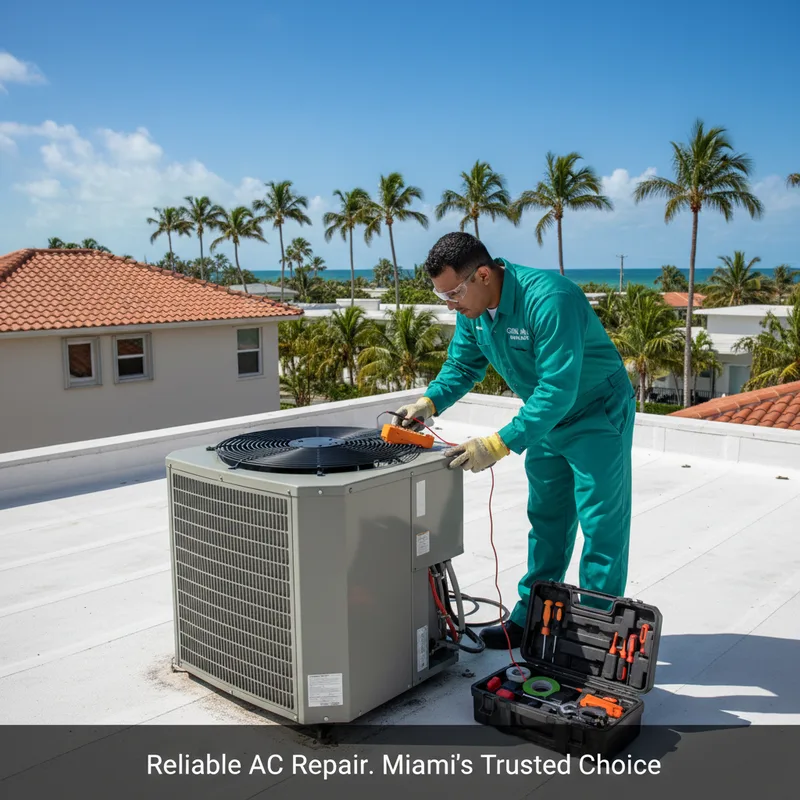
Your AC stopped blowing cold air last night. The outdoor unit hums but nothing happens, and the technician just told you the compressor is gone. AC compressor replacement cost in Miami runs $1,500 to $4,000 or more in 2026, and those prices have roughly tripled over the last five years. That number can push some homeowners straight into full unit replacement territory, especially now that the R-410A refrigerant used in most existing systems is being phased out and parts are getting harder to find. In this post we break down exactly what compressor replacement costs in South Florida, why compressors fail here faster than in any other state, and the one cheap device that prevents most of these failures entirely.
AC Not Cooling? Free Diagnostic Inspection
Before you authorize a compressor replacement, get a licensed second opinion. The diagnostic fee is waived with job approval — we confirm what actually failed and give you an exact price for both repair and full unit replacement so you can make the right call. Same-day available in Miami-Dade and Broward.
What the Compressor Actually Does
The compressor is the heart of your AC system. Every other component depends on it. It takes low-pressure refrigerant gas and compresses it into a high-pressure, high-temperature gas so it can dump heat outside and cool your home. When the compressor stops, the whole system stops. No cooling. No heating if you have a heat pump. Nothing.
It is also the single most expensive component in the system, which is why compressor failure is the repair call nobody wants to get. A blown capacitor costs $150 to $400 to fix. A failed blower motor runs $400 to $900. A dead compressor is $1,500 on the low end and $4,000 or more for larger systems. The price gap matters because a lot of the early warning symptoms overlap, and some contractors lead with the compressor diagnosis without ruling out cheaper failures first. Always get a full diagnostic before authorizing any repair.
AC Compressor Replacement Cost Miami in 2026
Here is what replacement actually costs in Miami-Dade and Broward County today:
| System Size / Type | Compressor Replacement Cost | Notes |
|---|---|---|
| 1.5–2 ton (small condo, studio, 1BR) | $1,500–$2,200 | Heat pump condos in Aventura, Doral, Brickell |
| 2.5–3 ton (2BR home or condo) | $1,800–$2,800 | Most common residential system in South Florida |
| 3.5–4 ton (3–4BR home) | $2,400–$3,600 | Typical single-family home in Pembroke Pines, Weston, Miramar |
| 5 ton+ (large home or commercial) | $3,200–$4,500+ | Larger estates, rooftop units, commercial package systems |
| R-410A system over 10 years old | May exceed unit replacement cost | Parts availability declining; get a full unit quote before deciding |
These are installed costs, including labor. The compressor part alone can run $600 to $2,500 depending on brand and system size. Labor in South Florida typically adds $400 to $900 on top. Carrier, Trane, Rheem, Goodman, Bryant, Lennox, Ruud, and Daikin all use different compressor models, and availability for some of those models has tightened significantly with the R-410A phaseout.
The price reality: Compressor replacement costs have risen roughly three times over the last five years. A job that cost $800 to $1,200 in 2021 now runs $1,800 to $3,000+ for the same system. Supply chain constraints on R-410A system parts are the primary driver, and prices are not expected to decrease as the phaseout continues. This is why getting the numbers right before authorizing a repair matters more than ever.
The R-410A Phaseout: Why Compressor Repair Might Mean Full Unit Replacement
Most residential AC systems installed before 2025 run on R-410A refrigerant. The U.S. Environmental Protection Agency is phasing it out under the AIM Act because of its high global warming potential. New systems are manufactured with lower-GWP refrigerants: R-32, R-454B, or R-466A depending on the manufacturer.
Here is why this matters for your compressor decision: as R-410A production is reduced and eventually eliminated, replacement compressors for older R-410A systems become harder to find and more expensive to source. For a 12-year-old system, the cost of sourcing and installing an R-410A-compatible compressor may now approach or exceed the cost of replacing the entire unit with a new, more efficient R-32 or R-454B system.
A new 3-ton system in Miami-Dade or Broward runs $8,000 to $17,000+ installed depending on brand, efficiency rating (SEER2), and installation complexity. That is more than a compressor repair, but a new unit comes with a 10-year manufacturer warranty, runs on modern refrigerant with available parts for the next two decades, and typically delivers 20 to 30 percent better efficiency than the aging system it replaces.
Before authorizing any compressor replacement, have a licensed technician run the numbers on both options. The right answer depends on your system's age, brand, and the current parts availability for your specific model. For more detail on how the refrigerant phaseout affects repair costs in South Florida, see our post on new AC freon and refrigerant costs in Miami.

Repair or Replace? We Run the Numbers for Free
A licensed technician inspects your system, pulls your model numbers, prices both options, and gives you a straight comparison before you commit to anything. Carrier, Trane, Rheem, Goodman, Bryant, Lennox, Ruud, Daikin, York, Amana — central air, split systems, heat pumps. We service them all across Miami-Dade and Broward.
Why AC Compressors Fail in Miami Faster Than Anywhere Else
There are four main causes of premature compressor failure in South Florida. Each one alone shortens compressor life. All four working together push a system to failure years ahead of schedule.
Dirty Coils Causing Liquid Flood Back
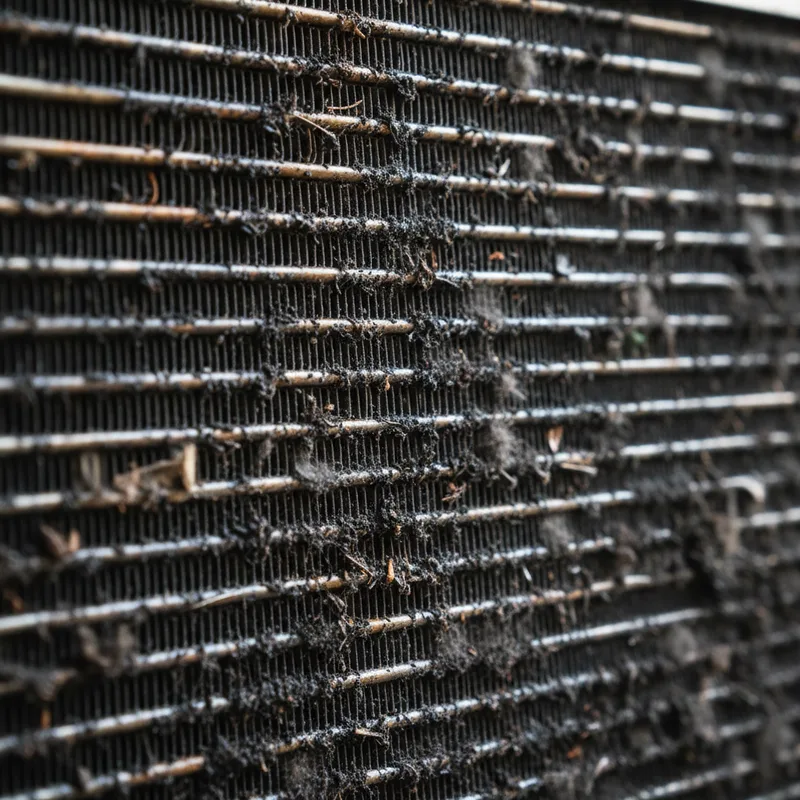
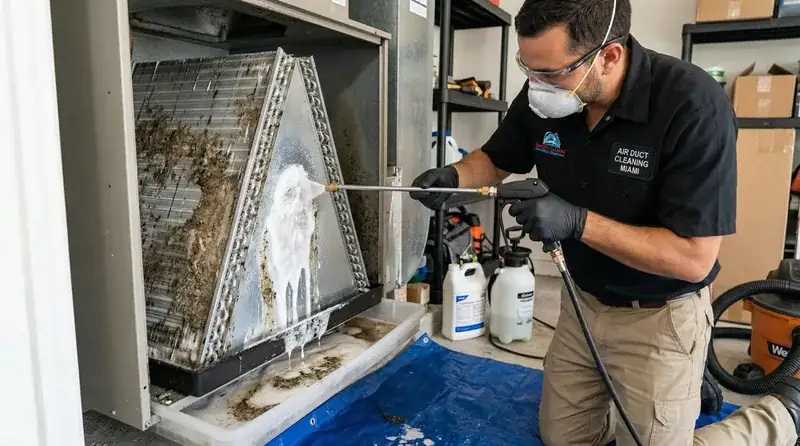
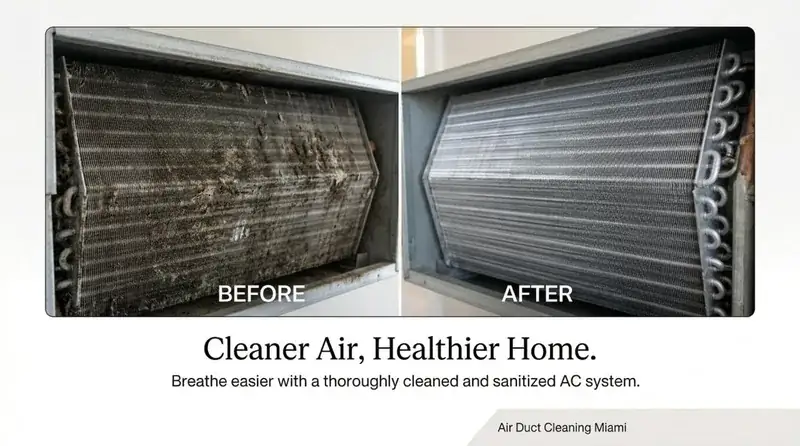
This is the most common cause of compressor failure in Miami and Broward homes. Here is how it happens: when your evaporator coil (the cold indoor coil inside your air handler) gets dirty, it cannot absorb heat from the air properly. Refrigerant that should completely evaporate into gas before reaching the compressor instead travels back as liquid.
Compressors are built to pump gas. They are not designed to move liquid. When liquid refrigerant hits the compressor internals at operating speed, it damages valves and bearings, overheats the unit, and eventually kills it. This process is called liquid flood back. It is quiet, invisible, and builds over months of the coil getting dirtier.
The fix is a professional coil cleaning every 12 to 18 months. The coil cleaning costs a fraction of the compressor it prevents. We see this play out on service calls constantly: a Pembroke Pines home, a Miramar condo, a Hialeah family with a three-year-old coil that was never cleaned. The compressor dies and they pay thousands for what a cleaning would have prevented. Read our full post on why regular AC cleaning matters in Miami for the complete breakdown of this chain reaction.
Years of Deferred Maintenance
Your AC unit sits in a closet, an attic, or a utility room. It runs 10 to 12 months a year in South Florida without anyone looking at it. No oil changes. No filter checks on the unit itself. No coil inspection. No drain flush. It just runs until something breaks.
Annual professional AC maintenance catches the early warning signs: a capacitor that is starting to fail and making the compressor work harder to start, refrigerant that is slightly low from a small leak, coil buildup that is reducing airflow before it gets bad enough to cause flood back. Catching these issues costs $150 to $400. Ignoring them leads to compressor failure at $1,500 to $4,000. The compressor was designed to last 15 to 20 years in a maintained system. In a neglected one we see them die at 7 to 10 years. For the most common mistakes South Florida homeowners make with their AC, see our post on AC maintenance mistakes in Miami.
Lightning Storms and Power Fluctuations
Miami and Broward County get more lightning strikes than almost anywhere in the United States. May through October, the rainy season brings afternoon thunderstorms that knock out power, cause voltage spikes, and create momentary outages multiple times per week.
Every time power flickers, your AC compressor tries to restart. The problem is that when the unit shuts off, refrigerant pressure stays high on one side of the compressor. A normal startup cycle gives that pressure time to equalize before the compressor motor engages. A power flicker does not. The compressor tries to start under full head pressure, which is like trying to start a car engine that is already in gear. It puts severe mechanical stress on the motor windings, capacitors, and internal valves.
During rainy season, we see a surge in compressor failure calls that trace directly to this pattern. The compressor was already under some stress from dirty coils or age, and repeated hard-starts through storm season pushed it over the edge. We will explain the solution to this specific problem in the next section.
Year-Round Runtime in Miami Heat and Humidity
A homeowner in Chicago runs their AC four to five months a year. A homeowner in Coral Springs or Hialeah runs it ten to twelve. That is more than double the annual operating hours, applied to every moving part in the compressor motor. Bearings wear. Valves cycle more times. Refrigerant passes through the system more often.
Miami’s humidity compounds this. Condos and apartments with deferred maintenance, buildings from the 1970s and 1980s in Hallandale Beach and Hollywood, coastal properties on Miami Beach and Bal Harbour with salt air corroding condenser coils: all of these carry a higher-than-average compressor failure rate because the system works harder for longer under conditions that accelerate wear. The compressor was not rated for this level of use without regular maintenance. Most manufacturers assume a maintenance schedule that Miami homeowners rarely follow.
The Compressor Delay Kit: A Few Hundred Dollars That Saves Thousands
What a Compressor Delay Kit Is and Why Every Miami Home Needs One
A compressor delay kit is a small electronic device installed at your outdoor AC unit. Its job is straightforward: when power is interrupted and then restored, the kit holds the compressor off for a few seconds to let refrigerant pressure equalize before the motor engages. This turns a hard-start into a soft-start, which is the difference between your compressor handling a power flicker gracefully and grinding through it under mechanical stress.
This device does not come installed from the factory. It is not included when your AC unit is manufactured. It is not required by Florida building code. Most homeowners have never heard of it. We install them as an add-on service, and during rainy season we recommend it to every customer.
Cost to install: a couple hundred dollars. The protection it provides: it can extend compressor life by years and prevent the kind of storm-season failures that generate our service calls from June through October. For a home in South Florida that runs the AC almost year-round through lightning season, the math is simple. One avoided compressor failure pays for the kit ten times over.
If you want this installed, contact our AC service team or call us at (305) 607-3244. We will add it during any inspection or maintenance visit.
Protect Your Compressor Before the Next Storm
Delay kit installation takes under an hour. It is the lowest-cost insurance you can buy for the most expensive component in your AC system. Available during any inspection or maintenance visit throughout Miami-Dade and Broward County. Same-day scheduling available.
Warning Signs Your Compressor Is Starting to Fail
A compressor rarely dies without warning. These symptoms appear weeks or months before full failure:
- AC runs but never reaches the set temperature even after an hour of runtime. The system is working but the compressor cannot maintain the right refrigerant pressure to cool effectively
- The outdoor unit makes a grinding, rattling, or chattering sound when it starts. This often means the capacitor is failing and the compressor is struggling to start
- The circuit breaker trips repeatedly when the AC runs. The compressor is drawing more current than the circuit can handle, usually because it is working against high resistance
- Short cycling: the system starts, runs for 5 to 10 minutes, and shuts off before your home reaches temperature. The compressor is overheating and triggering the thermal protection cutoff
- Unusually high FPL bills with no change in thermostat habits. A compressor running outside its designed parameters uses significantly more electricity than a healthy one
- The outdoor unit runs but the air handler blows warm air. The compressor is not building refrigerant pressure, so no cooling is happening even though the fan is running
Any one of these symptoms is worth a same-day call. A failing capacitor caught early costs $150 to $400. The same symptoms ignored for two or three months until the compressor burns out costs $1,500 to $4,000. For the full cost picture on AC repairs in South Florida, see our post on AC repair costs in Miami for 2026.
Repair vs. Replace: How to Make the Right Call
When a compressor fails, the question is never just “how much to replace the compressor?” The real question is whether replacing the compressor in this specific system makes financial sense versus replacing the unit.
Here is the framework a licensed technician should walk you through:
- System age. Under 8 years old: compressor replacement usually makes sense. 10 to 12 years: compare replacement cost to unit cost carefully. Over 12 years: full unit replacement is often the better financial decision
- Refrigerant type. R-410A systems over 10 years old face the parts availability problem. Get a quote for a new unit with the R-32 or R-454B refrigerant and compare the 5-year cost of ownership
- Current efficiency rating. If your system has a SEER rating under 14, a new high-efficiency system at 17 to 20 SEER2 can reduce your FPL bill by $60 to $120 per month. Over 5 years, that savings offsets a significant portion of the replacement cost
- What else is wearing out. A compressor that fails in a system with a corroded condenser coil, an aging air handler, and an old blower motor is not a system worth investing $2,500 in. Replace the unit and start clean
- Current compressor warranty status. Compressor manufacturer warranties typically run 5 to 10 years. A compressor that fails at year 6 may have a parts warranty that significantly reduces the cost
Real pattern from our Hallandale Beach service calls, 2026: A condo owner in a 1980s building on A1A had not serviced her heat pump in three years. The evaporator coil was fully fouled. The compressor failed from liquid flood back. She needed a compressor replacement quote. Once we pulled the model number, the R-410A compressor for her aging heat pump was backordered and priced at $1,800 for the part alone. A new heat pump for her unit size, with a 10-year warranty, was $3,800 installed. She replaced the unit. The coil cleaning at any point in the previous three years would have cost under $800 and prevented the entire situation.
How to Prevent Compressor Failure in South Florida
The good news is that most compressor failures in Miami and Broward are preventable. Here is the full prevention stack:
- Annual professional AC cleaning: clean evaporator coil eliminates liquid flood back, the number one cause of compressor failure. This is the single highest-impact action you can take
- Annual AC maintenance and inspection: capacitor testing, refrigerant level check, electrical connection tightening, drain flush, blower inspection. Catches the early warning signs before they become compressor failures
- Compressor delay kit installation: protects against storm-season hard-starts. Costs a couple hundred dollars installed. Should be in every South Florida home that runs AC through lightning season
- Quality air filters changed on schedule: a clogged filter restricts airflow to the evaporator coil, accelerating buildup. A $10 filter changed monthly is AC insurance
- Surge protection on the outdoor unit: a whole-home surge protector or a dedicated surge protector at the condenser adds another layer of protection against lightning-induced voltage spikes
None of these are expensive. Together they are the reason some South Florida AC systems hit 18 years without a compressor failure while the neighbor’s unit dies at year 9. Consistent maintenance is the dividing line. For a complete guide to what professional AC maintenance includes and why it matters here, read our post on AC cleaning and maintenance service from Air Duct Cleaning Miami.
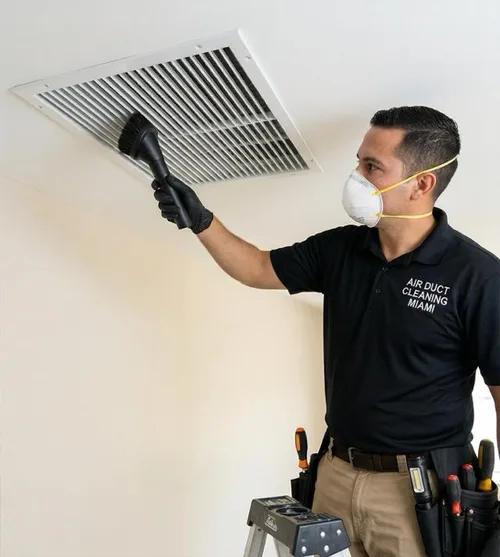
Annual AC Maintenance Prevents Compressor Failure
A licensed HVAC technician inspects your coils, tests the capacitor, checks refrigerant levels, clears the drain, and flags any early warning signs before they become expensive repairs. Free diagnostic inspection. FL License #CAC1817115. BBB A+. 1,000+ Miami-Dade and Broward homes served.
What to Do Right Now If Your AC Stopped Cooling
If your AC stopped blowing cold air, do these steps before calling a technician:
- Check the breaker panel. A tripped breaker is the first thing to rule out. Reset it once. If it trips again immediately when the AC starts, stop there and call a pro. A compressor drawing excessive current will trip a breaker repeatedly
- Check the thermostat setting. Confirm it is on COOL, not FAN. Confirm the temperature setpoint is lower than the current room temperature
- Look at the outdoor unit. Is the fan on top spinning? Is there ice on the refrigerant lines going into the house? Ice on the lines means a frozen evaporator coil, which needs 2 to 4 hours of defrost with the system off before a tech can diagnose it properly
- Do not restart the system repeatedly. If the compressor is failing, repeated restart attempts will accelerate the damage. Turn the system off at the thermostat and call for service
- Call a licensed technician for a diagnostic. The symptoms for a bad capacitor, low refrigerant, frozen coil, and failed compressor all overlap. A proper diagnosis with manifold gauges takes the guesswork out and tells you exactly what you are dealing with before you commit to any repair
Related Reading for Miami and Broward Homeowners
If you found this post useful, these related guides cover the adjacent topics South Florida AC owners ask us about most:
- Why AC cleaning is important in Miami — the dirty coil and liquid flood back connection
- AC repair cost Miami 2026 — what every repair actually costs in South Florida
- New AC freon and refrigerant cost in Miami — R-410A phaseout explained
- The biggest AC maintenance mistakes Miami homeowners make
Air Duct Cleaning Miami has served 1,000+ homes across Miami-Dade and Broward County. We hold FL HVAC License #CAC1817115 and carry full liability insurance. Every technician arrives in a uniformed, branded service vehicle with the license number visible. BBB A+ rated. For everything our team does to protect your AC investment in South Florida, visit airductcleaningmiamifl.com.
