Our Services
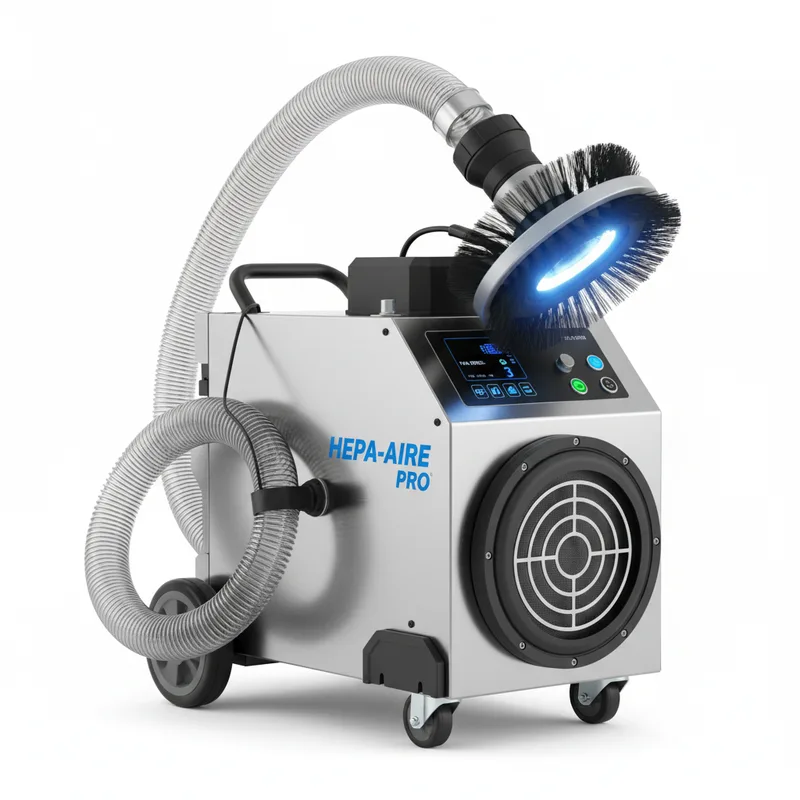
Duct & Vent CleaningFrom Free Estimates
›
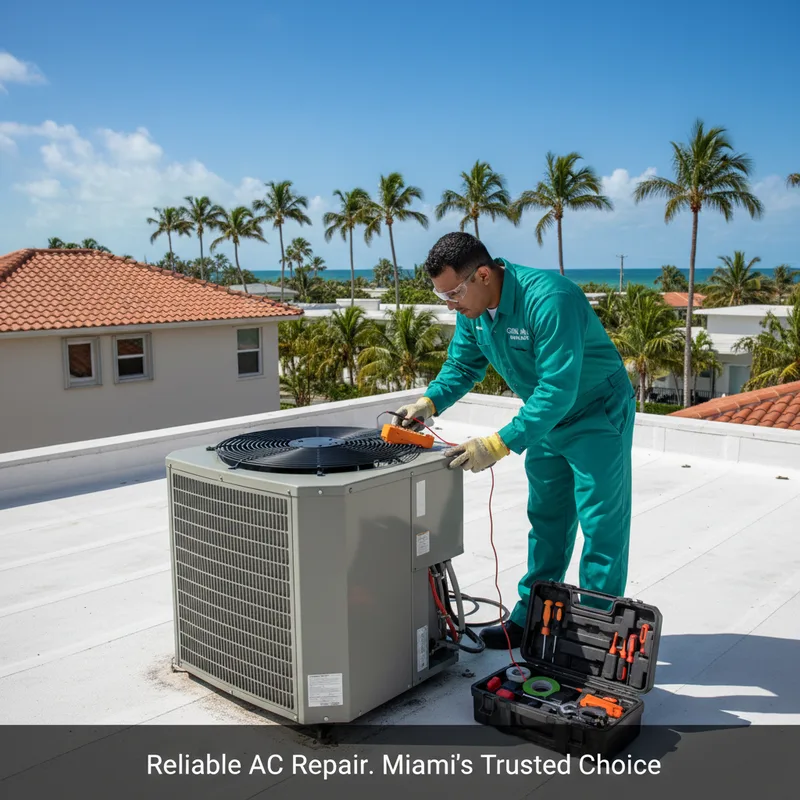

AC MaintenancePackages from $149
›
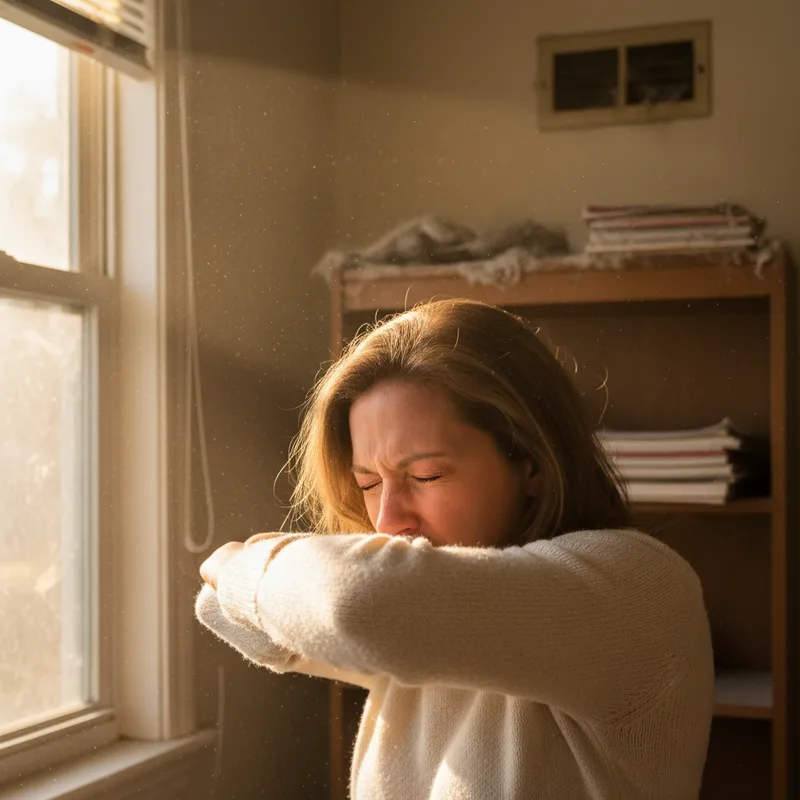
Indoor Air QualityThermostats, UV Lights & More
›
CommercialRefrigeration & Restaurant
›
Quick Links
Cleaning removes the dust. Sanitizing kills the mold spores, bacteria, and odor-causing germs cleaning leaves behind. In hot inland Miami Gardens -- where AC systems run ten to twelve months a year and most homes carry original 1960s-to-80s ductwork -- humidity and decades of biofilm re-contaminate ducts within weeks without it. EPA-registered antimicrobial treatment by a FL Licensed HVAC contractor #CAC1817115, BBB A+. Honest service for hard-working Miami Gardens families.
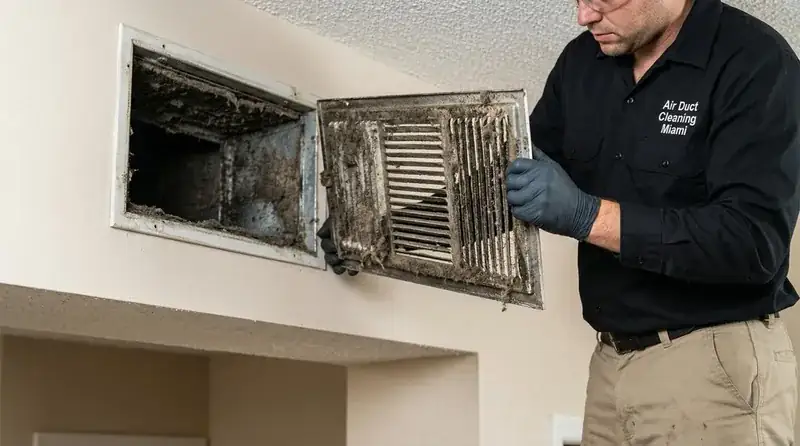
AC sanitizing in Miami Gardens, FL is the application of an EPA-registered antimicrobial treatment inside your air conditioning system that kills the mold spores, bacteria, and odor-causing germs that ordinary duct cleaning leaves behind. Air Duct Cleaning Miami (FL Licensed #CAC1817115) provides it throughout Miami Gardens and Miami-Dade County. Because Miami Gardens is a hot inland city where AC runs nearly year-round and most homes carry original 1960s-to-80s ductwork, humidity and decades of accumulated biofilm re-contaminate ducts within weeks of a cleaning. If your vents smell musty, your family's allergies flare worse indoors, or your last duct cleaning skipped the antimicrobial step, you need sanitizing -- not just cleaning.
Miami Gardens is Florida's largest majority-Black city -- a proud, family-oriented community in northwest Miami-Dade -- and the way these homes are built and lived in is exactly why duct sanitizing matters here far more than in a newer, drier suburb.
Miami Gardens grew up in the 1960s, 70s, and 80s, and most of its housing is exactly that age. From Carol City and Norland in the west, through Andover, Bunche Park, and Lake Lucerne, over to Scott Lake, Rolling Oaks, and Vista Verde near the Opa-locka border, the bulk of the city is established single-family homes built decades ago -- with original ductwork that has been collecting dust, dander, and biofilm for forty or fifty years. That aging fiberglass duct lining is porous: it harbors a living microbial layer that mechanical cleaning alone simply cannot reach. That is the difference between a Miami Gardens home and a brand-new-construction house: here, cleaning gets the dust out, but the living growth needs an antimicrobial treatment to actually kill it.
Then there's the heat. Miami Gardens sits inland, well away from the ocean breeze, so summer days run hot and the AC runs hard -- ten to twelve months a year for most families. Pair that near-continuous operation with South Florida's 70%-plus humidity and a duct system becomes a dark, cool, damp tunnel that never fully dries out. Those are the exact conditions mold and bacteria need to thrive. Home to Hard Rock Stadium and the energy of game days, Rolling Loud, and the Miami Open, Miami Gardens is a city that's always running -- and so are its air conditioners.
We see the pattern constantly. A family in Carol City or near the Betty T. Ferguson Recreational Complex calls and says, "We had our ducts cleaned and the wet-towel smell is already back." Almost every time, the reason is the same: the dust was vacuumed out, but the mold colony on the evaporator coil was never treated, so it grew right back the moment the humidity climbed. That is what a complete professional air duct cleaning paired with antimicrobial sanitizing fixes. For the full regional picture, see our AC sanitizing across Miami-Dade & Broward hub page.
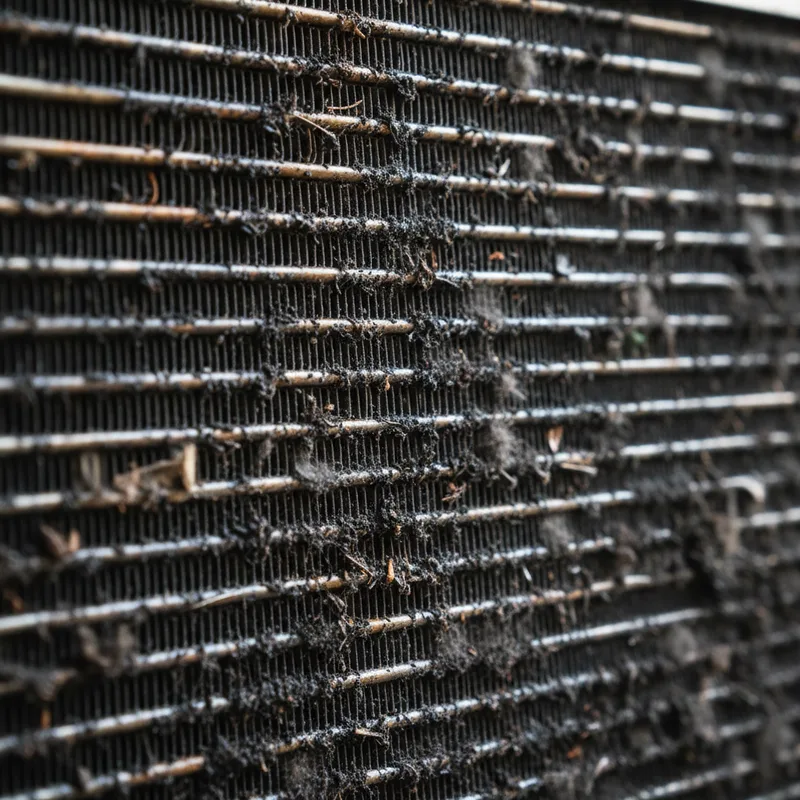
Most people think "duct cleaning" and "duct sanitizing" are the same thing. They are not -- and knowing the difference decides whether your family's air actually gets healthier or just looks cleaner for a few weeks.
Cleaning is mechanical. A technician runs a HEPA vacuum and agitation brushes through your ducts to pull out the loose dust, debris, pet hair, and construction particles. It's the physical removal step. You can see the difference -- the inside of the duct looks clean.
Sanitizing is microbial. After the debris is gone, we apply an EPA-registered antimicrobial treatment that kills what you can't see: mold spores, bacteria, viruses, and the odor-causing microbes that live in the thin biofilm coating your duct walls and evaporator coil. Cleaning removes the dirt. Sanitizing kills the living stuff in it.
Here's why this matters in plain terms. Think of your ducts like a dirty straw. You can rinse the visible gunk out (cleaning), but if there's a slimy film growing on the inside walls, the air still tastes off until you actually disinfect it. Duct cleaning and sanitizing together are the complete job. Sanitizing is also the exact step most $99 "duct cleaning" outfits advertised around Miami Gardens quietly skip -- and it's why so many homes here start smelling musty again within weeks of a cheap cleaning.
If you already suspect mold is the issue rather than just dust, our anti-mold AC treatment page walks through that specific service, and active visible colonies are handled through our air duct mold removal process under Florida guidelines.
National chains never tell you this, because their content is written once for the whole country. Sanitizing an AC system in Denver and sanitizing it in hot, humid, inland Miami Gardens are not the same decision. Here, with this much older housing stock, it's closer to a requirement than a nice-to-have.
Most Miami Gardens homes -- across Carol City, Andover, Norland, and Bunche Park -- were built in the 1960s, 70s, and 80s. Their original fiberglass duct lining is porous and has harbored biofilm for decades. Cleaning can't reach into that lining. Sanitizing is what actually treats those interior surfaces.
⚠ Decades-Old Ducts Hold BiofilmMiami Gardens sits inland, away from any ocean breeze, so summers run hot and units run almost continuously. The ducts rarely get a chance to fully dry out, so microbial growth never really stops -- it just keeps building on whatever cleaning left behind.
⚠ Ducts Never Dry Out HereSouth Florida humidity routinely runs above 70%. The EPA notes mold begins to grow at around 60% relative humidity -- we live well above that line most of the year. Your duct system is essentially a dark, cool, damp tunnel: the exact conditions mold and bacteria love.
⚠ Mold Starts at 60% RH -- We Live Above ItMiami Gardens homes are family homes -- often kids, parents, and grandparents under one roof, plus pets. More people and pets mean more dander, more dust, and more contaminants feeding the biofilm inside the ducts. That's more reason, not less, to kill the growth at the source.
⚠ More People = More for Biofilm to Feed OnNo competitor in Miami Gardens explains how they actually do this. We will, in plain language, because you deserve to know what you're paying for. Typical duration: 1.5 to 3 hours depending on system size.
Before anything else, a technician inspects the inside of your ducts and AC system, often with a camera, and shows you what's actually in there -- mold, biofilm, debris levels. No charge. No obligation to book anything on the spot. You see your real situation first, then you decide.
Free -- No Obligation to BookWe remove the physical debris first. This step is non-negotiable, because antimicrobial treatment can't penetrate through a layer of caked dust -- it just sits on top of it. Clean first, then sanitize. Skipping this is one of the cheap-contractor shortcuts that makes sanitizing useless.
Clean First, Then Sanitize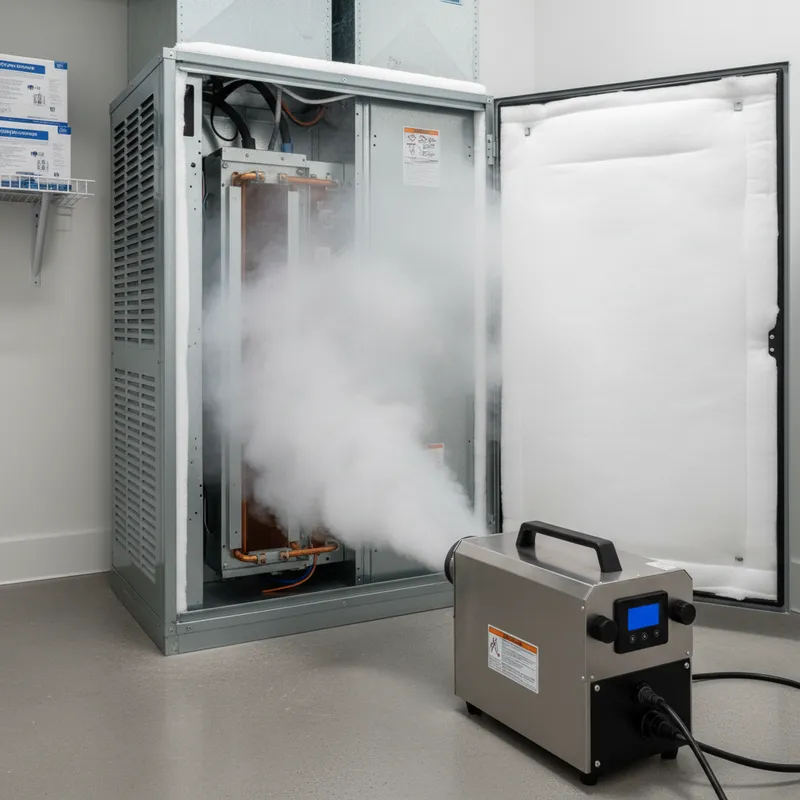
We apply an EPA-registered antimicrobial disinfectant, distributed as a fog throughout your entire duct network so it reaches every branch and run. It's formulated to be safe for occupied homes and leaves no harmful residue behind. This is the step that actually kills the mold spores and bacteria.
Kills Spores & Bacteria on ContactThis is where it counts most in hot, humid Miami Gardens. The evaporator coil, the blower wheel, and the drain pan are where mold colonies almost always start -- it's wet, dark, and dirty in there. We treat all three directly. Sanitize the ducts but skip the coil, and the colony just re-seeds the whole system.
Targets the #1 Mold Source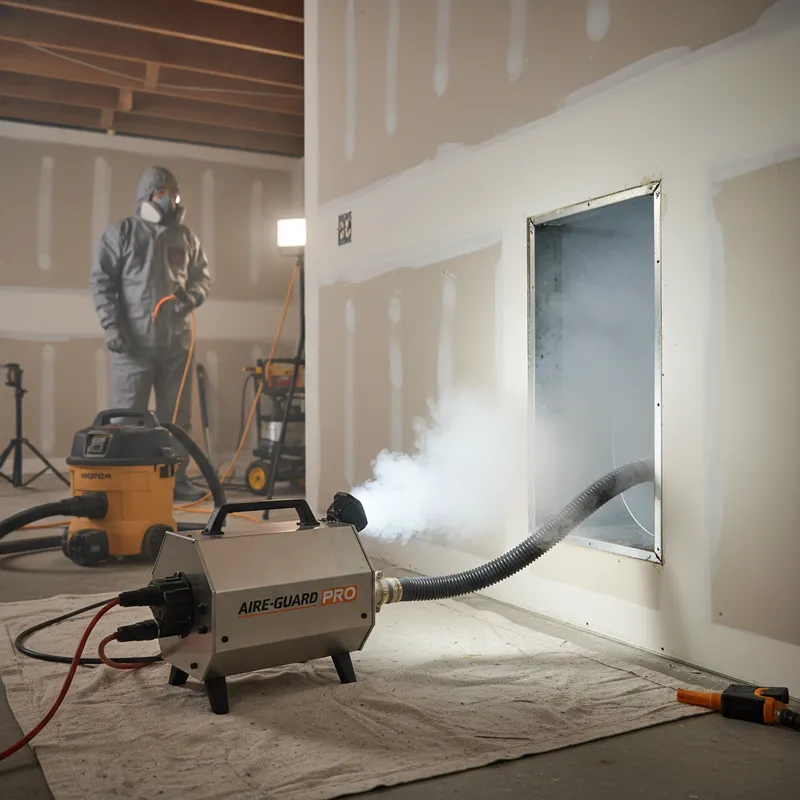
We document the work with before-and-after photos, so you can see the difference yourself. You're not taking our word for it. We confirm coverage, verify airflow at the vents, and leave you with a clear record of exactly what was treated.
Before-and-After Photos Every JobWe inspect your system, show you what's inside, and quote before any work begins.
People search for all three, and most contractors blur them together to sell you whichever one they happen to offer. Here's the honest breakdown so you can self-diagnose before you call anyone.
| Service | What It Actually Does | When You Need It |
|---|---|---|
| Duct Cleaning | Physically removes dust, debris, pet hair, and construction particles from ductwork | Every 3-5 years, after a renovation, when you move into a new Miami Gardens home |
| AC Sanitizing | Applies EPA-registered antimicrobial treatment that kills mold spores, bacteria, and odor-causing germs cleaning leaves behind | After cleaning, in older Miami Gardens homes with aging ducts, with allergy symptoms, musty odors, kids, or pets |
| Mold Remediation | Full containment and physical removal of active, visible mold colonies, handled per Florida state guidelines | When inspection confirms active mold growth -- visible colonies, not just spores |
The honesty line: Florida guidelines require active mold in an AC system to be handled by a licensed professional under proper containment -- not just sprayed over. We are a FL HVAC licensed contractor (#CAC1817115), and when a Miami Gardens diagnostic turns up active mold growth that crosses into remediation territory, we'll tell you straight and coordinate the proper mold removal from air ducts process. We won't fog over a real mold problem and call it solved.
Sanitizing kills spores and inhibits regrowth. It is not a substitute for remediating an active colony -- and any company that tells you a quick fog fixes visible mold is selling you a re-do in three months.
Your HVAC system touches every room. Whatever is living inside the ducts gets blown into your bedroom, your kid's room, grandma's room, your kitchen -- every time the AC kicks on. A contaminated system isn't a duct problem. It's a whole-home, whole-family exposure problem.
Mold spores, dust-mite waste, and pet dander get trapped in the biofilm lining your ducts and recirculate constantly. If your family feels worse indoors than outdoors, your air handler is a prime suspect.
That smell isn't dust -- it's microbial VOCs, the gases bacteria and mold colonies give off as they grow on your coil and ductwork. You can't deodorize it away. You have to kill the source.
The EPA reports Americans spend about 90% of their time indoors, and indoor air can be two to five times more polluted than outdoor air. A dirty HVAC system is a big reason why -- and it hits kids and elders hardest.
Dander and saliva proteins bond to the duct lining and literally feed bacterial growth. Homes with dogs and cats need sanitizing more often than homes without.
If clean air for the whole family is the goal, our indoor air quality products pair well with sanitizing to keep the system protected between visits.
Not sure if you actually need this? If any of these describe you, sanitizing is worth a free diagnostic. Nodding at two or more? Don't guess -- a free diagnostic shows you exactly what's in your system.
The realistic Miami Gardens interval -- not the national 3-5 year cleaning cycle, which doesn't account for our humidity and near-continuous AC use.
That first-blast smell is the classic sign of microbial growth living on the coil and in the first few feet of ductwork.
Symptoms with no clear outdoor trigger -- worse inside than outside, especially in kids -- point straight at your AC system.
Dander and saliva proteins feed bacterial growth in the ducts. Pet homes need sanitizing more often.
Spores travel through the HVAC system. Mold anywhere in the home seeds the ducts -- sanitize after any incident.
Carol City, Andover, Norland, and Bunche Park houses from the 1960s-80s have porous, decades-old duct lining that harbors biofilm cleaning can't reach.
Most cheap $49-$99 cleanings do. If yours did, the spores were never killed -- only the dust was removed.
More people and pets under one roof feed more biofilm. The more your home holds, the more the whole-home air matters.
Whether you have a central air system in a Carol City single-family home or a heat pump in a newer Miami Gardens build, we sanitize it -- and every major brand that runs it.
The most common Miami Gardens single-family setup -- a condenser outside, an air handler inside or in the garage, and a full duct network. We fog the entire duct system and treat the evaporator coil, blower wheel, and drain pan.
Condenser plus indoor air handler, often in a closet, garage, or attic in these older homes. We sanitize the supply and return runs and treat the coil and drain pan where condensation feeds mold growth.
Found in many newer Miami Gardens homes and additions. Heat-pump air handlers and package units get direct coil and blower-wheel antimicrobial treatment -- the spots that breed the musty smell.
We service all major brands including Rheem, Carrier, Trane, Goodman, Bryant, Daikin, Lennox, York, Amana, American Standard, Mitsubishi, Fujitsu, and LG. For full-system work in Miami Gardens, see our HVAC system cleaning service.
Let's talk about money honestly, because the pricing games in this industry are exactly why hard-working families don't trust duct cleaners.
We start with a free diagnostic. A licensed technician inspects your Miami Gardens home's system, shows you what's actually in there, and explains what treatment makes sense. There is no obligation to book anything on the spot. You see the real condition of your ducts first -- then you decide.
Why we don't quote a flat price online. The honest answer is that cost depends on what your specific system needs: the number of vents, your duct linear footage, whether the air handler is easy to access, your home's square footage, and the contamination level we find. Any company quoting you a firm price before seeing your system is either guessing or planning to "find" extra charges once they're inside. That's the bait-and-switch this industry is famous for, and it's not how we treat Miami Gardens families.
About those $99 specials. When you see a $49 or $99 duct cleaning ad around Miami Gardens, here's what's usually missing: no antimicrobial sanitizer is actually applied, there's no before-and-after documentation, and often no licensed technician on site. You get a vacuum run through a few vents and a smell that comes back in a month. We are a FL HVAC licensed contractor (#CAC1817115) -- our work is documented, accountable, and done by people legally allowed to do it.
The bottom line: start with the free diagnostic. No pressure, no obligation to book, no surprise fees. You'll know exactly what your system needs and what it costs before any work begins. The best value is bundling sanitizing into a complete air duct cleaning and sanitizing service in a single visit, while the ducts are already open and accessible.
Anyone can buy a fogger and a jug of disinfectant. That's the problem. Here's why the license behind the work actually protects your family.
The contrast is simple: a licensed contractor is accountable to the state, to the BBB, and to you. An unlicensed one is accountable to no one. For a treatment going into the air your family breathes, that difference matters. To keep the system protected long-term, UV germicidal light installation in Miami Gardens adds continuous microbial control between sanitizing visits.
Real reviews from Miami Gardens and Miami-Dade County families who booked AC sanitizing and antimicrobial treatment.
"Our house in Carol City is from the 70s and the original ducts had never been touched. My son's asthma was always worse at home. The free diagnostic showed biofilm all down the first duct run. After the antimicrobial sanitizing he's been breathing easier at night. Showed me before-and-after photos, no pressure on the price."
"Older home in Andover, three generations under one roof and the AC runs all year. Had it cleaned by another company and the musty smell came back in a few weeks. These guys explained the dust came out but the mold on the coil was never treated. They sanitized the whole system and treated the coil. The smell is finally gone and stayed gone."
"Two dogs and a place near Norland that runs the AC nonstop. I didn't even know sanitizing was different from cleaning until they explained it. They treated the ducts, the coil and the drain pan. The dusty film on the vents is gone and the air just smells cleaner for the whole family. Upfront and honest about everything before any work started."
Sanitizing kills current microbes. These services do the mechanical removal, handle active mold, and keep your system protected between visits.
Also see: HVAC system cleaning | anti-mold AC cleaning | AC sanitizing across Miami-Dade & Broward
AC sanitizing is a multi-step process: we HEPA-vacuum and agitate the ducts to remove physical debris, then apply an EPA-registered antimicrobial treatment by fogging it throughout the duct network, and finally treat the evaporator coil, blower wheel, and drain pan where mold colonies usually start. It kills mold spores, bacteria, viruses, and odor-causing microbes that cleaning alone leaves behind. For the established single-family homes across Carol City, Andover, and Norland, the coil step matters most because the inland heat keeps systems running hard and re-seeds growth fast. Most systems take about 1.5 to 3 hours depending on size.
We start with a free, no-obligation diagnostic -- a licensed technician inspects your Miami Gardens home's system and shows you what's actually in there before quoting anything. Final cost depends on your number of vents, system size, air-handler access, and contamination level, which is why we don't quote a firm price sight-unseen (that's how bait-and-switch pricing happens). You'll know the exact cost before any work begins -- no surprises for a hard-working family. Call (305) 607-3244 or book your free diagnostic online.
Yes. Miami Gardens is a hot inland city in northwest Miami-Dade where AC systems run ten to twelve months a year, and most homes were built in the 1960s, 70s, and 80s with original ductwork that has been collecting biofilm for decades. Cleaning alone doesn't kill the mold and bacteria living in that aging duct lining. Sanitizing delivers the strongest payoff for families with kids, multi-generational households, allergy sufferers, and pet owners -- exactly the family-oriented homes that fill Carol City, Andover, Bunche Park, and Lake Lucerne.
Every 2 years in Miami Gardens is the realistic interval -- shorter than the national 3 to 5 year cleaning cycle, because our South Florida humidity and the near-continuous AC use of a hot inland summer re-grow microbes faster. Older homes with original 1960s-80s ductwork may benefit from sanitizing on the shorter end of that range. After any mold incident in the home, sanitize right away, since spores travel through the HVAC system into every room.
Cleaning is the physical removal of dust and debris. Sanitizing is the application of an EPA-registered antimicrobial treatment that kills the mold spores, bacteria, and germs cleaning leaves behind. Cleaning makes the ducts look clean; sanitizing makes them actually healthy. Done together, they're the complete job -- and the sanitizing step is the one cheap $99 cleanings advertised around Miami Gardens usually skip. See our duct cleaning and sanitizing service for the full bundle.
Yes. Mold spores, dust-mite waste, and pet dander get trapped in the biofilm lining your ducts and recirculate through every room when the AC runs. Sanitizing kills the microbial growth and clears the allergen-hosting film off the duct surfaces. In a family-oriented city like Miami Gardens, where homes often hold kids, grandparents, and pets under one roof, families who feel worse indoors than out often trace it straight to the air handler. It works best done right after a thorough HEPA cleaning, not instead of one -- and it makes a real difference for mold- and dust-triggered allergies.
Yes. We sanitize AC systems throughout Miami Gardens -- Carol City, Andover, Bunche Park, Lake Lucerne, Norland, Scott Lake, Rolling Oaks, Vista Verde, and the neighborhoods near Hard Rock Stadium and the Betty T. Ferguson Center -- plus the surrounding Miami-Dade cities of Hialeah, Opa-locka, Miami Lakes, North Miami Beach, North Miami, and Aventura. Call (305) 607-3244 to confirm your ZIP.
Sanitizing kills mold spores and inhibits regrowth, which handles the surface-level microbial problem. But active, visible mold colonies require professional mold remediation under Florida state guidelines -- sanitizing is not a substitute for that. Our free diagnostic determines which you actually need, and we'll tell you honestly if remediation is required rather than fogging over a real problem. See air duct mold removal for active colonies.
In hot inland Miami Gardens, expect roughly 18 to 24 months before retreatment is recommended -- our humidity and the near-continuous AC use of a long South Florida summer shorten the interval compared to drier climates. You can extend it by keeping the AC drain pan clean, changing filters every 30 to 60 days, and keeping indoor humidity below 60 percent with a dehumidifier. Adding UV germicidal light installation in Miami Gardens extends protection by continuously killing spores between treatments.
Not effectively. The DIY sprays sold at hardware stores aren't EPA-registered for HVAC duct application, and they can't reach deep into the duct runs or treat the evaporator coil where mold actually starts. A $15 can of Lysol on the visible vent covers does nothing for the system itself. Effective sanitizing requires commercial fogging equipment and EPA-registered products applied by a licensed technician.
We bring EPA-registered AC sanitizing to homes across all of Miami Gardens and the surrounding northwest Miami-Dade cities. The established neighborhoods especially -- Carol City, Andover, Norland, and Bunche Park, where original 1960s-80s ductwork is the norm -- benefit most from post-cleaning antimicrobial treatment, because that aging duct lining holds the biofilm cleaning alone can't reach.
Local AC sanitizing pages for the Miami-Dade and Broward cities closest to Miami Gardens.
We also serve nearby Opa-locka, Miami Lakes, North Miami Beach, North Miami, and Aventura. Do not see your city? Call (305) 607-3244 -- we likely serve your area. View the full AC sanitizing service area.
It's not the dust -- it's what's living on your coil. One antimicrobial sanitizing kills the mold spores and bacteria at the source and stops the musty smell from coming back. Book your free Miami Gardens AC sanitizing diagnostic now.