
Why Miami Homes Get Mold in Air Ducts (And How to Stop It)
If your air vents smell musty every time the AC kicks on, you’re not imagining things — and you’re not alone. Mold in air ducts is one of the most common HVAC problems we see in South Florida, and Miami’s climate is the number one reason why.
I’ve been doing air duct mold removal across Miami-Dade and Broward County for over a decade. At least 3 out of every 10 duct cleaning jobs we take on involve some level of mold contamination. In most cases, the homeowner had no idea it was there — they just knew something smelled off, or their allergies were getting worse indoors.
This guide explains exactly why Miami homes are uniquely prone to duct mold, how to recognize the warning signs, what the professional HVAC mold removal process looks like, and — most importantly — how to prevent it from coming back.
Why Miami Is Ground Zero for Air Duct Mold
Mold needs three things to grow: moisture, warmth, and organic material. Miami delivers all three in abundance, 365 days a year. Here’s what makes our city a perfect storm for mold in air ducts:
1. Relentless Humidity
Miami’s average relative humidity hovers around 73% year-round, regularly spiking above 85% during summer months. The National Weather Service ranks Miami-Dade among the most humid metropolitan areas in the continental United States. When your AC pulls in this moisture-laden air, condensation forms inside the ductwork — especially in areas where cold supply air meets warm surrounding air in unconditioned spaces like attics.
2. Year-Round AC Cycling
Unlike northern cities where HVAC systems get months of downtime, Miami’s air conditioners run 10–12 months per year. Every cooling cycle creates temperature differentials that produce condensation inside ducts. When the system shuts off overnight or during mild weather, that moisture sits in dark, stagnant ductwork — the exact conditions mold spores need to colonize and spread.
3. Tropical Rain Patterns
Miami averages 62 inches of rainfall annually — more than Seattle, more than New York, more than almost any major U.S. city. Summer afternoon thunderstorms dump massive amounts of moisture into the air. That moisture gets pulled into your HVAC system through the fresh air intake, return vents, and any leaks in the duct system. If your air duct system has even small gaps or poorly sealed connections, rainwater can enter directly.
4. Construction Practices Unique to South Florida
Many Miami homes built from the 1980s through the 2000s use flex duct installed in unconditioned attics. Florida attics regularly hit 140–150°F in summer. The extreme temperature difference between cold air inside the duct and scorching air outside creates constant condensation — like a cold glass of water sweating on a hot day. Older homes may also have inadequate duct insulation or vapor barriers that have degraded over time.
⚠ Miami-Specific Risk Factor
Homes within 5 miles of the coast face an additional threat: salt air accelerates corrosion of metal duct components, creating rough surfaces where mold adheres more easily. Combined with the higher humidity near the water, coastal Miami properties develop duct mold at roughly twice the rate of inland homes.

Suspect Mold in Your Ducts?
Free inspection. Licensed #CAC1817115. We’ll tell you exactly what’s going on — no obligation.
Schedule Free Inspection →5 Signs You Have Mold in Your Air Ducts
Mold inside ductwork isn’t always visible from outside the vents. But it almost always leaves clues. If you notice any of these signs, it’s time to call for a professional HVAC mold remediation inspection:
1. Musty or Earthy Smell When the AC Runs
This is the most common complaint we hear. If your air vents smell musty — like a damp basement or wet cardboard — only when the air conditioning is running, mold inside the ductwork is the most likely culprit. The smell may be stronger in certain rooms, which helps us pinpoint where the growth is concentrated.
2. Visible Dark Spots Around Vent Registers
Check the area immediately around your supply and return vents. Dark discoloration, black or green spotting on the vent grilles, or staining on the ceiling or wall around the register often indicates mold growing on the inside surface of the duct where it meets the vent opening.
3. Unexplained Allergy Symptoms That Worsen Indoors
If your family experiences increased sneezing, coughing, nasal congestion, watery eyes, or throat irritation — and these symptoms improve when you leave the house — airborne mold spores circulating through the duct system could be the cause. The EPA estimates that indoor air can be 2–5 times more polluted than outdoor air, and mold is a leading contributor.
4. Recurring Respiratory Issues
Chronic headaches, fatigue, difficulty breathing, and worsening asthma symptoms that don’t respond to medication may indicate prolonged mold exposure. Children, elderly family members, and anyone with compromised immune systems are especially vulnerable to mold-related health effects.
5. Visible Mold Inside the Air Handler
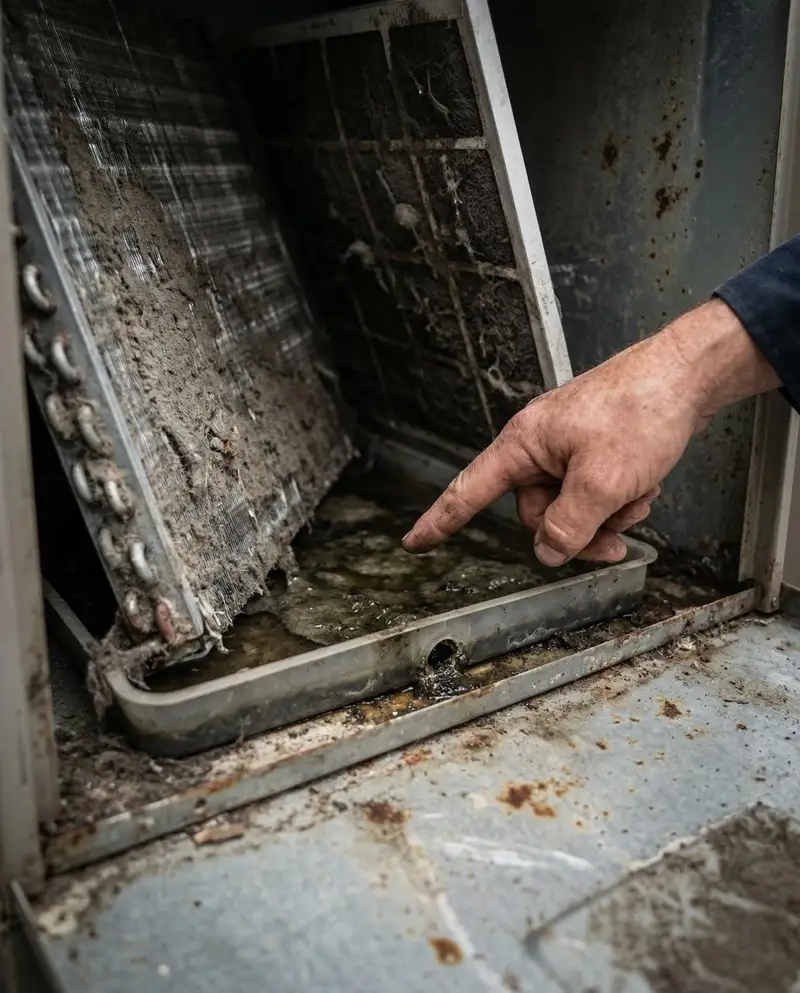
Turn off your AC system, remove the access panel on the air handler, and look at the evaporator coil, drain pan, and blower housing with a flashlight. If you see black, green, or white fuzzy growth on any of these surfaces, mold is almost certainly present in the connected ductwork as well.
How Mold Gets Inside Your Duct System
Understanding the entry points helps you prevent future growth. Here are the most common ways mold establishes itself in Miami HVAC systems:
Condensation on Duct Surfaces
This is the primary cause in Miami. When cold air (55–60°F) flows through ducts surrounded by hot, humid air (90–150°F in attics), moisture condenses on the outer duct surface and can migrate inward through gaps, seams, and degraded insulation. Even properly insulated ducts develop condensation over time as insulation compresses or shifts.
Clogged Condensate Drain Lines
Your AC produces 5–20 gallons of condensate water per day in Miami’s humidity. That water drains through a small PVC pipe. When algae, rust, or debris clogs the drain line, water backs up into the drain pan and eventually overflows into the air handler and connected ductwork. This is the most preventable cause of HVAC mold — regular AC maintenance keeps drain lines clear.
Poor Duct Insulation
Ductwork running through unconditioned spaces needs adequate insulation to prevent condensation. In many older Miami homes, the original R-4.2 insulation has compressed, torn, or been damaged by rodents or storms. Exposed sections of duct become condensation magnets — and mold follows within days.
Oversized AC Systems
An AC unit that’s too large for the home cools the air quickly but shuts off before it can adequately dehumidify. This “short cycling” leaves excess moisture in the air and on duct surfaces. It’s a surprisingly common problem in Miami — many systems were oversized at installation to handle “worst case” heat but end up creating worse humidity problems than they solve.
Duct Leaks and Poor Sealing
The average residential duct system loses 20–30% of conditioned air through leaks, according to Energy Star. In Miami, those leaks work both ways — hot, humid attic air gets pulled into the duct system through the same gaps, introducing moisture directly into the airstream.
Professional Mold Remediation — Licensed & Insured
Complete air duct mold removal with antimicrobial treatment. Kill it at the source.
How to Prevent Mold in Your Air Ducts
Prevention is always cheaper than remediation. Here are the most effective strategies to keep mold in air ducts from developing in the first place:
Install UV-C germicidal lights. A UV light installed inside the air handler kills mold spores, bacteria, and viruses as air passes through the system. Studies show UV-C lights reduce microbial growth on AC coils by up to 99.9%. In Miami’s climate, this is the single most effective long-term mold prevention tool. Installation runs $199–$1,000 depending on the system.
Keep humidity below 50% indoors. Use a whole-home dehumidifier or a smart thermostat with humidity control. Miami’s outdoor humidity often exceeds 80%, but your indoor environment should stay between 40–50% relative humidity. Many modern thermostats can monitor and control this automatically.
Change air filters every 30–60 days. In Miami’s dusty, pollen-heavy air, filters clog faster than national guidelines suggest. A clogged filter restricts airflow, causing the evaporator coil to freeze and thaw — creating excess moisture that feeds mold growth. Use a MERV 8–11 rated filter for the best balance of filtration and airflow.
Schedule annual AC maintenance. A professional tune-up includes cleaning the drain line, checking insulation, inspecting for mold, and ensuring proper refrigerant levels. This single appointment prevents the majority of mold-causing conditions. It costs far less than a full HVAC mold remediation down the road.
Don’t turn your AC off for extended periods. When you leave for vacation or set the thermostat to 85°F to save money, humidity inside the home skyrockets. Mold can begin growing in ductwork within 24–48 hours in Miami’s climate. Keep the AC running at 78–80°F even when you’re away, or use the “dry mode” setting if your system has one.
The Professional HVAC Mold Removal Process
If mold is already present, here’s what a proper HVAC mold remediation job looks like when done by a licensed professional. This is exactly the process we follow for every mold remediation job:
- Full system inspection — We visually inspect every accessible section of ductwork, the air handler, evaporator coil, drain pan, and blower housing. We identify the type and extent of mold growth, plus the moisture source causing it.
- Containment setup — Affected areas are sealed with plastic sheeting to prevent mold spores from spreading to other parts of the home during remediation. Negative air pressure machines with HEPA filters run continuously.
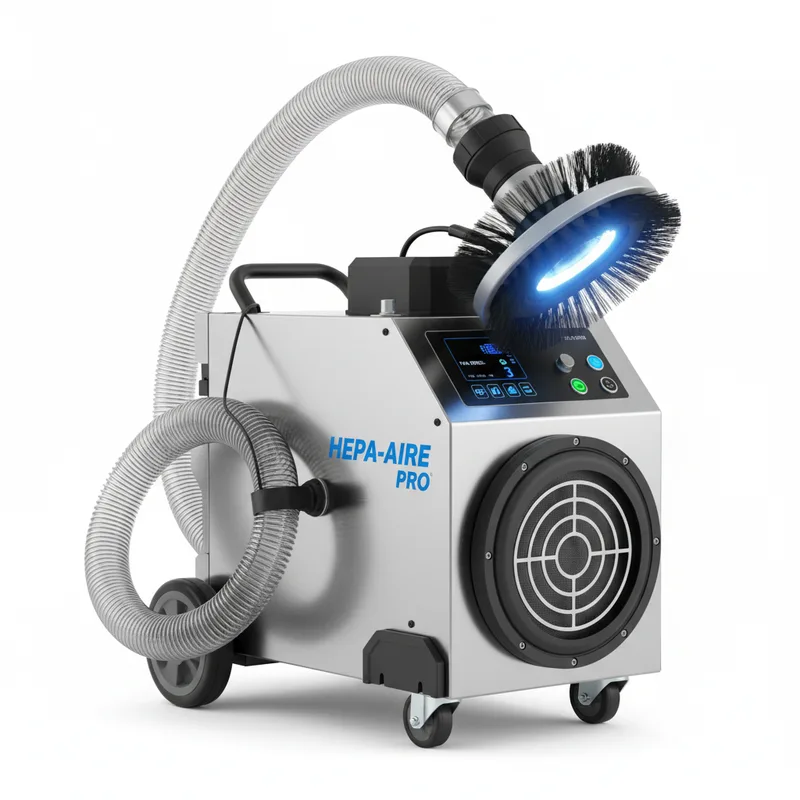
- HEPA vacuuming — Every interior duct surface is vacuumed with HEPA-grade equipment that captures particles down to 0.3 microns — small enough to trap individual mold spores.
- Mechanical cleaning — Rotating brushes and compressed air tools physically remove mold colonies from duct walls, vent boots, and air handler components.
- Antimicrobial treatment — An EPA-registered antimicrobial solution is applied to all interior duct surfaces and air handler components. This kills remaining mold and creates a protective barrier that inhibits regrowth.
- Source correction — We address whatever caused the mold in the first place — whether that’s a clogged drain line, damaged insulation, duct leaks, or inadequate dehumidification. Without fixing the root cause, mold will return within weeks.
- Post-remediation verification — We document the completed work with before-and-after photos and perform a final inspection to ensure all visible mold has been eliminated.
How Much Does AC Mold Cleaning Cost?
The ac mold cleaning cost in Miami depends on severity. Here’s what to expect for HVAC mold cleaning cost at different levels:
- Mild (confined to 1–2 sections): $500–$800 — Localized growth near a vent or in the air handler drain pan.
- Moderate (multiple duct sections): $800–$1,500 — Mold present in several supply lines and possibly the air handler.
- Severe (system-wide contamination): $1,500–$3,000+ — Widespread growth throughout the duct system, air handler, and possibly the home’s structure. May require duct replacement in extreme cases.
If you’re searching for air duct mold removal near me or HVAC mold removal near me, make sure the company you choose is a licensed HVAC contractor (not just a general mold remediation company). HVAC systems require specialized knowledge — a general mold company may clean visible mold but miss the moisture source inside the air handler that’s causing the problem.
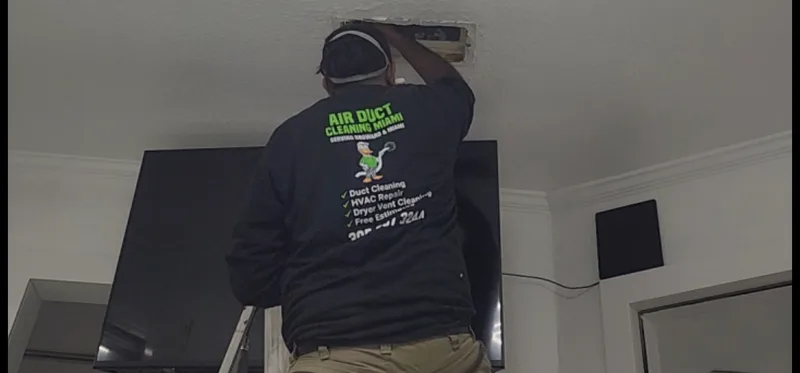
Get a Mold Inspection — Free, No Obligation
Licensed #CAC1817115. BBB A+ Rated. We’ll identify the problem and give you honest options.
Book Free Inspection →Frequently Asked Questions
Stop Duct Mold Before It Spreads — Call (305) 607-3244
Mold in your air ducts isn’t just a nuisance — it’s a health hazard and a sign that something in your HVAC system needs attention. In Miami’s climate, the question isn’t if mold will try to grow in your ductwork — it’s whether you catch it early or let it become a major problem.
If you’re searching for HVAC mold remediation near me, we’re licensed (#CAC1817115), BBB A+ accredited, and have completed hundreds of mold remediation jobs across Miami-Dade and Broward County. We also offer UV light installation to prevent mold from returning and professional duct cleaning to keep your system running clean year-round.
Read more about mold in air ducts in Miami or call (305) 607-3244 for a free, no-obligation inspection.
Ready to Eliminate Duct Mold?
Professional mold remediation + UV light protection. Same-day service available across Miami-Dade and Broward County.
Book Mold Inspection →