

Your Allergies May Be Coming From Your AC — Here's What to Do

You wake up every morning congested. Your nose runs, your eyes itch, and by 9 AM you have a headache. But your doctor ran the tests and told you: no seasonal allergies. So what is going on? If you notice your symptoms are worse at home than they are outside — or better on the days you spend out of the house — your AC is almost certainly the reason. Allergies from AC systems and dirty air ducts are one of the most common complaints we hear from Miami homeowners, and the fix is simpler than most people expect. In this post, we'll walk you through exactly why your air conditioner triggers these symptoms, the Miami-specific factors that make it worse here than almost anywhere else in the country, and what you need to do to actually get relief.
Dirty air ducts and contaminated AC coils trap and recirculate mold spores, dust mites, pet dander, and pollen throughout your home. In Miami's year-round humidity, mold grows on evaporator coils and inside ductwork faster than in any other US climate. Professional duct cleaning, coil cleaning, and a filter upgrade are the three steps that stop the cycle.
Why Your AC Is Blowing Allergens Through Every Room
Think of your air conditioning system as a giant straw that pulls air from every room, sends it through the air handler, cools it, and blows it back out. Whatever is living inside your ductwork — dust, mold spores, pet dander, pollen — gets blown into every room of your home every time the AC cycles on. It doesn't stay still. It recirculates.
In a typical South Florida home, the AC runs 10 to 12 months a year. That's 10 to 12 months of pulling air, collecting debris, and pushing it back through your living space. Unlike homes in colder states where systems sit idle for months and get a natural break, your Miami system never really stops. The buildup in your ducts compounds every single year.
The four main allergens we find when we open up ductwork in Miami-Dade and Broward homes are:
- Dust mites — Microscopic bugs that thrive above 50% relative humidity. Miami averages 73% humidity year-round. Your ductwork is their dream home.
- Mold spores — The evaporator coil (the cold metal part inside your air handler) is constantly wet from condensation. Without regular cleaning, mold grows directly on it and releases spores into your airstream every cycle.
- Pet dander — Pet hair and dander gets pulled into the return vents and accumulates in duct bends and corners. Even if you're not allergic to your pet, the dander feeds dust mite colonies and contributes to overall particle load.
- Pollen — South Florida has no real winter. Pollen season here is essentially year-round, which means pollen gets tracked inside and recirculated continuously through your ducts. It never settles permanently because the AC keeps moving it.
If you have a newborn on the way, this accumulation carries extra urgency. Read our complete guide on air duct cleaning before baby arrives in Miami to understand the timing and what to expect.
Why Miami and Broward Homes Have It Worse
When we do air duct cleaning in Miami-Dade and Broward County, we see contamination levels that would surprise most people. A Coral Gables home built in the 1970s with original ductwork can have decades of accumulated debris. A newer Doral condo with five pets can have significant dust mite and dander buildup in just two or three years. The climate accelerates everything.
Here is what makes South Florida uniquely bad for indoor air quality:
- Humidity never drops. Dust mites need 50%+ humidity to survive. Miami rarely goes below 65%. They reproduce freely inside your ductwork all year.
- Mold on coils is almost universal. We inspect coils on hundreds of systems every year. In Miami-Dade homes with no recent maintenance history, mold on the evaporator coil is the rule, not the exception. The coil is cold, wet, and dark — exactly what mold needs to grow.
- No "off season" for pollen. Brazilian pepper, ficus, melaleuca, and dozens of other South Florida plants produce pollen continuously. Pollen enters your home every time a door opens, and your AC keeps it in circulation instead of letting it settle and be vacuumed up.
- Older home ductwork in Coconut Grove and Coral Gables. Many homes in these neighborhoods were built before modern duct design standards. Flex duct that sags, poorly sealed joints, and return plenums built into wall cavities all create zones where debris accumulates and cannot be reached by a standard vacuum alone.
- Condos with shared air handling. In Brickell, Aventura, and Hallandale Beach high-rises, air handling systems service multiple units. One neighbor with a heavy mold problem or multiple pets can contribute to the air quality across the floor.

Your AC May Be the Reason You Can't Breathe at Home
We inspect ducts and coils in Miami-Dade and Broward County homes every day. A licensed technician can tell you exactly what's in your system in under an hour — free of charge.
Book Free Inspection →The Signs Your AC Is Causing Your Allergy Symptoms
The symptom pattern for AC-related allergies is different from outdoor seasonal allergies. Here is what to watch for:
| AC-caused allergy symptoms | Seasonal allergy symptoms (outdoor) |
|---|---|
| Worse in the morning (AC ran overnight) | Worse during high-pollen days regardless of location |
| Better when you leave home for a few hours | Same outdoors as indoors |
| Worse in rooms near supply vents | Same in all rooms |
| Worse immediately when AC kicks on | No connection to AC cycle |
| Musty smell from vents when AC starts | No unusual smell indoors |
| Allergy tests return negative or mild results | Allergy tests show clear positive results |
If you recognize three or more of the left column, your indoor air quality is the problem, not the outdoors. The good news: this is fixable.
Important: If you have asthma, notice chest tightness after the AC kicks on, or experience symptoms that get rapidly worse, contact your doctor first. AC-related mold exposure can trigger serious respiratory events in sensitive individuals. The HVAC fix and the medical care go together — one does not replace the other.
What Needs to Be Done to Fix It
Getting relief from AC-driven allergies requires addressing the source, not just the symptoms. Three services work together to solve the problem completely.
1. Professional Air Duct Cleaning
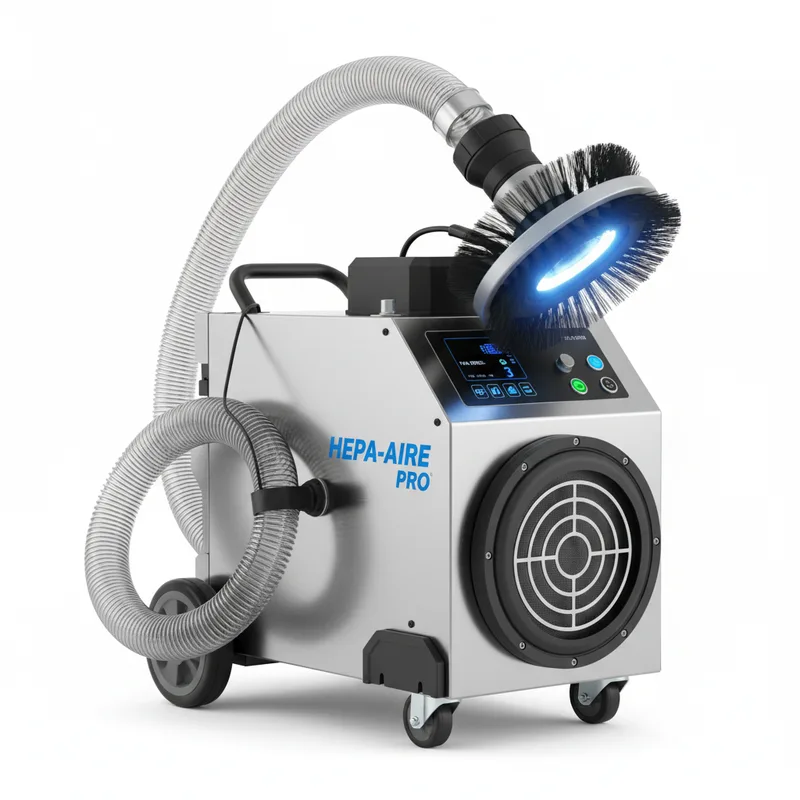
A licensed air duct cleaning service uses commercial-grade HEPA negative-air equipment to remove accumulated debris from inside your ductwork. This is not the same as replacing your filter. Filters catch what's in the airstream coming in. Duct cleaning removes what has already settled inside the duct walls, corners, and bends over years of operation. For a home that has never been cleaned, it is common to remove several pounds of debris.
We see this every week in Pinecrest and South Miami homes with hardwood or tile throughout — the homeowners clean meticulously, but the dust keeps coming back. That's because the source is inside the ducts, not on the surfaces.
2. Evaporator Coil Cleaning
The evaporator coil is the cold metal component inside your air handler, usually located in a closet or the attic. It removes heat and humidity from the air. Because it runs wet, it is the single most common place we find mold in South Florida systems.
Cleaning the coil removes the mold growing directly on it. As long as mold is on the coil, every air cycle pushes spores into your home. No amount of duct cleaning fixes an actively contaminated coil. Both need to be addressed. We treat them as one job.
3. Filter Upgrade
A standard 1-inch fiberglass filter (MERV rating 4 to 6) catches large dust particles but passes right through with mold spores, pollen, and pet dander. An upgrade to a MERV 11 or MERV 13 pleated filter captures those smaller particles before they reach the coil and re-enter your air.
One important note: a thicker, higher-MERV filter does restrict airflow slightly. On older systems with marginal blower motors, this can cause the coil to freeze. A licensed technician should confirm your system can handle the upgrade before you switch. This is part of what we check during our free inspection.
★ 4.8 Stars — Free Inspection, Same Day Available
Licensed #CAC1817115 • BBB A+ Rated • 1,000+ Homes Served in Miami-Dade & Broward
Why This Is Not a Job for a Handyman or a Vacuum
We get calls every month from homeowners who tried to clean their ducts with a shop vac and still have the same allergy symptoms a week later. A shop vac can reach 18 inches into a duct register. Your ducts run 30 to 50 feet through walls and ceilings. The debris causing your symptoms is not near the vent. It is in the middle of the run, at every bend, and at the plenum where all ducts connect to the air handler.
Professional duct cleaning uses HEPA-equipped negative-air machines that create suction from the main trunk line while a technician agitates debris loose from each register. The system captures everything in a HEPA filter instead of blowing it back into your home. There is no DIY equivalent.
Air Duct Cleaning Miami is licensed by the Florida Department of Business and Professional Regulation (license #CAC1817115) and rated A+ with the BBB. We use commercial HEPA negative-air equipment on every job, and we inspect the coil on the same visit. We've cleaned over 1,000 South Florida homes. We know what Miami ductwork looks like after two, five, and fifteen years without service — and we know what it looks like after.
After the Cleaning: Keeping Your Air Clean Long-Term
Duct cleaning is not a one-time fix you do and forget. In Miami's climate, maintenance matters:
- Change your filter every 60 days (not 90, despite what the packaging says — Miami's AC runs far more hours per year than the national average assumes).
- Schedule an AC tune-up every year, which includes coil inspection and drain line flush. A clogged condensate drain causes water to back up in the pan, which grows mold fast.
- Have ducts inspected every 2 to 3 years if you have pets, allergies, or young children. Annual inspections are worth it for households with asthma.
- Ask about in-duct UV light systems. A UV light installed near the evaporator coil keeps mold from regrowing between cleanings. We explain the technology during every inspection so you can decide if it makes sense for your system.
For more on what drives mold growth in Miami HVAC systems, read our guide on mold in air ducts in Miami. And if you are not sure whether your ducts need cleaning at all, our post on the signs your air ducts are dirty will help you decide before you call anyone.
Ready to Breathe Easier at Home?
Free inspection, same-day service available in Miami-Dade and Broward. Licensed, insured, BBB A+. We find the source of your symptoms, not just the filter.
Book Free Inspection →