
How to Prepare Your AC for Hurricane Season in Miami (2026 Checklist)
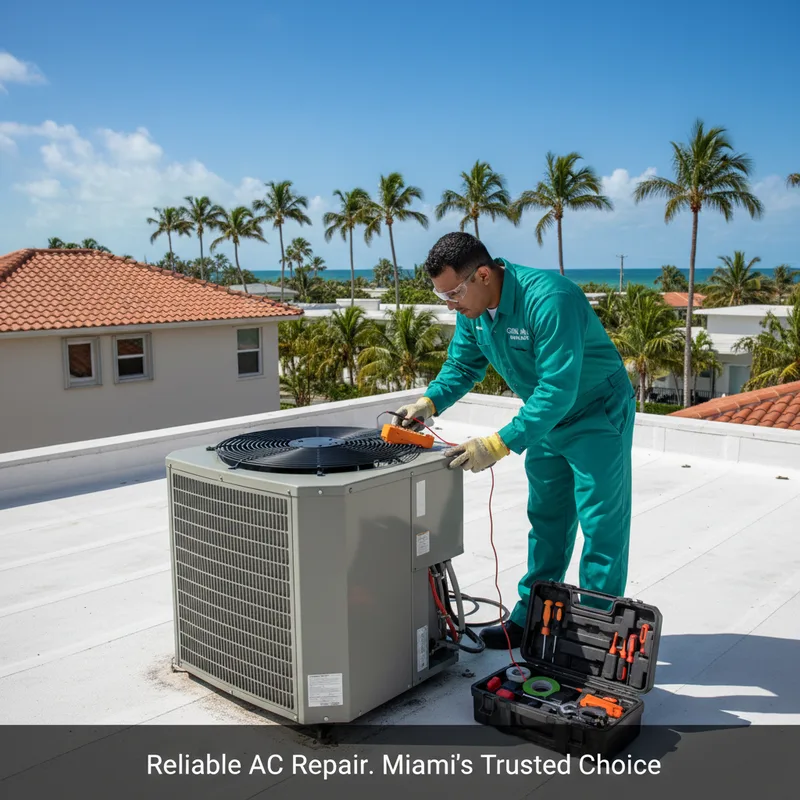
Hurricane season in Miami runs from June 1 through November 30 — six full months where a single storm can turn a working AC system into a $5,000 repair bill. If you haven’t started thinking about how to prepare your AC for hurricane season, now is the time. Once a storm is named and headed toward South Florida, every HVAC company in the county is booked solid.
I’ve seen what hurricanes do to air conditioning systems across Miami-Dade and Broward County. Outdoor condensers ripped off their pads. Compressors fried by power surges. Ductwork flooded with standing water that turns into a mold factory within 48 hours. The good news: most of this damage is preventable with the right preparation. This checklist walks you through exactly what to do — before, during, and after the storm.
Why Miami Homeowners Need a Hurricane AC Plan
Unlike homeowners in most of the country, Miami residents depend on air conditioning for survival — not just comfort. When temperatures hit 95°F with 85% humidity in July, losing your AC isn’t an inconvenience. It’s a health risk, especially for children, elderly family members, and pets.
Here’s what makes Florida AC hurricane preparation different from general storm prep:
- Your outdoor unit is fully exposed. The condenser sits on a concrete pad outside your home, directly in the path of hurricane-force winds and flying debris. A single piece of flying metal can destroy the fan blades and coil fins.
- Power surges kill compressors. When power goes out and comes back repeatedly during a storm, the voltage spikes can burn out your compressor — the most expensive component in the system. A new compressor runs $1,500–$3,000 installed.
- Flooding causes hidden damage. Even a few inches of standing water around or inside the outdoor unit can corrode electrical connections, damage the control board, and create conditions for mold growth inside your entire duct system.
- Post-hurricane demand is overwhelming. After a major storm, HVAC companies are booked for weeks. If your system fails because you didn’t prep, you could be waiting 2–4 weeks for a repair in the middle of summer.
Pre-Hurricane AC Checklist (Do This Before June 1)
The best time to prepare your AC for hurricane season is April or May — before storm season starts and while HVAC companies still have availability. Here’s your complete pre-season checklist:
1. Schedule a Professional AC Tune-Up
A pre-season AC maintenance visit is the single most important step. A licensed technician will check refrigerant levels, test electrical connections, clean the evaporator and condenser coils, inspect the drain line, and verify the system is running at peak efficiency. A well-maintained AC unit is significantly more likely to survive a storm without major damage — and it runs more efficiently during the brutal summer months that overlap with hurricane season.
✅ What a Pre-Hurricane Tune-Up Covers
Refrigerant level check • Electrical connection tightening • Coil cleaning (evaporator + condenser) • Drain line flush • Thermostat calibration • Capacitor and contactor inspection • Air filter replacement • System performance test
2. Clean the Condenser Coils
Dirty condenser coils force your AC to work harder, which means higher energy bills and more stress on the compressor. Before hurricane season, make sure the coils are professionally cleaned. This is part of a standard AC maintenance before summer in Miami, but it’s worth highlighting because clean coils also mean your system recovers faster after a power outage — it doesn’t have to work as hard to cool your home back down.
3. Secure the Outdoor Unit
Your condenser unit should be bolted to its concrete pad with hurricane-rated straps or brackets. Many Miami homes have condensers that are simply sitting on the pad by gravity. A Category 3 hurricane with 130 mph winds can shift or topple an unsecured unit, snapping refrigerant lines and causing thousands in damage.
Also clear the area around your outdoor unit. Remove any loose items within a 10-foot radius — patio furniture, garden tools, potted plants, decorative items. During a hurricane, anything that isn’t bolted down becomes a projectile aimed directly at your condenser.
4. Check and Clear the Drainage System
Your AC’s condensate drain line removes moisture from the air as part of the cooling process. In Miami, this line handles a massive amount of water due to our extreme humidity. If the drain line is clogged or slow before a hurricane, the additional moisture from storm conditions can cause water backup into your air handler — leading to water damage and mold growth inside your ductwork.
Flush the condensate line with a vinegar solution or have your technician clear it during the tune-up. Also make sure the drain pan under the air handler is clean and the float switch is working properly.
5. Install a Whole-Home Surge Protector
This is the single best investment you can make to protect your AC unit from a hurricane. A whole-home surge protector installed at your electrical panel costs $200–$500 and protects every appliance in your house — including your AC — from the voltage spikes that come with power outages during storms. Compared to replacing a $2,500 compressor, it’s the best insurance money can buy.
At minimum, install a point-of-use surge protector on the AC disconnect box next to your outdoor unit. These run $50–$150 and protect just the AC system.

Schedule Your Pre-Hurricane AC Tune-Up
Don’t wait until storm season. Book your maintenance visit now while appointments are available. Licensed #CAC1817115.
Book AC Maintenance →During the Hurricane: What to Do With Your AC
Once a hurricane warning is issued for your area, there are critical steps to take with your AC system. Getting this wrong can mean the difference between a system that fires right back up after the storm and one that needs a full replacement.
Turn Off Your AC System Completely
This is non-negotiable. Turn off your AC at the thermostat AND at the breaker panel before the hurricane arrives. Here’s why both matter:
- Thermostat off prevents the system from trying to cycle on if power flickers during the storm. Short-cycling during voltage fluctuations destroys compressors.
- Breaker off protects against power surges traveling through the electrical lines when FPL restores power. These surges are what fry circuit boards and compressor windings.
⚠ Never Run Your AC During a Hurricane
Running your AC while a hurricane passes overhead risks catastrophic damage. Flying debris can hit the outdoor unit while it’s operating, bending fan blades into the coil. Power fluctuations can destroy the compressor. And if the unit is flooded while energized, it creates an electrocution hazard.
Protect the Outdoor Unit From Debris
If you have time before the storm arrives, place a piece of plywood over the top of the condenser unit and secure it with bungee cords or ratchet straps. This deflects falling branches and debris from above — the most common source of hurricane damage to AC units.
Do NOT wrap the entire unit in a tarp. This is a common mistake. A fully wrapped unit traps moisture inside, which causes corrosion and creates a breeding ground for mold. The goal is to shield the top and deflect debris, not to seal the unit.
After the Hurricane: When and How to Restart Your AC
The storm has passed. The power is back on. It’s 92 degrees and the humidity is suffocating. Every instinct says flip the AC on immediately. Don’t.
Wait at Least 24 Hours After Power Returns
Power restoration after a hurricane is often unstable. FPL may restore power to your grid, lose it, and restore it multiple times in the first 24 hours. Each cycle is another surge risk to your compressor. Wait until power has been stable for a full day before turning on your AC.
Inspect the Outdoor Unit Before Starting
Walk outside and visually inspect your condenser unit. Look for:
- Standing water around the base — If the unit was submerged in floodwater, do NOT turn it on. Floodwater contains salt, chemicals, and debris that can short electrical components.
- Shifted or tilted unit — The condenser must be level to operate safely. If winds moved it off the pad, call a technician.
- Bent fan blades or damaged fins — Look through the top grille. If the fan blades are bent, running the system will cause vibration damage and could burn out the motor.
- Debris inside the unit — Branches, leaves, roofing material, or other debris lodged in the condenser coils need to be removed before operation.
- Damaged refrigerant lines — The copper lines running from the outdoor unit to your house should be intact. If you see oil stains or hear hissing, you have a refrigerant leak.
Check for Mold and Water Damage Inside
After any hurricane that brought flooding or extended power outages, your ductwork is at risk for mold growth. Miami’s humidity means that without the AC running to dehumidify your home, mold can start growing in air ducts within 24–48 hours. Signs to watch for:
- Musty or damp smell when the AC turns on
- Visible moisture or water stains around vents
- Black or green spots on vent grilles or near the air handler
- Increased allergy symptoms, coughing, or headaches after the AC runs
If you notice any of these signs, schedule a mold remediation inspection before continuing to run the system. Running a moldy AC spreads spores throughout every room in your home.
AC Not Working After a Storm?
Same-day emergency AC repair across Miami-Dade and Broward County. Licensed #CAC1817115.
Insurance Tips for Hurricane AC Damage Claims
If your AC sustains hurricane damage, knowing how to file an insurance claim properly can save you thousands. Here’s what every Miami homeowner should know:
📄 Document Everything Before the Storm
Take photos and video of your outdoor AC unit, air handler, and thermostat BEFORE hurricane season. Record the make, model, serial number, and installation date. This documentation is critical if you need to prove the unit was in good working condition before the storm damaged it.
What’s Typically Covered
- Wind damage to the outdoor unit (debris impact, toppled condenser) is covered under most Florida homeowners policies as part of dwelling or other structures coverage.
- Power surge damage to the compressor or control board may be covered, but some policies exclude it. Check your policy or call your agent now — before you need it.
- Flood damage is almost never covered by standard homeowners insurance. You need a separate flood insurance policy through the National Flood Insurance Program (NFIP) or a private carrier. If you live in a flood zone, this is essential.
Filing Your Claim
- Document the damage immediately with photos and video from multiple angles.
- File the claim within 72 hours of discovering the damage. Florida law gives insurers specific timelines, but delays on your end can complicate the process.
- Get a written repair estimate from a licensed HVAC contractor (that’s us — call (305) 607-3244). The insurance company will want documentation of the repair cost.
- Don’t make permanent repairs before the adjuster inspects the damage, unless it’s an emergency that will cause further damage. Temporary measures (like covering exposed ductwork) are fine.
- Keep all receipts for any emergency repairs, hotel stays (if you had to leave due to no AC), and replacement equipment.
Your Complete 2026 Hurricane AC Preparation Timeline
Here’s when to do what for Miami hurricane AC preparation:
- April: Schedule your AC maintenance tune-up. Install surge protector. Photograph your equipment.
- May: Secure outdoor unit with hurricane straps. Clear 10-foot radius around condenser. Test drain line. Stock replacement air filters.
- When a storm is forecast: Turn off AC at thermostat and breaker. Place plywood over condenser top. Bring any loose outdoor items inside.
- After the storm passes: Wait 24 hours. Inspect outdoor unit visually. Check for flooding, debris, and damage. Remove plywood cover.
- Before restarting: Turn breaker on first. Wait 5 minutes. Then turn thermostat on. Listen for unusual sounds. Check for musty smells at vents.
- Within 1 week post-storm: Schedule a professional post-hurricane AC inspection even if the system seems fine. Hidden damage from surges or water intrusion can cause failures weeks later.
Frequently Asked Questions
Don’t Wait Until the First Storm Warning
Every year, the same pattern repeats in Miami: a tropical system forms in the Atlantic, homeowners panic, and every HVAC company is suddenly booked for three weeks. The smart move is to prepare your AC for hurricane season now — in the spring — while you can get a same-week appointment and give your system the attention it needs before it really matters.
We’re licensed (#CAC1817115), BBB A+ accredited, and have been serving Miami-Dade and Broward County homeowners for over a decade. Whether you need a pre-season tune-up, post-storm AC repair, or mold remediation after flooding, we offer same-day service and honest pricing.
Get Your AC Hurricane-Ready
Pre-season tune-ups, surge protector installation, and condenser securing. Same-day service across Miami-Dade and Broward County.
Book AC Maintenance →