
Mold in Air Ducts: Removal Cost, Signs & What Miami Homeowners Need to Know
If you’re wondering about mold in your air ducts, here’s the direct answer: professional mold removal from ductwork costs $500 to $2,000+ depending on how far it’s spread. And if you live in Miami, this is NOT a rare problem. Our year-round humidity — consistently above 70% — creates the perfect breeding ground for mold inside AC systems. Left untreated, duct mold circulates spores through every room in your home every time the AC kicks on.
This guide covers everything Miami homeowners need to know: how much removal costs, what causes it, how to spot it, the health risks, and how to prevent it from coming back.
How Much Does Mold Removal From Air Ducts Cost?
Mold remediation costs vary widely based on severity. Here’s what Miami homeowners can expect to pay in 2026:
| Severity Level | Average Cost | What’s Involved |
|---|---|---|
| Light Mold (surface, 1-2 vents) | $300 – $500 | Localized cleaning & antimicrobial treatment |
| Moderate (multiple vents + trunk line) | $500 – $1,200 | Full duct cleaning with mold remediation |
| Severe (full system + air handler) | $1,200 – $2,000+ | Complete system remediation, coil cleaning, drain treatment |
| With Duct Replacement | $2,000 – $5,000+ | Removing and replacing contaminated ductwork |
Several factors affect where you’ll fall in these ranges. How far the mold has spread is the biggest driver — surface mold around one vent is a quick fix, but mold that’s colonized your trunk lines, air handler, and evaporator coil is a major job. The type of ductwork matters too: flex ducts that are heavily contaminated often need to be replaced entirely, while metal ducts can usually be cleaned and treated. Accessibility also plays a role — ducts in tight attic spaces or behind walls take longer to reach.
If you suspect mold in your ducts, our team provides free assessments. See our mold remediation service areas or call us for an honest evaluation.

Suspect Mold in Your Ducts?
Free mold assessment. No obligation. Licensed #CAC1817115. BBB A+ Rated.
Get Free Estimate →Why Miami Homes Get Mold in Their Air Ducts
Mold needs three things to grow: moisture, warmth, and organic material. Miami delivers all three in abundance — and your AC system is ground zero.
The Humidity Problem
Miami’s average relative humidity stays above 70% year-round, regularly spiking above 80% during summer months. That humid air gets pulled into your AC system through return vents. Inside the ducts, condensation forms when warm, moisture-laden air meets cold surfaces. Unlike homes in drier climates where this is occasional, in Miami it happens every single day.
Making things worse: most Miami homeowners keep their windows closed 10 to 12 months per year because of the heat. That means zero fresh air circulation. Your indoor air recirculates through the same duct system over and over, and any mold spores that take hold have an unlimited food supply of dust, skin cells, and other organic debris that accumulates inside ductwork.
The AC Connection
Your air conditioning system is designed to cool air, but the byproduct is condensation — and that condensation is mold’s best friend. Here’s how it works:
- Temperature differential — Cold air inside the ducts meets hot, humid air outside, creating condensation on duct surfaces. In Miami, this temperature gap can be 30+ degrees.
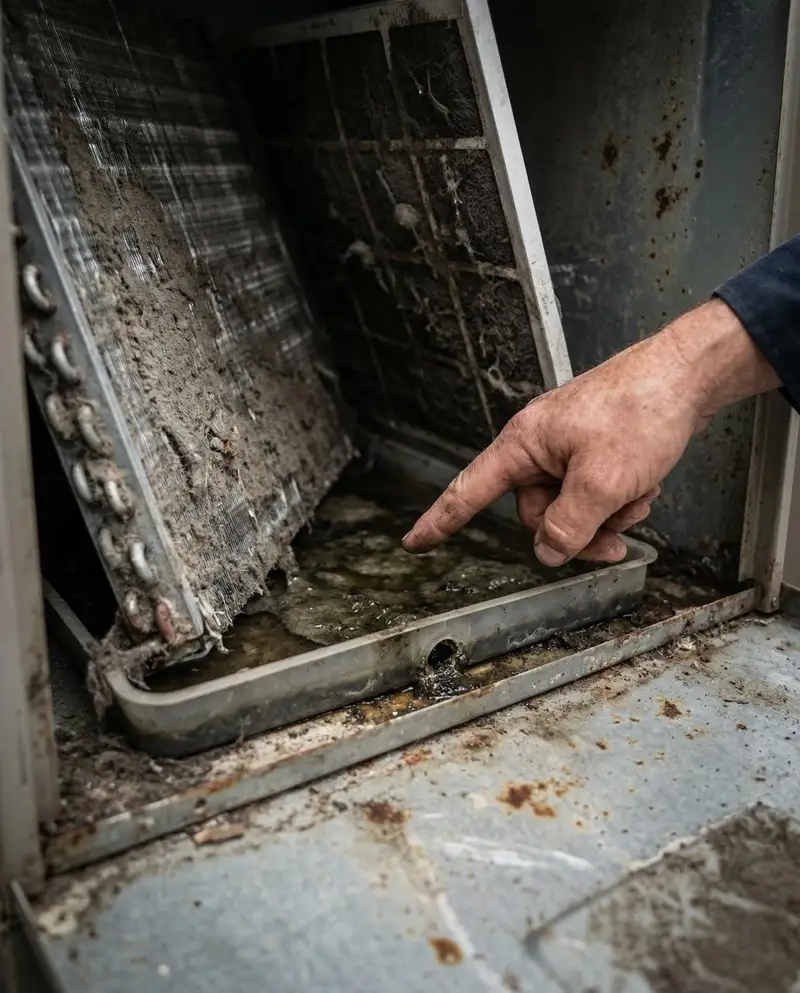
- Condensate drain clogs — Your AC produces gallons of water daily. When the condensate drain line clogs (extremely common in Miami), standing water collects in the drain pan and air handler. That standing water becomes a mold factory within 24-48 hours.
- Dirty evaporator coils — The evaporator coil is constantly wet during operation. When dust and debris coat the coil, it creates a damp, organic surface — a perfect mold breeding ground. Regular AC coil cleaning prevents this.
- Oversized AC units — An AC that’s too large for your home cools too quickly without properly dehumidifying. The result is excess moisture left in the ductwork. Many older Miami homes have this issue.
This is why we always recommend a complete HVAC system cleaning when treating mold — cleaning just the ducts without addressing the coils, drain, and air handler leaves the root cause in place.
6 Signs You Have Mold in Your Air Ducts
Mold inside ductwork isn’t always visible, but it sends clear signals. Watch for these warning signs:
- Musty smell when the AC turns on — This is the #1 red flag. If you notice a damp, earthy, or musty odor that appears when your AC kicks on and fades when it shuts off, mold is almost certainly growing inside the system. The AC is literally blowing air across mold colonies and pushing that smell into your rooms.
- Visible black or green spots around vents — Check the area around your supply vents and return vents. Dark discoloration, black spots, or greenish growth on or near the vent covers means mold has reached the visible portions of your ductwork. If you can see it at the vents, there’s far more growing deeper inside.
- Allergy symptoms worse at home than outside — If your sneezing, congestion, itchy eyes, or respiratory symptoms improve when you leave the house and worsen when you return, your indoor air is the problem. Mold spores circulating through contaminated ducts are a common culprit.
- Family members getting unexplained headaches — Chronic headaches, fatigue, and brain fog that seem to have no cause are associated with mold exposure. If multiple household members experience these symptoms, especially after spending extended time indoors, get your ducts inspected.
- Dust-like particles blowing from vents — If you see small particles or what looks like fine dust being pushed out of your vents when the AC runs, those could be mold spores or fragments of mold colonies being broken off and distributed through your home.
- AC drain line frequently clogging — If your condensate drain line clogs repeatedly — more than once or twice a year — mold and algae growth inside the line is likely the cause. This also indicates conditions favorable for mold growth elsewhere in the system.
★ 4.9 Stars — 287 Google Reviews
Licensed #CAC1817115 • BBB A+ Rated • 1,000+ Homes Served
Health Risks of Mold in Air Ducts
Mold in your ductwork isn’t just an inconvenience — it’s a genuine health hazard. Every time your AC runs, it pushes air across mold colonies and distributes microscopic spores throughout your entire home. Here’s what that exposure can cause:
- Respiratory problems — Coughing, wheezing, shortness of breath, and worsening of existing respiratory conditions. Mold spores irritate the airways and lungs with every breath.
- Allergic reactions — Sneezing, runny nose, red eyes, skin rashes, and sinus congestion. For allergy sufferers, mold exposure can make symptoms significantly worse than typical seasonal allergies.
- Asthma attacks — Mold is a known asthma trigger. For the estimated 8% of Miami-Dade residents with asthma, mold in the ducts can cause frequent and severe attacks.
- Vulnerable populations at higher risk — Children, elderly adults, pregnant women, and anyone with a compromised immune system face the greatest danger. Infants and toddlers are especially susceptible because they breathe more air relative to their body weight.
- Toxic black mold (Stachybotrys) — While not all mold is toxic, Stachybotrys chartarum produces mycotoxins that can cause serious neurological symptoms, chronic fatigue, and even organ damage with prolonged exposure. This species thrives in the chronically damp conditions inside Miami AC systems.
The EPA recommends professional remediation for any visible mold growth. DIY cleaning with bleach or household cleaners is not effective for duct mold — it only treats the surface while leaving the root system intact, and disturbing mold without proper containment can actually spread spores to areas that were previously clean.
How Professional Mold Remediation Works
Proper mold remediation in ductwork is a systematic, multi-step process. Here’s what a professional job looks like:
- Inspection and assessment — A licensed technician inspects your entire HVAC system: ducts, vents, evaporator coil, drain pan, air handler, and blower assembly. We identify all affected areas and determine the extent of contamination before recommending a treatment plan.
- Containment of affected areas — Before any cleaning begins, affected sections are isolated to prevent cross-contamination. Negative air pressure is established to ensure mold spores don’t spread to clean areas of your home during the remediation process.
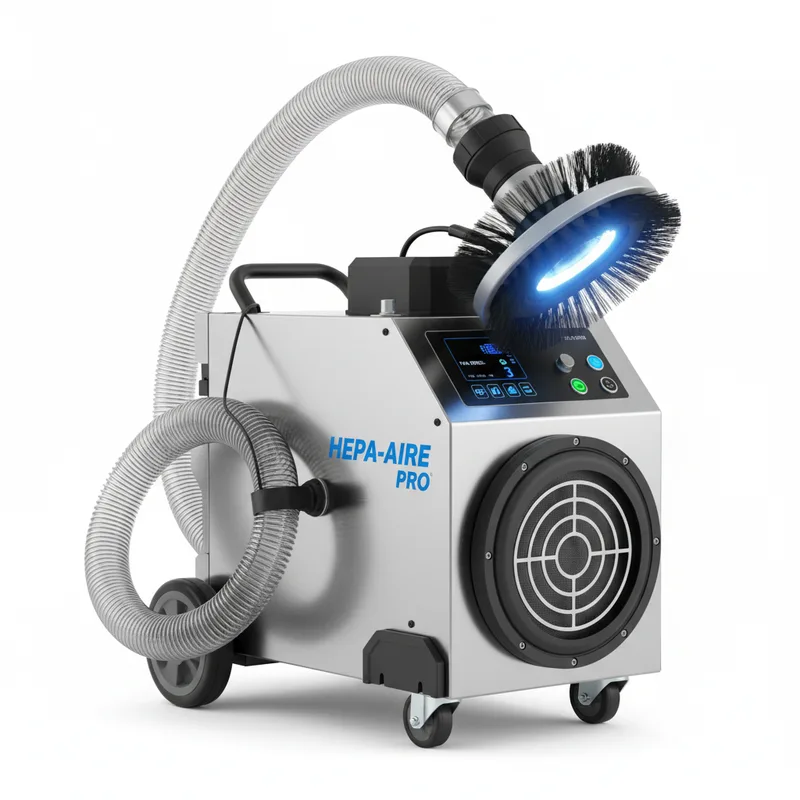
- HEPA vacuum and antimicrobial treatment — All affected ductwork is thoroughly cleaned using HEPA-filtered vacuums that capture particles as small as 0.3 microns. After physical removal, EPA-registered antimicrobial agents are applied to kill remaining mold and prevent regrowth.
- Coil and drain cleaning — The evaporator coil is deep-cleaned to remove mold colonies, and the condensate drain line is flushed and treated. These are critical steps — if the coil and drain aren’t addressed, mold will return within weeks.
- UV light installation for ongoing prevention — We strongly recommend installing a UV germicidal light inside the air handler. UV-C light kills mold, bacteria, and viruses 24/7 as air passes through the system. It’s the single most effective way to prevent mold from returning in Miami’s humid climate.
For homes with severe contamination, we may also recommend whole-home air purification systems to actively remove spores and improve indoor air quality beyond what duct cleaning alone can achieve.
How to Prevent Mold in Your Ducts
Prevention is always cheaper than remediation. Here are the most effective steps Miami homeowners can take to keep mold out of their ductwork:
- Annual HVAC cleaning — A comprehensive HVAC system cleaning removes the dust, debris, and organic material that mold feeds on. In Miami’s climate, this should be done at least once per year, ideally before summer when humidity peaks.
- Change air filters monthly — Dirty filters restrict airflow, causing the evaporator coil to get colder and produce more condensation. In Miami, swap your filter every 30 days — not the 90 days the filter package suggests. Those recommendations are for drier climates.
- Keep your AC drain line clear — Pour a cup of distilled white vinegar down the drain line monthly to prevent algae and mold buildup. If it clogs, get it professionally flushed immediately — standing water in the drain pan is how most duct mold problems start.
- Install a UV light in your air handler — A UV germicidal light costs $199-$1,000 installed but can save you thousands in mold remediation. It runs continuously, killing mold and bacteria before they can colonize your coil and ducts.
- Maintain indoor humidity below 60% — Use a dehumidifier or ensure your AC is properly sized to handle Miami’s humidity load. A smart thermostat with humidity monitoring helps you stay on top of this. Target 50-55% relative humidity indoors.
- Regular duct cleaning every 2-3 years — Even with good maintenance, dust and organic debris accumulate inside ductwork over time. Professional duct cleaning every 2-3 years removes this material before mold can establish itself.
The bottom line: mold in air ducts is one of Miami’s most common HVAC problems, but it’s completely preventable with proper maintenance. If you already have mold, professional remediation eliminates it and protects your family’s health. If you want to prevent it, a combination of regular cleaning, UV light, and humidity control keeps your system mold-free year-round.
Have questions or need a mold inspection? Call (305) 607-3244 or see our full duct cleaning cost guide for more pricing details.
Book a Mold Inspection Today
Free assessment. Licensed #CAC1817115. Same-day appointments available.
Book Mold Inspection →