
How Much Does an AC Tune-Up Cost in Miami? (2026 Guide)
If you are searching for the cost of an AC tune-up in Miami, you are already ahead of most homeowners. The average AC tune-up cost in Miami ranges from $99 to $650 depending on the level of service, with most professional HVAC companies charging between $300 and $500 for a comprehensive visit. That is a small price when you consider that a full AC replacement in South Florida now costs $16,000 to $17,000.
Miami’s heat and humidity push AC systems harder than almost anywhere else in the country. Your air conditioner runs 8 to 10 months per year here, often 12 to 16 hours a day during summer. That kind of workload wears down components fast — and an annual tune-up is the only way to catch problems before they turn into emergency repairs. If you have been wondering whether a professional AC tune-up is worth the investment, this guide breaks down everything you need to know.
AC Tune-Up Cost Breakdown for Miami Homeowners
The price of an AC tune-up in Miami depends on what is included in the service. Here is what you can expect to pay in 2026:
| Service Level | What’s Included | Price Range |
|---|---|---|
| Basic Tune-Up | Visual inspection, filter check, thermostat test | $99 – $200 |
| Standard Tune-Up | 31-point inspection, freon check, drain flush, electrical test | $300 – $500 |
| Premium Tune-Up | Full inspection + evaporator coil cleaning + freon top-off | $450 – $650 |
| Annual Maintenance Plan | 2 tune-ups/year + priority service + discounted repairs | $199 – $350/year |
Be cautious of companies advertising AC tune-ups for $29 or $39. These “deals” almost always result in a technician arriving, doing a quick visual check, and then upselling you on $500 to $1,500 in “critical repairs.” A legitimate tune-up takes 45 to 90 minutes and covers every major component in your system. If the technician is in and out in 15 minutes, you did not get a real tune-up.
What Is Included in a Professional AC Tune-Up?
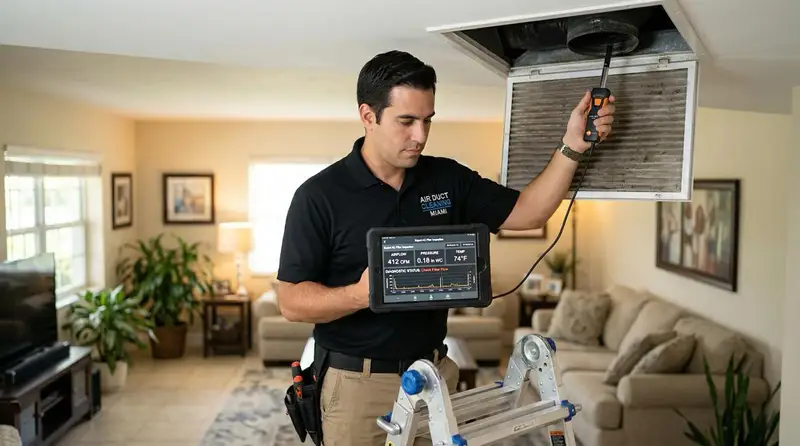
A thorough professional AC tune-up should include all of the following. If any of these items are missing, you are not getting the full service your system needs:
- 31-point system inspection — a comprehensive check of every component, electrical connection, and safety control in your AC system. This is where hidden problems get caught before they become expensive failures.
- Refrigerant level check — measuring freon pressure to confirm levels are within manufacturer specifications. Low freon is the number one cause of compressor failure in Miami. If levels are low, you have a leak that needs to be located and repaired.
- Evaporator coil inspection and cleaning — the indoor coil that absorbs heat from your home. When coated with dust, pet hair, and biological growth, cooling capacity drops significantly. In Miami’s humid climate, dirty coils grow mold fast.
- Condenser coil inspection — the outdoor unit that releases heat. When clogged with leaves, dirt, and debris, it cannot dispose of the heat picked up by the refrigerant, forcing your compressor to work overtime.
- Condensate drain line flush — clearing the drain line and treating it with anti-mold solution. Clogged drain lines are the most common AC problem in Miami and cause water damage plus mold growth inside walls and ceilings.
- Electrical component testing — checking capacitors, contactors, relays, and all wiring connections. Weak capacitors are the second most common cause of AC breakdowns after low refrigerant.
- Thermostat calibration — verifying your thermostat reads accurately and communicates properly with the system. An inaccurate thermostat causes short-cycling that wears out components prematurely.
- Blower motor check — testing motor amperage, checking lubrication, and measuring airflow output. A failing blower motor wastes energy and puts extra strain on the compressor.
- Air filter inspection or replacement — confirming you have the right size and MERV rating filter installed and that airflow is not restricted.
This level of service is what separates a real AC tune-up from a glorified sales visit. When every item on this list is checked, your technician has a complete picture of your system’s health and can tell you exactly what needs attention — now and in the future.

Schedule Your AC Tune-Up Before Summer
31-point inspection. Freon check included. Licensed #CAC1817115. BBB A+ Rated.
Book AC Tune-Up →Factors That Affect AC Tune-Up Cost in Miami
Not every tune-up costs the same. Several factors determine what you will pay for AC maintenance service in Miami:
System Age and Condition
Older systems take longer to inspect and often require more attention. If your AC is 10 or more years old and has not been serviced recently, expect the technician to spend additional time testing components that may be nearing the end of their useful life. Some companies charge a small premium for systems over 15 years old because the risk of finding issues is significantly higher.
System Type and Size
A standard central AC system is the most straightforward to service. Mini-split systems, packaged units, and commercial HVAC systems may cost more due to the additional time and specialized knowledge required. Larger systems (4 to 5 ton units common in bigger Miami homes) also take more time to properly inspect than a 2-ton condo unit.
What Repairs Are Found
The tune-up itself is a fixed price. However, if the technician discovers low refrigerant, a failing capacitor, or a cracked drain pan, the repair cost is separate. A good company will always explain what they found, why it matters, and let you decide. If you want to understand how much common AC repairs cost in Miami, we have a full breakdown.
Time of Year
Scheduling your tune-up in March, April, or May saves you money and headaches. During peak summer months (June through September), every HVAC company in Miami-Dade and Broward County is slammed with emergency calls. Some companies charge premium rates during summer, and wait times stretch to 3 to 5 days. Book your tune-up before summer hits Miami and you get faster service at normal rates.
The Chain Reaction That Happens When You Skip Tune-Ups
Skipping an AC tune-up does not just mean your system is a little less efficient. It triggers a chain of failures that build on each other until something expensive breaks. Here is exactly what happens inside your AC when it goes without professional service:
It starts with a dirty filter. A clogged filter slows down airflow across the evaporator coil. With reduced airflow, the coil temperature drops too low and starts to freeze. A frozen coil grows mold faster in Miami’s humidity. Now your system cannot maintain the proper temperature split — the 20-degree difference between supply and return air that indicates healthy operation. The AC runs longer cycles trying to compensate, your FPL bill climbs, and the compressor works harder than it was designed to.
Meanwhile, the condenser coil is getting dirty too. When the outdoor coil is clogged with debris, it cannot release the heat the refrigerant picked up inside your home. This raises head pressure inside the system, which puts direct stress on the compressor valves. The compressor draws more amperage, which means higher electricity consumption and more heat generation inside the unit itself.
Then the compressor starts failing. The combination of high head pressure, elevated amp draw, and overheating causes oil breakdown inside the compressor. That oil is what keeps the internal parts lubricated and cool. Without proper lubrication, the compressor can burn a wire, burn the terminal, burn the capacitor, or burn the winding. Any of these leads to compressor failure — and a compressor replacement runs $2,500 to $4,000. On a system older than 10 years, most technicians will recommend full replacement rather than putting thousands of dollars into a dying system.
An AC system can lose approximately 50% of its cooling capacity within the first year without maintenance. That is not a gradual decline over a decade. It is a steep drop that happens fast, and most homeowners do not notice until the system simply cannot keep up with a 95-degree Miami afternoon.
★ 4.9 Stars — 287 Google Reviews
Licensed #CAC1817115 • BBB A+ Rated • 1,000+ Homes Served
DIY vs. Professional AC Tune-Up: What You Can and Cannot Do Yourself
There are a few things every Miami homeowner should be doing between professional visits to keep their AC running well:
- Change your air filter every 30 to 60 days. In Miami, with the humidity, pet dander, and dust, filters get dirty faster than in drier climates. A clean filter is the single most impactful thing you can do between tune-ups. If you are unsure which filter to use, avoid these common AC maintenance mistakes Miami homeowners make.
- Keep the outdoor unit clear. Trim vegetation at least two feet from your condenser. Remove leaves, branches, and debris from the top and sides. Rinse the exterior fins gently with a garden hose every few months.
- Make sure all supply and return vents are open and unblocked. Furniture, curtains, and rugs covering vents restrict airflow and create the same problems as a dirty filter.
- Check your thermostat settings. Make sure it is set to AUTO (not ON) for the fan setting. ON runs the blower continuously, which can increase humidity inside your home and drive up energy costs.
However, the critical tasks that actually prevent breakdowns require a licensed professional:
- Refrigerant level testing requires specialized gauges and EPA certification to handle freon
- Electrical testing of capacitors and contactors involves working with high-voltage components
- Evaporator coil cleaning requires removing access panels and using professional-grade cleaning solutions
- Drain line treatment involves specialized anti-microbial solutions and wet/dry vacuum equipment
The DIY tasks maintain baseline performance between visits. The professional tasks are what prevent the $2,500 to $16,000 failures. Both matter, but they are not interchangeable. Learn more about what AC maintenance includes and why each step matters.
When to Schedule Your AC Tune-Up in Miami
Timing matters more than most homeowners realize. Here is the ideal schedule for Miami and Broward County:
- March through May (best time): Book your primary annual tune-up during spring. The weather is mild enough that your AC is not under maximum stress, technicians have availability, and any issues found can be addressed before summer arrives. This is when we catch the problems that would have caused a mid-July breakdown.
- October through November (second visit): If you are on a twice-yearly plan, the fall visit confirms everything is running correctly after the summer workload. This is especially important for systems over 8 years old.
- Avoid June through September if possible: Emergency service during peak summer in Miami means longer wait times and higher costs. Every HVAC company in the county is running at full capacity. If your system has not been checked all year and it fails on a 96-degree day, you may wait 3 to 5 days for service.
For homeowners who want maximum protection, an annual AC maintenance plan includes scheduled visits so you never have to remember to book. You also get priority scheduling, which means if something does go wrong mid-summer, you go to the front of the line. That alone can be worth the cost of the plan when it is 95 degrees and your AC stops working.
Wondering what else you should be checking before the heat arrives? Read our complete Miami summer AC tips guide for a full seasonal preparation checklist.
Frequently Asked Questions About AC Tune-Up Costs in Miami
Products That Can Help Your Home
AC Maintenance Plan
Twice-yearly tune-ups with priority scheduling, discounted repairs, and freon top-off included.
Learn More →Smart Thermostat Installation
Accurate temperature control reduces short-cycling and can lower your energy bill by up to 23%.
Learn More →AC Air Filter Replacement
The right MERV-rated filter keeps airflow optimal and protects your coils from dust buildup.
Learn More →
Book Your AC Tune-Up Today
31-point inspection with freon check included. Same-day service available. Licensed, insured, BBB A+ rated.
Book AC Tune-Up →