The New AC Freon Cost Changeover Will Drain Your Wallet — What Every Miami Homeowner Must Know (2026)
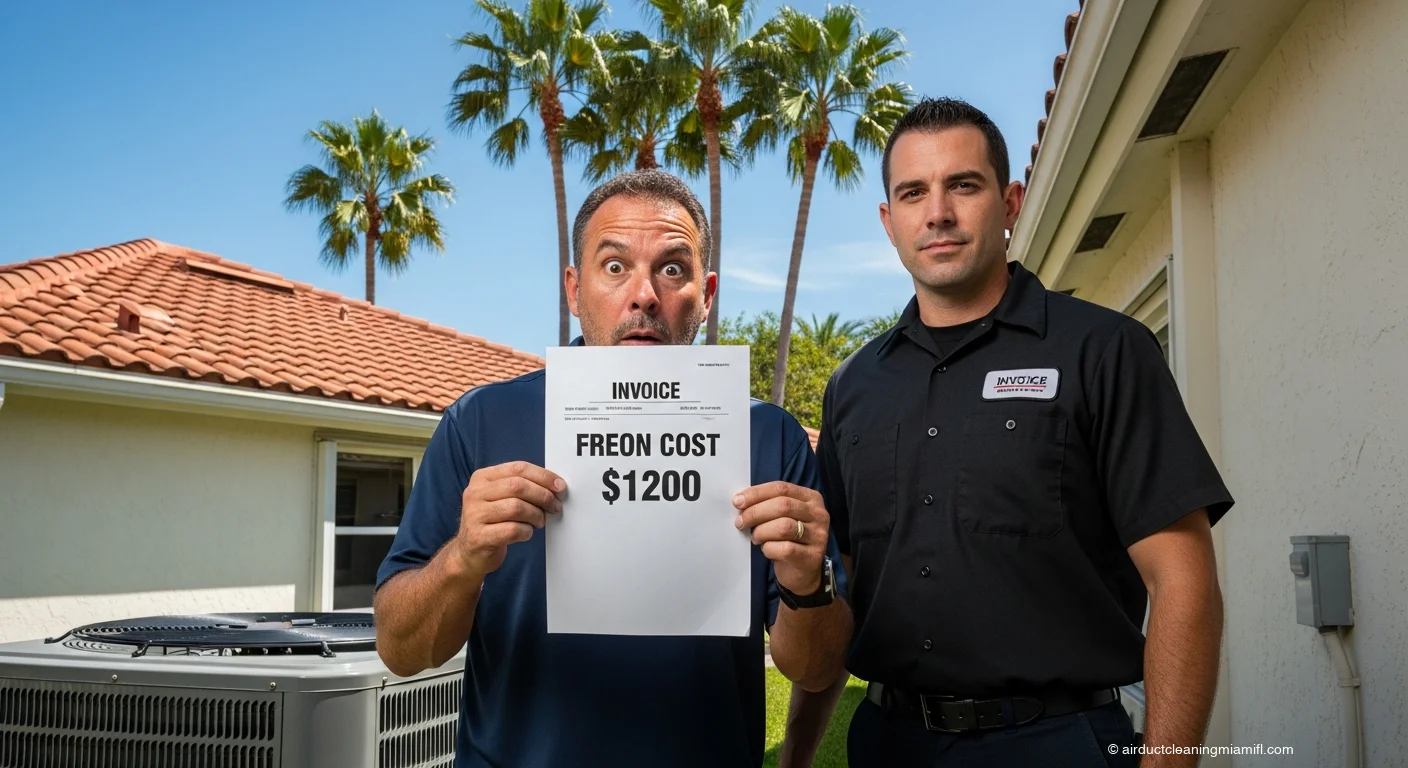
The freon your AC runs on was just banned. Here is what that means for your wallet.
If you own a home in Miami-Dade or Broward County, your air conditioner almost certainly runs on a refrigerant called R-410A. It has been the industry standard for the past 15 years. Every AC system installed in South Florida between roughly 2010 and 2024 uses it. And as of January 2025, manufacturers can no longer build new equipment that runs on it. As of January 2026, every new residential AC system sold must use a completely different refrigerant.
That sounds like a problem for people buying new AC systems. But here is the part nobody is telling you: this changeover is already hitting the freon cost for your current system. The refrigerant you need for a simple recharge is getting more expensive every month. And if something goes seriously wrong with your compressor, you may not be looking at a repair bill anymore — you may be looking at why AC replacement now costs $17,000 in South Florida.
This content is based on real-world experience from Air Duct Cleaning Miami (License #CAC1817115). Our insights come from daily service calls, real invoices, and on-ground observations across Miami-Dade and Broward County. We are going to break down exactly what this freon changeover means for your specific AC system, your specific repair bills, and what you can do right now to protect yourself.
R-410A vs R-454B vs R-32 — The Old Freon vs. The New Freon Explained
Think of it like gasoline. Your car runs on one type of fuel. You cannot put diesel in a gasoline car and expect it to work. Refrigerant — what most people call “freon” — works the same way. Your AC was designed for one specific type, and it cannot use another.
A quick history: R-410A is the freon that has powered virtually every home and business AC system in America for the last 15 to 20 years. If you bought or replaced an AC unit anytime between 2005 and 2024, it almost certainly runs on R-410A. Before that, there was R-22 (which was also phased out). Now, R-410A itself is being phased out, and we are in the middle of another major changeover — one that is going to cost homeowners significantly more than the last one.
Here are the three refrigerants every homeowner needs to understand right now:
- R-410A (the old freon) — This is what your current AC almost certainly uses. It was the standard for residential systems for the past 15 years. The federal government banned new equipment production using R-410A starting January 1, 2025, under the EPA’s AIM Act. You can still buy R-410A to service your existing system, but the supply is shrinking and the cost is climbing fast.
- R-454B (the primary new freon) — This is the main replacement for residential AC systems in the United States. It has a lower environmental impact than R-410A, which is why the government mandated the switch. But it is classified as “mildly flammable” (the industry calls it A2L), which means AC systems using it need completely different safety features, including built-in leak detection sensors that will shut your system down if they detect a refrigerant leak.
- R-32 (the alternative new freon) — This is another low-impact refrigerant that is widely used in Asia and parts of Europe. R-32 is actually more energy-efficient than R-454B, but it is also mildly flammable. Some manufacturers are exploring R-32 for the U.S. market as an alternative to R-454B. It uses a different system design than both R-410A and R-454B.
The critical detail: none of these refrigerants are interchangeable. You cannot put R-454B into an R-410A system. You cannot put R-32 into an R-454B system. Each requires its own compressor, its own coils, its own safety systems, and its own installation procedures. There is no conversion kit. There is no retrofit option. When your R-410A system dies, you are buying an entirely new system designed for one of the new refrigerants.
The New AC Freon Cost Reality — The Numbers Will Shock You
Here is where this gets personal. These are the real costs you will face if your AC system needs refrigerant work in 2026:
| Refrigerant | Cost Per Pound | Typical Recharge (6-12 lbs) |
|---|---|---|
| R-410A (your current freon) | $100 – $150/lb ↑ rising daily | $600 – $1,800+ |
| R-454B (the new freon) | $300 – $600/lb | $1,800 – $7,200 |
| R-32 (alternative new freon) | $200 – $300/lb | $1,200 – $3,600 |
Important: The R-410A price you see today is not the price you will pay tomorrow. As R-410A gets phased out, the supply shrinks and the price rises — every single day. What costs $100 per pound today could be $200 per pound six months from now. This is pure supply and demand, and it only goes in one direction.
Let that sink in. A simple freon recharge on your existing R-410A system — the kind of service call that used to cost a few hundred dollars — now runs $600 to $1,800. And the new R-454B refrigerant is even worse: a cylinder that contractors used to buy for $99 has surged to $1,200 or more due to supply shortages. That is the wholesale cost before the contractor even starts working on your system — and that cost gets passed directly to you.
Do the math on a real scenario. Your AC is low on freon and needs 8 pounds added. At R-410A prices, that is $800 to $1,200 just for the refrigerant — before the service call, before the leak check, before any labor. Three years ago that same job might have cost $300 to $400 total. The freon cost alone has tripled.
The hidden trap: R-410A wholesale prices have already jumped from $8-$12 per pound to $25-$45 per pound. Every month that R-410A production winds down further, the retail price per pound climbs higher. If you are planning to “wait and see,” you are watching your future repair bill grow in real time.
The Compressor Trap — Why a Single Failure Can Cost You $17,000
Here is the scenario we are seeing more and more on service calls across Broward and Miami-Dade: a homeowner calls because their AC stopped cooling. We diagnose a failed compressor. In the past, we could replace the compressor, recharge the system, and the homeowner was back in business for $2,000 to $3,500.
In 2026, that same compressor failure often means a full system replacement. Here is why:
- R-410A compressor parts are becoming scarce. Manufacturers have shifted production lines to R-454B equipment. Finding a replacement R-410A compressor is getting harder and more expensive every quarter.
- Even if you find the part, the freon cost makes the repair borderline irrational. A compressor replacement requires evacuating and recharging the entire system. At $100-$150 per pound for R-410A, the refrigerant alone on a compressor job adds $800 to $1,500 to the bill.
- You are putting expensive new parts into an obsolete system. Spending $4,000 to $5,000 repairing an R-410A system that will only get more expensive to service every year — while a new R-454B system starts at $10,000 to $12,000 — is a tough financial calculation. You can read more about the full AC repair cost breakdown to understand when repair makes sense.
This is the trap. The freon changeover did not just make new systems more expensive. It made keeping your old system alive more expensive too. You are caught between rising repair costs on one side and rising replacement costs on the other. And the only way out is to keep your current system healthy for as long as possible — which brings us to the most important part of this article.

The Chain Reaction That Kills Your Compressor — And Why It Matters More Than Ever
Most homeowners think AC failure happens suddenly. One day it works, the next day it does not. That is almost never what actually happens. Based on what we see on service calls every week, compressor failure is the end result of a chain reaction that starts months or even years earlier. And with freon now costing $100 to $150 per pound, understanding this chain reaction could save you thousands.
Here is how it works, step by step:
- Dirty coils reduce heat transfer. When your evaporator coils get coated with dust, dirt, and Miami’s humidity-driven mold, they cannot absorb heat efficiently. The system has to work harder to cool your home.
- Poor heat transfer causes freon problems. When coils cannot transfer heat properly, the refrigerant does not change state the way it should. Instead of fully evaporating into gas before entering the compressor, liquid freon can flow back into the compressor. This is called “liquid slugging” and it damages the compressor’s internal moving parts.
- Freon mixes with compressor oil and strips it away. Your compressor has moving parts that need constant lubrication — just like an engine needs oil. When the refrigerant cycle is disrupted by dirty coils or poor airflow, the freon interacts with the compressor oil in ways it should not. The oil gets stripped from the surfaces that need it most.
- Without oil, metal grinds on metal. A compressor without proper lubrication is like an engine running dry. The internal components overheat, wear down, and eventually seize up. This is mechanical failure — and it is not repairable.
- Compressor dies. You are trapped. Now you are facing the compressor trap we described above: scarce R-410A parts, expensive freon, and a replacement bill that starts at $10,000.
This is why technicians take superheat readings during a proper maintenance visit. Superheat is a measurement that tells us whether the refrigerant entering your compressor is fully vaporized (safe) or still partially liquid (dangerous). It is the single best early warning sign of compressor stress. A technician without real gauges and real training cannot take this reading — which is one reason you should never hire an unlicensed installer for AC work in South Florida.
What Poor Airflow Does to Your System
The chain reaction gets worse if your airflow is restricted. Dirty filters, blocked returns, clogged ductwork — anything that reduces the volume of air passing over the evaporator coil disrupts heat transfer. When heat transfer fails, condensation builds up where it should not. That excess moisture strips more oil from the compressor. The compressor overheats. Your FPL bill jumps from a normal $200 per month to $500 or $600 per month in summer because the system is running constantly, struggling to keep up.
One problem leads to another. Dirty coils cause freon problems. Freon problems cause oil loss. Oil loss causes compressor strain. Compressor strain causes sky-high electric bills. And eventually, compressor death causes a five-figure replacement bill at 2026 prices. Every step in this chain reaction is preventable with proper maintenance.
Your Defense: Premium Maintenance Is No Longer Optional
Here is the bottom line. In a world where R-410A freon costs $100 to $150 per pound and a compressor failure can trigger a $12,000 to $17,000 system replacement, the cost of AC maintenance is no longer a nice-to-have. It is the cheapest insurance policy you will ever buy.
But — and this is critical — not all maintenance is equal. A $29 AC tune-up from a coupon company is not maintenance. It is a sales call disguised as a service visit. Nobody can properly service your AC system in 15 minutes for $29. The companies offering those deals are hoping to find something expensive to upsell you on.
A real AC tune-up takes 60 to 90 minutes and includes every step that prevents the chain reaction described above:
- Evaporator and condenser coil cleaning — removes the dirt, dust, and mold that disrupt heat transfer and start the cascade toward compressor failure
- Freon level balancing — too much refrigerant stresses the compressor, too little overheats it and cooks the internal oil. Both extremes kill your most expensive component
- Superheat readings — confirms that all refrigerant entering the compressor is fully vaporized, protecting against liquid slugging damage
- Electrical component testing — contactors and capacitors degrade over time. A weak capacitor delivers low voltage to the compressor, forcing it to draw more amps and overheat. That increases your FPL bill and shortens compressor life
- Drain line cleaning — in Miami’s 70-90% humidity, a clogged drain line causes water damage and mold growth inside your air handler and ductwork
- Full performance evaluation — temperature split, amp draw, and comparison against manufacturer specifications
This level of service costs roughly $500 per year. Over the life of your system, that is $7,500 to keep it running for 15 to 20 years. The alternative — skipping maintenance and having your compressor fail at year 8 — costs $12,000 to $17,000 for a replacement, plus years of inflated FPL bills from a degraded system. The math is not close.
Book Our Premium AC Maintenance Now — Don’t Wait
See our maintenance packages and pricing for your area. Pick your city, choose your plan, and schedule today.
Freon Costs Are Rising — Protect Your System Now
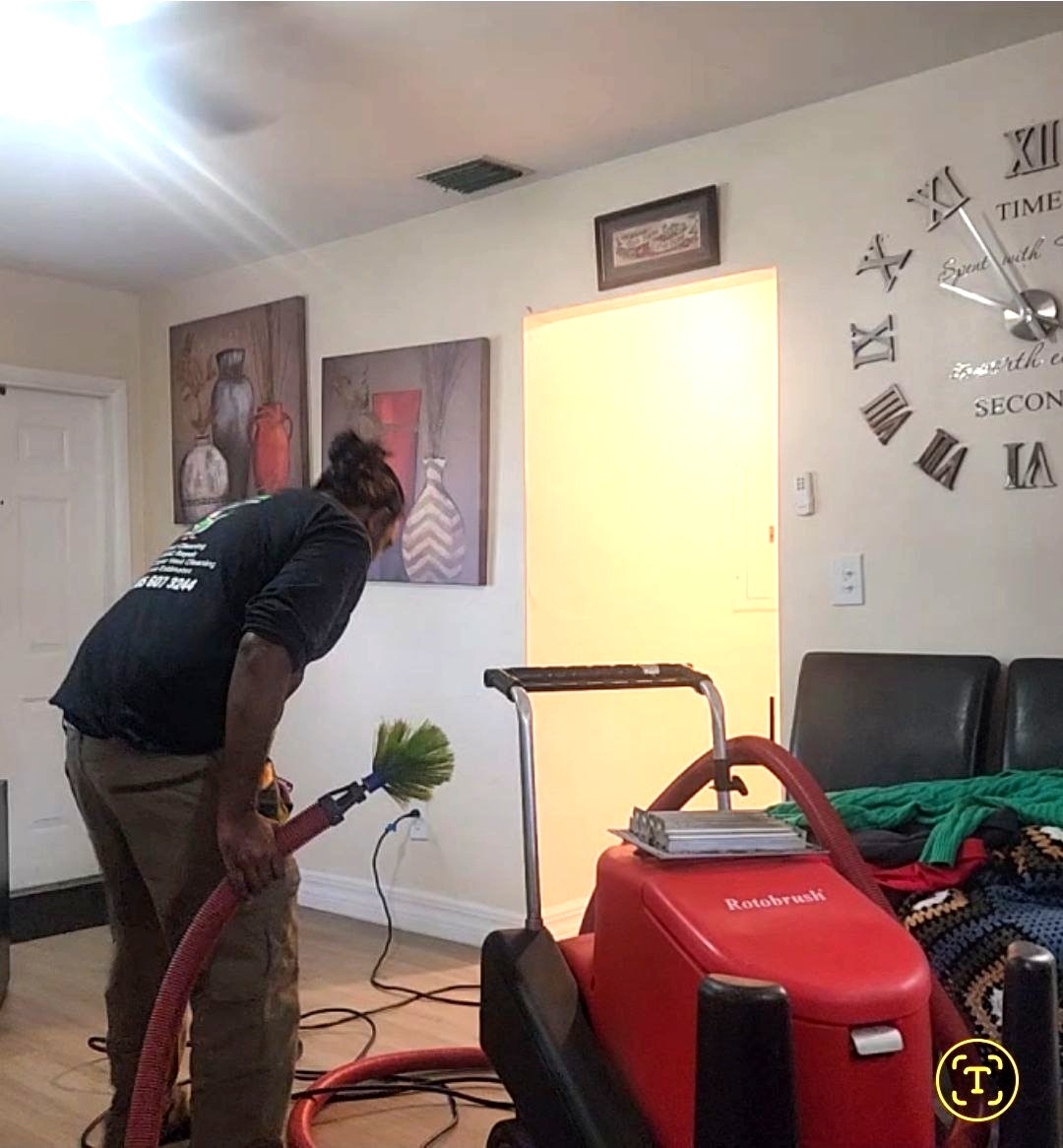
Comprehensive AC maintenance: coil cleaning, freon balancing, superheat readings, electrical testing. Licensed technicians, real equipment.
Repair vs. Replace — When Does Each Make Sense?
Every homeowner with an R-410A system is asking the same question: should I keep repairing this thing, or should I bite the bullet and buy a new R-454B system now? There is no one-size-fits-all answer, but here are the guidelines we use when advising our customers:
Keep Your R-410A System If:
- Your system is under 10 years old and the compressor is healthy
- The repair cost is under $2,000 and does not involve the compressor
- You have been maintaining the system annually (coil cleaning, freon checks, electrical testing)
- Your freon levels are stable — meaning you do not have a refrigerant leak draining expensive R-410A
Consider Replacing with a New R-454B System If:
- Your system is over 12-15 years old
- The compressor has failed or is showing signs of imminent failure
- You have a refrigerant leak that keeps requiring expensive R-410A recharges
- The repair bill exceeds $3,000 to $4,000 — at that point, you are throwing money at an obsolete system
- Your FPL bills are consistently $500+ per month in summer despite the AC running constantly
If you are considering AC replacement, make sure you work with a licensed contractor who is certified for R-454B installation. The new systems require specialized training, proper leak detection setup, and adherence to updated building codes. An unlicensed installer working with mildly flammable R-454B refrigerant is not just illegal — it is genuinely dangerous.
Frequently Asked Questions About AC Freon Costs in 2026
Products and Services That Protect Your Investment
AC Maintenance
Comprehensive annual service with freon balancing, coil cleaning, superheat readings, and electrical testing. The $500/year investment that prevents five-figure replacements in the freon changeover era.
Learn More →AC Installation
Licensed R-454B system installation with proper leak detection setup, manufacturer warranty protection, and code-compliant installation by certified technicians.
Learn More →AC Repair
Expert diagnosis of freon leaks, compressor issues, and electrical failures. Honest assessment of repair vs. replace decisions based on your specific system and situation.
Learn More →About This Article
Written by Air Duct Cleaning Miami — a licensed HVAC contractor (CAC1817115) serving Miami-Dade and Broward County. This article is based on real-world field experience, actual service data, and industry research. We are practitioners, not just writers. Every cost figure, technical detail, and maintenance recommendation in this article comes from what we see and do on service calls every day across South Florida.