

AC Leak Water Damage — How Much Can a Leaking AC Cost You?
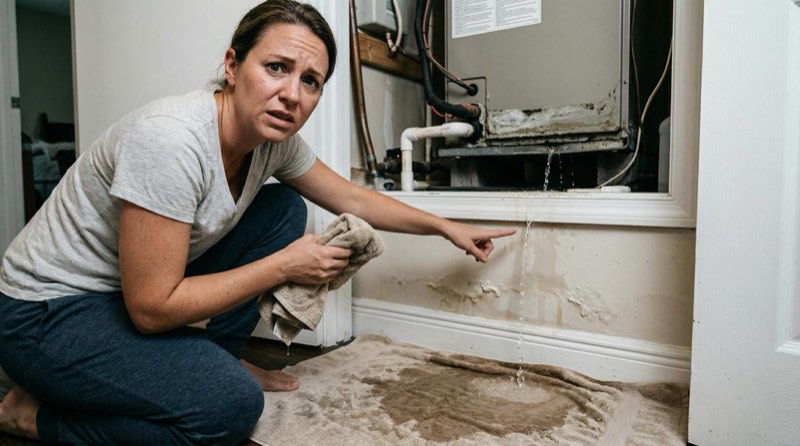
Your AC is leaking water inside your house. Maybe you noticed a dark stain spreading across the ceiling. Maybe you stepped in a puddle near the air handler. Either way, the clock is ticking on damage that gets exponentially more expensive every hour you wait.
A small ac leak that costs $150 to fix today can turn into $8,000+ in mold remediation, drywall replacement, and flooring repairs by next week. In Miami’s heat and humidity, water damage escalates faster than anywhere else in the country.
We’ve responded to hundreds of ac leak water damage calls across Miami, Fort Lauderdale, Hollywood, Pembroke Pines, Hialeah, Coral Gables, and all of Miami-Dade and Broward County. This guide breaks down exactly what it costs, what causes it, whether insurance covers it, and what you should do right now if your AC is leaking.
How Much Does AC Leak Water Damage Actually Cost?
The total cost of ac leak damage depends on two things: how long the leak has been active and what it has touched. Here are the real numbers South Florida homeowners face:
| Damage Type | Cost Range | Timeline |
|---|---|---|
| AC leak repair (drain line or pan) | $100 – $400 | Same-day fix |
| Drywall repair (small area) | $300 – $800 | After 24–48 hours of leaking |
| Drywall replacement (ceiling/wall section) | $800 – $2,500 | After 3–7 days of leaking |
| Carpet or laminate flooring replacement | $1,000 – $4,000 | After 48+ hours of saturation |
| Hardwood floor warping repair | $2,000 – $6,000 | After 24–72 hours of exposure |
| Mold inspection | $300 – $700 | Recommended after any leak lasting 48+ hours |
| Mold remediation (contained area) | $1,500 – $5,000 | Mold starts growing in 24–48 hours |
| Full mold remediation (spread to walls/HVAC) | $5,000 – $15,000+ | After 1–2 weeks of untreated moisture |
| Electrical damage (shorted wiring) | $500 – $2,000 | When water reaches outlets or panels |
The math is brutal. A clogged AC drain line costs $100–$250 to clear. Ignore it for a week, and you could be looking at $5,000–$10,000 in total restoration costs. In South Florida’s 90%+ humidity — from Miami Beach to Fort Lauderdale, Hollywood to Coral Springs — damage compounds faster than in any dry climate.
The Hidden Costs Most Miami Homeowners Miss
The water stain on your ceiling is just the visible damage. Here’s what’s happening behind the walls that most homeowners don’t think about until the repair bill arrives:
Mold Growth Starts in 24–48 Hours
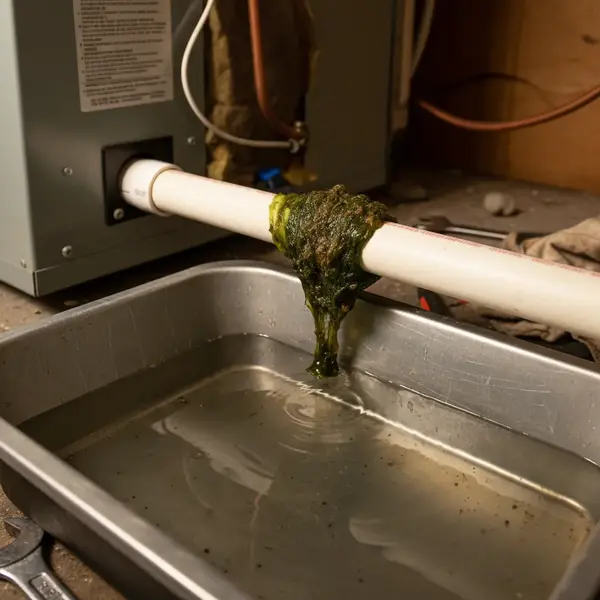
This is the big one. In Miami’s year-round heat and humidity, mold colonies begin forming within 24 to 48 hours of moisture exposure. You can’t see it yet, but it’s already spreading inside drywall, behind baseboards, and into your ductwork.
Once mold enters your AC system and air ducts, every room in your home becomes contaminated. What started as a small leak under the air handler becomes a whole-house problem that requires professional mold remediation.
Electrical Damage and Fire Risk
Water and electricity don’t mix. When ac leaking water inside house situations reach electrical outlets, junction boxes, or your breaker panel, you’re dealing with potential short circuits, damaged wiring, and genuine fire risk. Rewiring a section of your home runs $500–$2,000, and your homeowner’s insurance may not cover damage that resulted from deferred maintenance.
Attic AC Units: The Worst-Case Scenario
Many Miami and Broward County homes have AC air handlers installed in the attic. When an attic-mounted AC leaks, the water has nowhere to go but down — through the ceiling drywall, into insulation, and across the entire upper floor of your home. By the time you see a water stain on your ceiling, the damage above is already extensive: saturated insulation, mold growth in hidden spaces, and warped framing. Attic AC leaks are among the most expensive to repair because the damage is hidden and widespread before you ever notice it. If your AC is in the attic, regular maintenance isn’t optional — it’s critical.
Structural Damage to Ceilings and Subfloors
Saturated drywall loses its structural integrity. A ceiling that’s been absorbing water for days can collapse — and that’s not just expensive, it’s dangerous. Subfloor damage under hardwood or tile is especially costly because the finished flooring has to come up, the subfloor repaired or replaced, and everything reinstalled.
Damaged Personal Property
Furniture, electronics, documents, clothing — anything in the path of a ceiling leak or floor puddle. These costs add up fast and are often not fully covered by insurance.
Two-Story Homes: The $20,000 Problem
If you live in a two-story home in Miami, Fort Lauderdale, Hollywood, or anywhere in Broward and Miami-Dade County, AC leak damage can be catastrophically expensive. Here's why: the drain lines in two-story homes run inside the walls and through the concrete slab of the house.
When a second-floor drain line clogs and isn't cleared in time, the blockage can become so severe that the line can't be cleaned — it has to be completely reconstructed. We're talking about opening walls, cutting into the slab, and re-routing the entire drain system. That's a $15,000 to $20,000+ repair that could have been prevented with a $149 maintenance visit twice a year.
If you live in a two-story house, condo, or apartment building — especially if someone lives below you — regular drain line maintenance isn't optional. It's the only thing standing between you and a five-figure repair bill. Your AC leak doesn't just damage your unit — it can flood the unit below you, making you liable for their damages too.
The Condensate Pan Nobody Checks
Your AC's condensate pan sits under the evaporator coil and catches all the water your system produces. In Miami's humidity, that's gallons of water per day — think of how a cold soda can sweats in the heat. That's exactly what's happening inside your AC unit, constantly.
Over time, algae, mold, and grime build up in the pan. When the pan gets completely blocked, the water has nowhere to go — it overflows into your ceiling or walls. The worst part? Part of the condensate pan is hidden inside the AC unit, behind the evaporator coil. Cleaning a severely blocked pan sometimes requires removing the entire coil — a job that only a licensed HVAC technician should handle.
AC Leaking Water Right Now?
Every hour matters. Our licensed technicians (FL #CAC1817115) respond same-day across Miami-Dade and Broward County. BBB A+ rated.
Book Emergency AC Leak Repair →AC Leaking Water? Do This NOW
Miami & Broward County
Our licensed technicians show you exactly what to do (and what NOT to do) when your AC is leaking.
What Causes AC Leaks in Miami?
Understanding the cause helps you prevent the next one. Here are the most common reasons your AC is leaking water inside your house in South Florida:
1. Clogged Condensate Drain Line
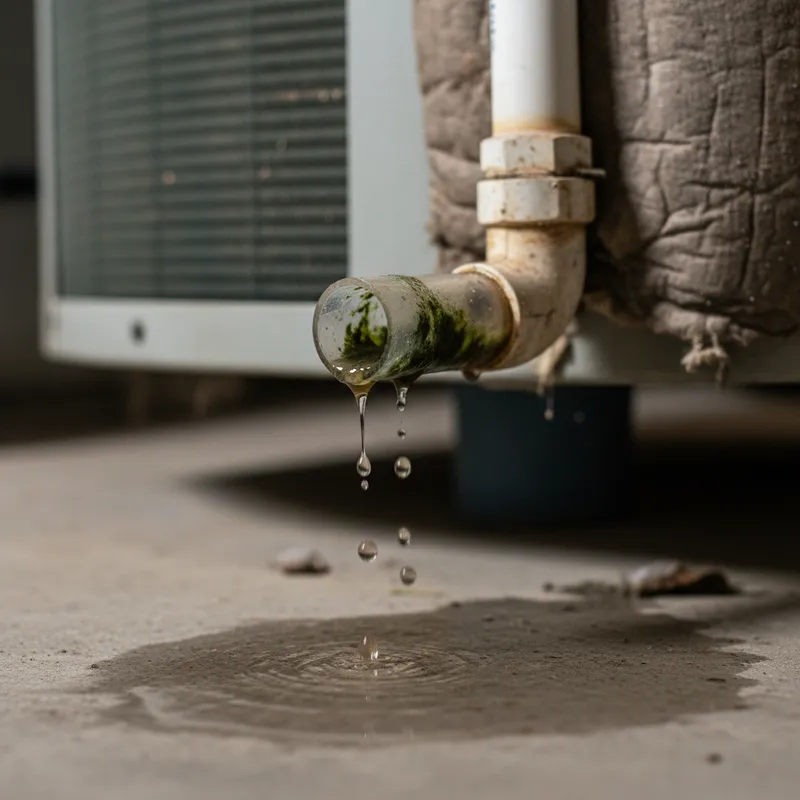
This is the #1 cause of ac leak damage in Miami homes — and it’s almost always preventable. Your AC removes gallons of moisture from the air every day. That water drains through a PVC line to the outside of your home. When algae, mold, or debris clogs that line, water backs up into the drain pan and overflows.
Miami’s humidity means your drain line handles 2–3 times more water than AC systems in drier climates. Regular AC drain line cleaning is critical — not optional.
2. Cracked or Rusted Drain Pan
The drain pan sits under your evaporator coil and catches condensation. Over time, especially in salt-air environments near the coast in Hollywood, Hallandale Beach, Miami Beach, and Fort Lauderdale, these pans corrode and crack. Even a hairline crack allows water to drip directly onto your ceiling or floor. Replacement cost: $150–$400 including labor.
3. Dirty Evaporator Coils & Frozen Coils
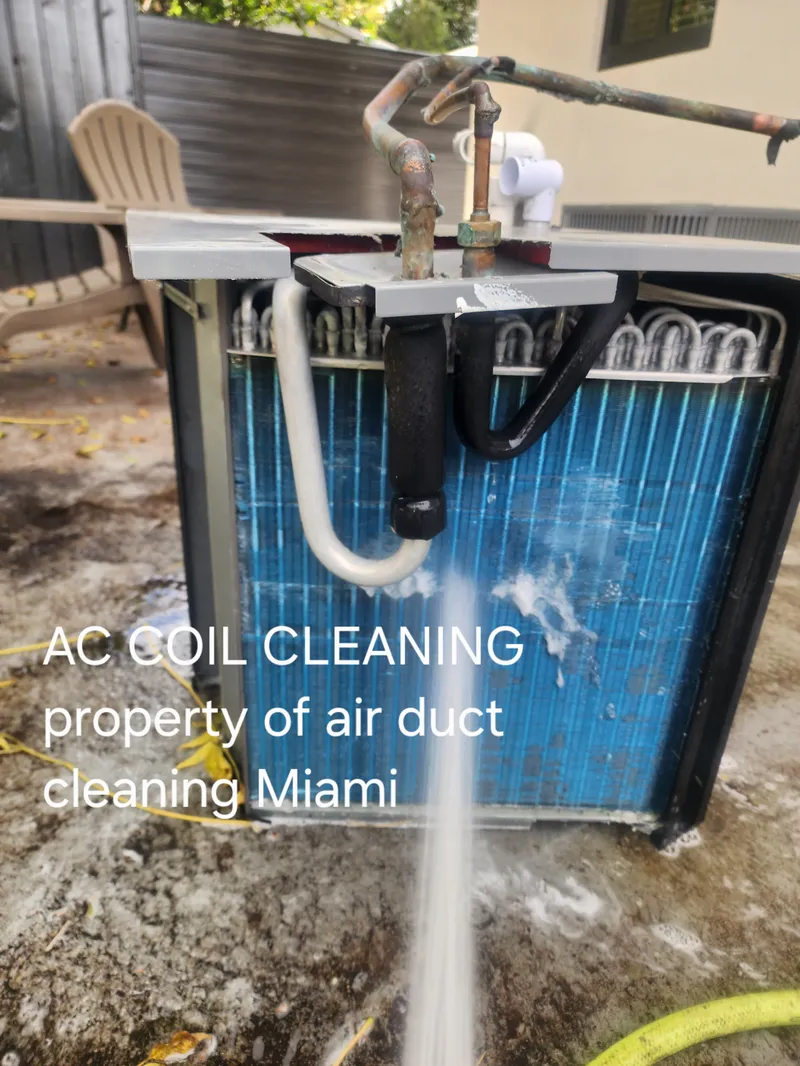
This is one of the biggest causes of AC leaks we find in South Florida. When your evaporator coil gets heavily clogged with dirt, the air can't pass through properly. This lowers the refrigerant pressure and causes the coil to freeze solid. When that ice melts — and it will — it all comes down at once, overwhelming the drain pan and flooding your home.
But there's a double problem: a blocked coil also increases the static pressure inside the AC unit. Your drain trap is designed to work with a minimum static pressure. When that pressure goes too high from restricted airflow, the fan's suction literally holds the water inside the unit and won't let it drain. So you get both ice buildup AND trapped water — a recipe for serious ac leak damage.
This is why professional AC coil cleaning is essential — not optional — especially for units that have been running 3+ years without a thorough cleaning. If you see ice on your AC lines or the unit is blowing warm air, turn it off immediately and call for AC repair service.
4. Disconnected or Cracked Drain Line
Vibration, settling, or poor installation can cause drain line connections to loosen or crack. This is especially common in older homes and condos in Miami, Hialeah, Coral Gables, and Aventura where the original AC was installed decades ago and has been repaired multiple times by different contractors.
5. Dirty Air Filter Causing Restricted Airflow
A clogged air filter restricts airflow over the evaporator coil. When airflow is blocked, the static pressure inside the unit increases — creating a negative pressure that actually holds water inside the unit instead of letting it drain. The coil gets too cold, ice forms, and when it thaws, you get flooding. Changing your filter every 30–60 days in Miami’s dusty, humid environment is the cheapest prevention you can do.
6. Improper Drain Line Design
Not all AC leaks come from maintenance issues. Some systems were designed incorrectly from day one. If the drain line has the wrong pitch (slope), an incorrect water trap, or undersized piping, water will back up every time the system produces heavy condensation — which in Florida is every day during rainy season. This is especially common in homes where the original AC was installed by a contractor cutting corners.
7. No AC Drain Safety Switch
Every AC unit should have a drain safety switch that automatically shuts the system off if the drain line backs up. This simple device is your last line of defense against water damage. Yet many AC units across Doral, Miramar, Pembroke Pines, Sunrise, and other South Florida cities — especially older ones — don't have a safety switch installed.
There are also wet floor sensors that detect moisture on the floor around your air handler and shut the system down. This secondary failsafe works in tandem with the drain switch. If your AC doesn't have both, ask your HVAC technician about installing them. The cost is minimal compared to the $20,000–$100,000 in ac leak damage they can prevent.
What to Do RIGHT NOW If Your AC Is Leaking
If you’re reading this because your AC is actively leaking water, do these things immediately:
- Turn off your AC at the thermostat. This stops the system from producing more condensation and making the leak worse.
- Place towels or a bucket to catch dripping water and prevent further spread to flooring and furniture.
- Check your air filter. If it’s clogged, replace it. A dirty filter is the easiest cause to fix yourself.
- Look at the drain line outside. Find where the PVC pipe exits your home (usually near the outdoor unit). If nothing is dripping out, the line is likely clogged.
- Do NOT turn the AC back on until the leak source is identified and repaired. Running the system with an active leak accelerates damage.
- Call a licensed HVAC professional. An ac leak repair technician can diagnose and fix the cause same-day. Call us at (305) 607-3244 for emergency service.
- Document everything with photos. If you plan to file an insurance claim, documentation from the moment you discovered the leak is critical.
Warning: Do NOT Ignore a Ceiling Leak
If water is dripping from your ceiling, the drywall is already saturated and weakened. A saturated ceiling section can collapse without warning. Move furniture and people away from the area immediately, and do not stand directly under the drip. Call for professional help today — not tomorrow.
⚠ Don’t Let a Small Leak Become a $10,000 Problem
Licensed AC leak repair across Miami-Dade and Broward County. Same-day emergency service available 7 days a week.
Does Insurance Cover AC Leak Water Damage?
This is one of the most common questions we hear after an ac leak water damage event. The answer: it depends.
Insurance Typically Covers:
- Sudden and accidental water damage — like a drain pan that cracks overnight and floods your ceiling
- Resulting damage to floors, walls, ceilings, and personal property
- Mold remediation if it resulted from a covered event and you acted promptly
Insurance Typically Does NOT Cover:
- Gradual leaks from deferred maintenance — if your drain line has been slowly dripping for months and you ignored it
- The AC repair itself — fixing the clogged drain line or cracked pan is your responsibility; insurance covers the damage it caused
- Damage that occurred because you failed to act promptly after discovering the leak
- Mold that grew because you waited too long to address the moisture
- Work done by unlicensed contractors or handymen — this is a growing reason for claim denials in Florida
Warning: Insurance Companies Are Rejecting AC Leak Claims
Here's something most homeowners don't know: Florida insurance companies are increasingly denying ac leak damage claims when homeowners can't provide proof of regular maintenance by a licensed contractor. If you hired a handyman, a building maintenance worker, or anyone without a Florida HVAC license to service your AC, your insurance company may deny your claim entirely. They want to see a receipt with a valid Florida contractor license number on it. No license number = no claim coverage. This is why hiring a licensed HVAC company like Air Duct Cleaning Miami (License #CAC1817115) for your maintenance isn't just smart — it's financial protection.
How to Strengthen Your AC Leak Claim
If you need to file an ac leak claim with your homeowner’s insurance, these steps make a significant difference:
- Document immediately. Take timestamped photos and videos of the leak source and all visible damage.
- Call a licensed contractor. Insurance companies give more weight to repair documentation from a licensed HVAC company. Our Florida license #CAC1817115 and BBB A+ rating provide the credibility your claim needs.
- Keep all receipts. Emergency repair, water extraction, mold testing — save every invoice.
- Act fast. Insurers can deny claims if they determine you waited too long to mitigate damage. Getting same-day ac leak repair service shows you acted responsibly.
- Get a written diagnosis. We provide detailed documentation of the cause of the leak, the repairs performed, and recommendations — exactly what adjusters need.
Pro tip: Many ac water damage insurance claims succeed or fail based on whether the homeowner can prove the leak was sudden rather than gradual. Regular AC maintenance records prove you were maintaining the system — which makes a “sudden failure” claim much more believable to your insurer.
How to Prevent AC Leak Damage in Your Miami Home
The best ac leak repair is the one you never need. Here’s how to prevent water damage from your AC system:
- Schedule professional AC maintenance twice a year. In South Florida, your AC works 10–12 months per year. Annual service isn’t enough. A professional AC maintenance visit includes flushing the drain line, inspecting the drain pan, and checking the evaporator coil — the three most common leak sources.
- Get your drain line cleaned every 6 months. Professional ac drain line cleaning uses pressurized nitrogen or a wet/dry vacuum to clear algae and buildup. This single service prevents the most common cause of AC leaks in Miami.
- Change your air filter every 30–60 days. Set a phone reminder. A clogged filter leads to frozen coils, which leads to flooding when the ice melts.
- Install a float switch on your drain line. This $20–$50 device automatically shuts off your AC if the drain line backs up. It’s the best insurance against catastrophic water damage and should be standard in every Miami home.
- Inspect your drain pan annually. Look for rust, cracks, or standing water. If you see corrosion, replace the pan before it fails.
- Keep the area around your air handler clear. Don’t store boxes, clothing, or valuables near the indoor unit. If it does leak, you want nothing in the damage path.
Don't Go Cheap on AC Maintenance
At Air Duct Cleaning Miami, we recommend every homeowner spend at least $500 per year on AC maintenance. We know that sounds like a lot — but we've seen firsthand what happens when homeowners cut corners. Cheap maintenance skips critical steps: they don't top off the freon, don't clean the drain line properly, don't sanitize the condensate pan, and don't apply mold-prevention drain treatment. The result? $20,000 to $100,000 in property damage that could have been prevented. Insurance companies look at your maintenance invoices. If they see you paid $49 for a "tune-up special" and your drain line clogged three months later, they have every reason to argue negligence. Proper maintenance is your proof of responsibility — and it's what protects your claim.
Smart investment: A proper maintenance visit twice a year protects you from $5,000–$100,000 in water damage and mold remediation costs. We offer AC maintenance contracts specifically designed to prevent AC leaks — including drain line cleaning, coil cleaning, freon checks, condensate pan treatment, and safety switch inspection. Learn about our maintenance plans.
Why a "$99 Drain Flush" Won’t Protect You
Every year, Miami homeowners see the same ads: "AC drain cleaning $79!" or "Drain flush $99!" So they book it, get the flush, and think they're covered. They're not.
A drain flush is one step out of dozens that a proper AC maintenance visit should include. When all you get is a flush, nobody checks:
- Whether your freon is low (low freon = frozen coils = water leak)
- Whether your fan or blower motor is operating correctly (malfunctioning fan = frozen coil = water leak)
- Whether your evaporator coil is dirty (dirty coil = restricted airflow = negative pressure = water can't drain)
- Whether your condensate pan needs to be cleaned (some pans require removing the coil to access)
- Whether your drain safety switch is working or even installed
- Whether your drain line has the right pitch and trap design
A $79 drain flush addresses ONE possible cause of AC leaks. There are at least SEVEN causes we've outlined in this article. That's why homeowners who only get a yearly drain flush still end up with ac leak water damage — because the real problem was never the drain. It was the dirty coil, the low freon, the broken pan, or the missing safety switch that nobody checked.
Real AC drain maintenance means checking everything that can cause a leak — not just flushing one pipe.
The Bottom Line: It’s Not Always Just the Drain
Most homeowners assume every AC leak is a clogged drain line. While that's the most common cause, the reality is that multiple factors cause AC water leaks — dirty coils, low freon, cracked pans, improper drain design, missing safety switches, dirty filters, and broken pipes. A single $99 "tune-up" won't catch all of these.
At Air Duct Cleaning Miami, our EPA-trained technicians check every possible cause of AC leaks during our maintenance visits. We train before every season starts and carry the tools and supplies to address problems on the spot. We don't sugarcoat it — if your system needs work, we'll tell you honestly and give you a real solution, not a Band-Aid.
The longer your AC runs without proper maintenance, the more these problems compound. An AC that's been running 3+ years without a thorough service is a ticking time bomb for ac leak water damage. Don't wait for the ceiling stain to appear. Book your AC inspection today or call (305) 607-3244.
Frequently Asked Questions About AC Leak Water Damage
The AC leak repair itself costs $100–$400 for a clogged drain line or cracked pan. However, the water damage it causes is where costs escalate. Drywall repair runs $300–$2,500, flooring replacement $1,000–$6,000, and mold remediation $1,500–$15,000+. Total costs depend on how long the leak was active. Acting within the first 24 hours keeps total costs under $500 in most cases.
Most homeowner’s insurance policies cover sudden and accidental AC water damage, including damage to walls, floors, and personal property. They typically do not cover the AC repair itself, gradual leaks from deferred maintenance, or mold that grew because you delayed repairs. Document everything with photos and get a written diagnosis from a licensed HVAC contractor (like our team, FL License #CAC1817115) to support your claim.
In Miami’s heat and humidity, mold can begin growing within 24 to 48 hours of moisture exposure. By 72 hours, mold colonies are actively spreading behind drywall and into air ducts. This is why emergency response is critical. The longer you wait, the more extensive (and expensive) the mold remediation becomes. Professional mold remediation in South Florida ranges from $1,500 for a contained area to $15,000+ when mold has spread into the HVAC system.
The most common cause is a clogged condensate drain line, which accounts for about 70% of AC leak calls in Miami. Other causes include a cracked or rusted drain pan, frozen evaporator coils (from low refrigerant or a dirty filter), a disconnected drain line, or an oversized AC unit that cycles too quickly and overwhelms the drainage system. A licensed HVAC technician can diagnose the exact cause and fix it same-day.
In South Florida, AC drain lines should be professionally cleaned every 6 months. Miami’s extreme humidity means your AC produces significantly more condensation than systems in drier climates, and algae and mold grow rapidly inside the warm, wet drain line. Bi-annual drain line cleaning is included in most professional AC maintenance plans and is the single most effective way to prevent AC leak water damage in your home.
Yes, turn off your AC immediately at the thermostat if you notice water leaking. Running the system while it’s leaking produces more condensation and makes the problem worse. Place towels or a bucket to catch dripping water, then call a licensed HVAC technician for same-day repair. Do not attempt to restart the system until the leak source has been identified and repaired by a professional.
Stop the Leak Before It Stops Your Wallet
Licensed (FL #CAC1817115) • BBB A+ Rated • Same-Day Emergency Service • Miami-Dade & Broward County